
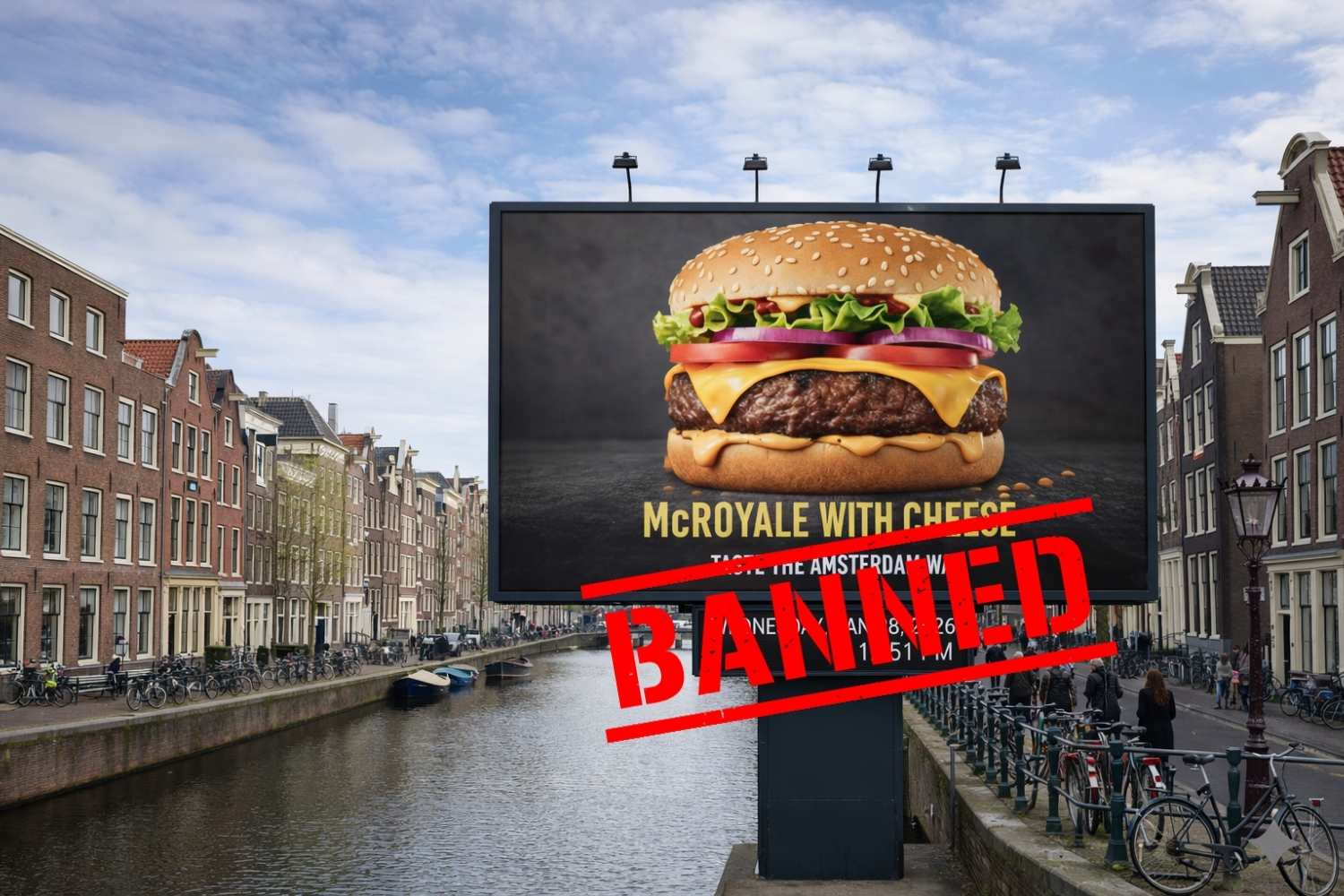
A historic decision, which marks a clear change of pace in urban policies against the climate crisis: the Amsterdam City Council voted in favor of a ban on advertising in public spaces for meat and products linked to fossil fuels, which will come into force from 1 May 2026.
The measure will concern advertising billboards, bus stops, digital screens and all public spaces under municipal jurisdiction. Shops and private properties are excluded.
The vote passed with a clear majority: 27 out of 45 councilors said yes. The proposal was presented by the Party for the Animals together with the party Green Links (Greens/Left) and is part of a broader strategy to reduce climate-changing emissions, intervening not only on the energy system but also on the food system.
A strong signal for the whole world
It is a strong political message: we cannot continue to talk about the climate emergency while promoting, in the public space, products that are among the main causes.
Second Melanie van der Horstcouncilor for public spaces and councilor of the centrist D66 party, today meat advertising represents only 0.1% of outdoor advertising spaces, while that linked to fossil fuels reaches 4.3%. Small numbers, but with enormous symbolic weight. However, Van der Horst warned that there could be legal consequences, linked to contracts already in place with advertising companies.
In reality, the legal ground has already been partly tested: in 2025 a court in The Hague confirmed the legitimacy of a similar provision against the appeal of some tourism companies. Yet, at a national level, the Dutch government does not seem willing to follow this path: Climate Minister Sophie Hermans has declared that she does not support a federal policy of this type.
However, Amsterdam is not alone. His choice is part of a trail already traced by other Dutch cities: Haarlem (in 2024), The Hague, Utrecht (in 2023), Delft and Nijmegen have adopted similar regulations. Haarlem, in particular, was the first city in the world to ban meat advertising in 2022. Amsterdam is the third Dutch city to implement the ban, but the first global capital to do so.
And it is precisely this passage that makes the news: a European capital that decides to intervene directly on the collective imagination, affecting the promotion of the products with the greatest impact on the climate.
ProVeg International openly supports the measure.
Much of the food system’s emissions come from meat production, so it makes sense for Amsterdam to limit its advertising as part of its strategy to change the food system, said Joey Cramer, director of ProVeg Netherlands.
The choice is consistent with a goal already set by the city: to achieve a diet made up of 50% plant foods by 2050. Today, in the Netherlands, the situation is reversed: around 60% of the proteins consumed come from animal sources, while the Dutch Health Council recommends exactly the opposite, i.e. 60% from plant sources and 40% animal sources.
However, there is no shortage of criticism. Advertising associations and some businesses speak of the limitation of commercial freedom and fear an impact on companies that promote “low emissions” products. Practical issues also remain open: how will hybrid products be classified? And the “transitional” ones? Where is the border between what is allowed and what is not?
Questions which in any case do not erase the political fact: Amsterdam is going beyond the classic policies of incentives and subsidies, choosing the path of direct regulation of commercial communication. Taking away space from meat and fossils means stopping treating them as “neutral” products. Let’s see it as a cultural stance even before an environmental one.
