
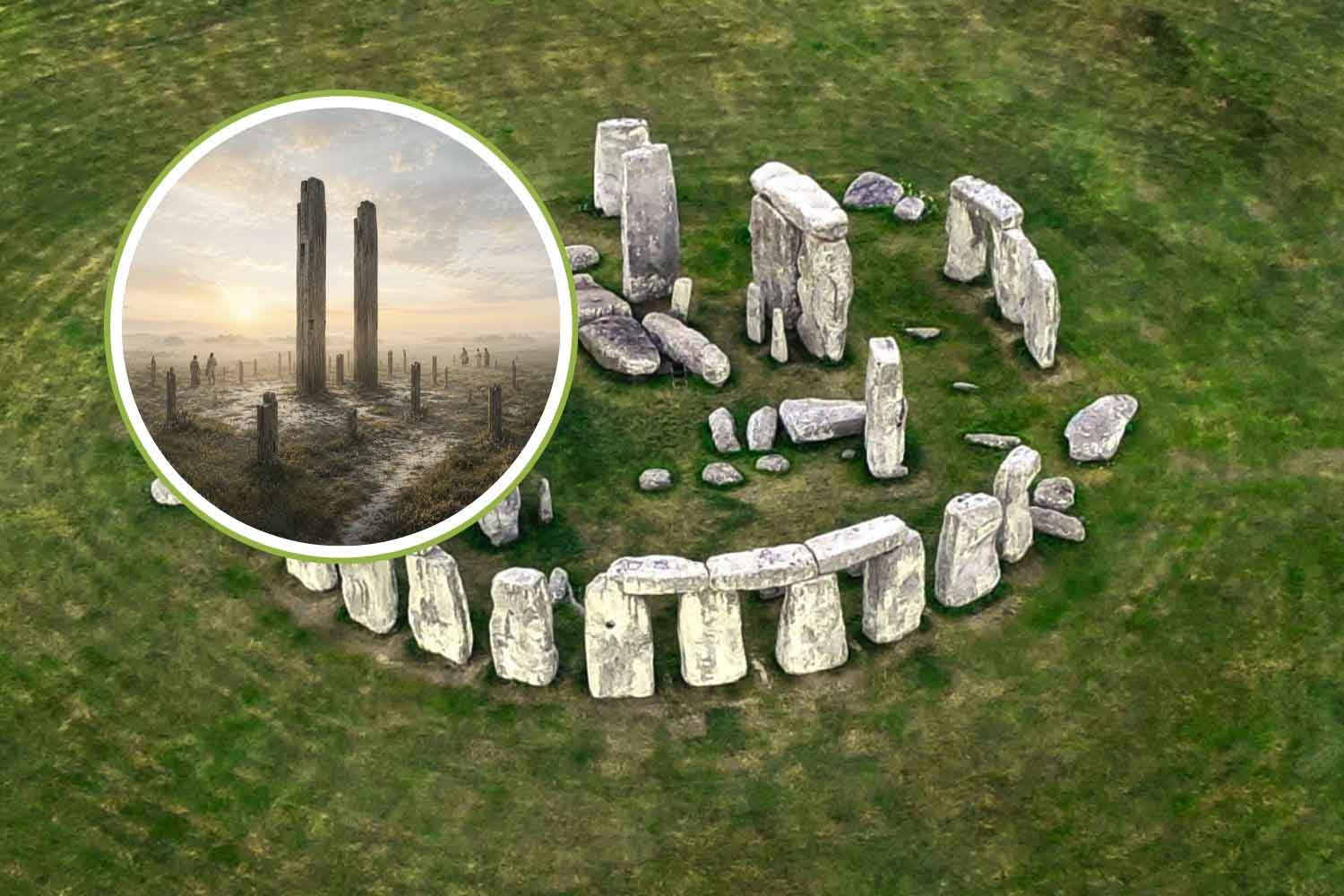
In the Stonehenge landscape, even two holes in the ground can change the way we look at a monument that has been famous for millennia. In Bulford, Wiltshire, approx 5 kilometers from Stonehengearchaeologists have identified traces of a wooden structure dating back to around 5 thousand years agoaligned with the sun on the days of the solstices.
The site, studied by Wessex Archaeologywould have been formed by two large wooden poles planted about 120 meters apart from each other. The line between the two points coincided with the sunrise of the summer solstice and the sunset of the winter solstice. A much more fragile structure than the stones of Stonehenge, of course, but built with an already very clear idea: to use the landscape to follow the movement of the sun.
The dating places the monument around 2950 BCtherefore several centuries before the large sarsen stones that make Stonehenge recognizable everywhere today. Second English Heritagethose stones were raised in the center of the site around 2500 BC and were carefully arranged with respect to the movements of the sun. Bulford therefore seems to recount a previous phase, less monumental and more difficult to see, but decisive in understanding how deeply rooted that relationship between community, seasons and sky was already.
Two poles in Wiltshire
The discovery comes from excavations conducted between 2015 and 2017 in the Salisbury Plain area, during works related to theArmy Basing Programmea program of the British Ministry of Defence. At first those traces might have seemed secondary: pits in the ground, scattered materials, inconspicuous signs in an area where archeology often surfaces. Subsequent work changed the picture.
Archaeologists have reconstructed the position of the two poles and the relationship with the ancient horizon. The archaeoastronomy analysis conducted by Fabio Silva confirmed that the alignment worked for the sky of about 5 thousand years ago, with a very small difference. Basically, looking along that line, the sun rose at the point of the summer solstice and set at the point of the winter solstice.
They have also been identified on the site 48 pitsalong with pottery, worked flints, animal bones and charcoal. They are elements compatible with collective meetings, probably linked to ritual or seasonal moments. Among the finds there is also a rare disc-shaped flint knife, which scholars cautiously link to solar symbolism.
Before the stones
The word “prototype” should be taken with a bit of caution. Bulford was a wooden structure, Stonehenge became a stone monumental complex. But the connection exists: both sites show attention to the solstices and are located in the same archaeological landscape. The difference lies in the scale, the materials, the duration.
The wood left only footprints in the ground. The stone, however, has spanned the millennia and has become an icon. This also explains why such a discovery is weighty: it shows that the solar alignment associated with Stonehenge had older roots in the area. Before the huge blocks were transported and lifted with an impressive collective effort, someone had already marked the passage of the sun with wooden poles.
Stonehenge thus appears less isolated. Its construction is part of a longer history, made up of places used, modified and charged with meaning over time. Bulford adds an earlier passage to that story: a simple structure, probably visible from afar, designed to fix two extreme moments of the year in the landscape.
The sun as a measure
For Neolithic communities, the solstice had a very concrete value. The cycle of the sun marked the return of light, the cold season, the times of the earth and the harvests. Following him meant giving order to the year and recognizing a rhythm on which daily life depended.
The Bulford monument seems to fit precisely into this relationship. Two poles, a horizon, a line. Enough to turn a hill into a lookout point and probably a gathering place too. The materials found in the pits indicate repeated or concentrated human activities, with food, objects, fires and processing.
The discovery also helps to better understand the landscape of Stonehenge, which includes enclosures, mounds, ditches, burials and paths built in different eras. That area of Wiltshire was already a territory marked by collective practices long before the most famous stones were raised.
Today, low, almost invisible traces remain in Bulford. No columns, no standing circle, no postcard profile. Yet those signs are enough to say one precise thing: before the stone there was wood, and it was already looking at the sun.
