
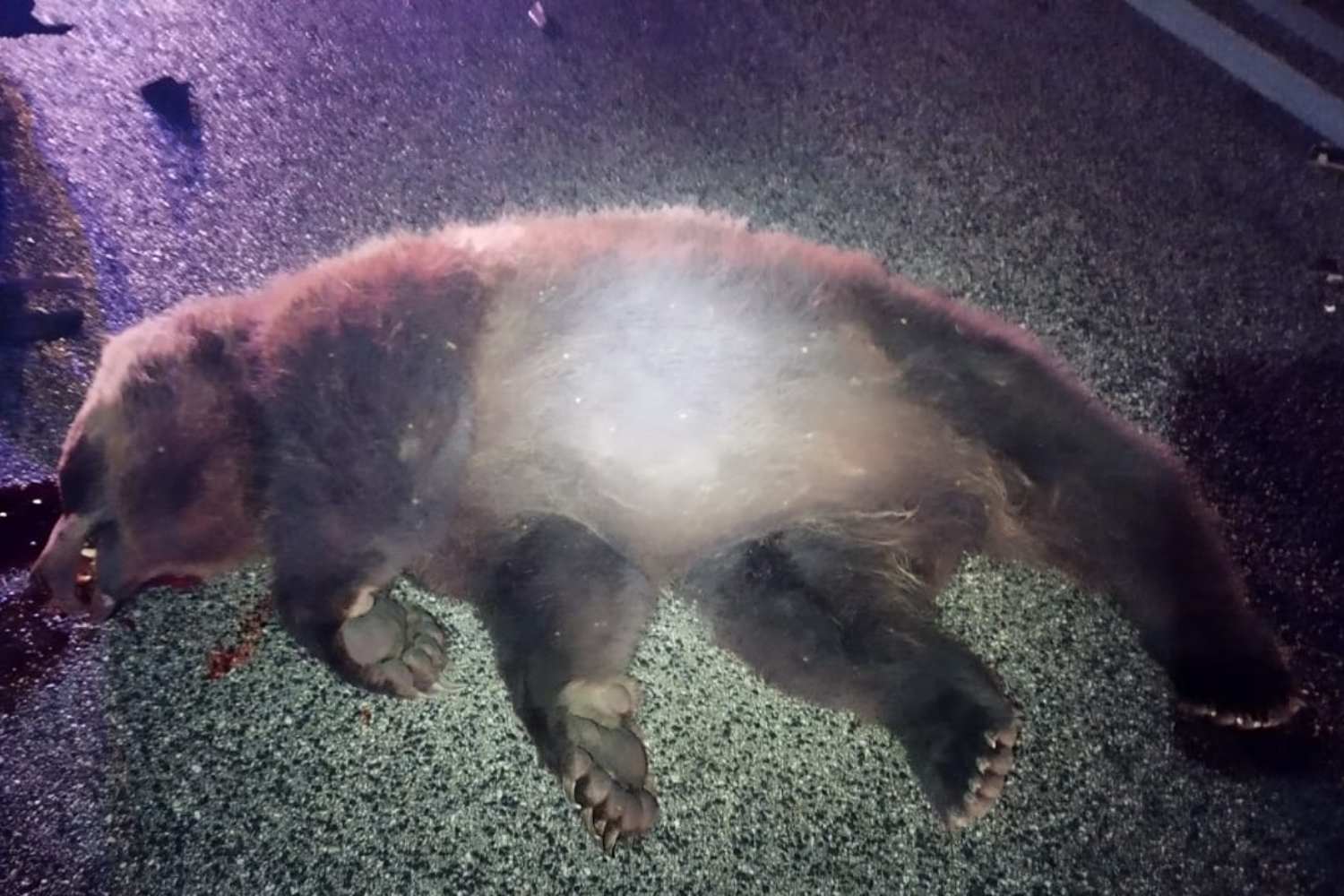
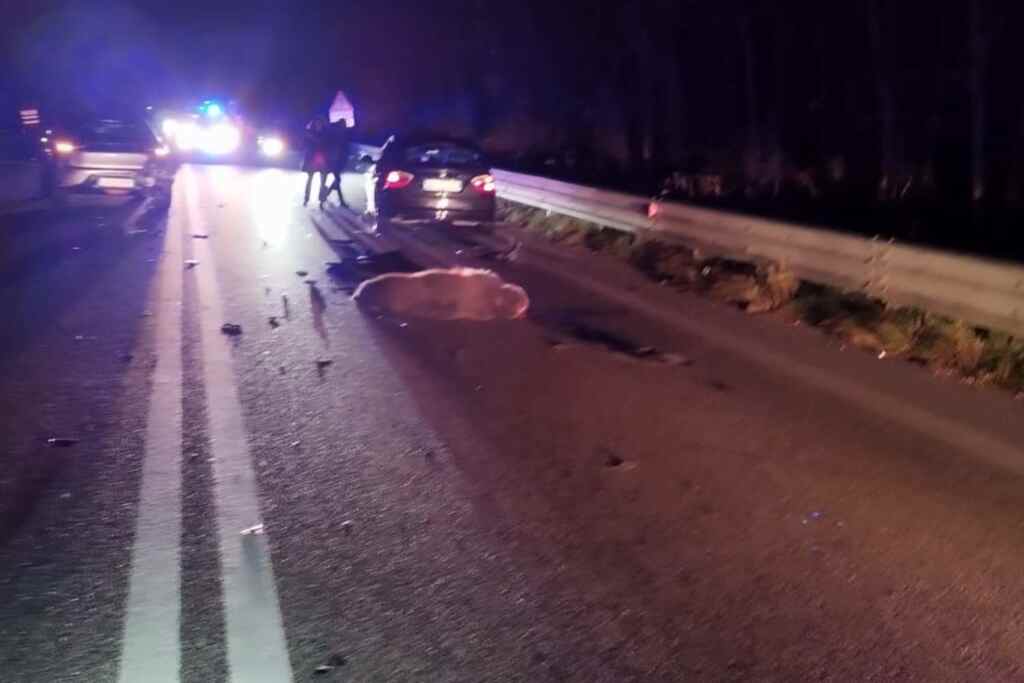
Once again the Sora–Avezzano state road becomes the scene of a dramatic episode involving protected wildlife. On Saturday evening, around 10pm, a Marsican brown bear, a sub-adult male between 4 and 6 years old, was hit near kilometer 27, near the Le Rosce exit. The impact was violent and, according to initial assessments, the animal died instantly, due to serious trauma suffered during the accident.
The intervention of the authorities and the Park
The alarm went off immediately and the Tagliacozzo Carabinieri Operations Center activated the required procedures. As there were no vets available on site, the Park team was contacted and reached the area after approximately 45 minutes. In fact, it is an area outside the boundaries of the Park and also outside the Contiguous Area, a factor which inevitably slowed down the intervention times.
Once arriving at the site of the accident, the Park veterinary surgeon was only able to confirm the death of the bear, which was most likely attributable to a head injury. The carcass was subsequently removed and transported to the Park headquarters in Pescasseroli, from where it will be sent to the Zooprophylactic Institute of Teramo for necropsy and all the necessary investigations.
According to initial reconstructions, the accident involved at least two vehicles. The Carabinieri of the Tagliacozzo Company are investigating the dynamics and are trying to clarify the responsibilities and the sequence of events. Fortunately, no serious injuries were reported: one of the drivers reportedly suffered trauma to a shoulder and went to hospital for further checks. His conditions are not of particular concern at the moment.
An increasingly difficult coexistence
This latest investment adds to an already long list of incidents involving the Marsican brown bear, an iconic and highly threatened species. The episode brings the complex and unresolved coexistence between road infrastructures, inhabited territories and wild animals that move freely back to the center of the debate.
Every Marsican bear lost is not just a number in a statistic. It is a collective wound, because it represents an irreversible setback for biodiversity, for the protection of the territory and for the very idea of the future that we want to build. Such a fragile species cannot afford “collateral” deaths.
The roads that cross these areas do not just cut through landscapes: they cross ecological corridors, vital spaces for animals that know no administrative borders or signs. Continuing to consider these places exclusively as spaces of human transit means accepting that similar episodes will repeat themselves.
Prevention exists and is concrete: reduce speed, especially at night; pay attention to the signs and the most risky sections; seriously invest in mitigation measures such as wildlife underpasses, adequate fencing, smart lighting. All actions that can make the difference between life and death.
Protecting the Marsican bear is not a battle of a few environmentalists: it is a shared responsibility. Because those territories are not just ours and their survival says a lot about who we are and how much we are willing to respect what cannot defend itself.
You might also be interested in:
