
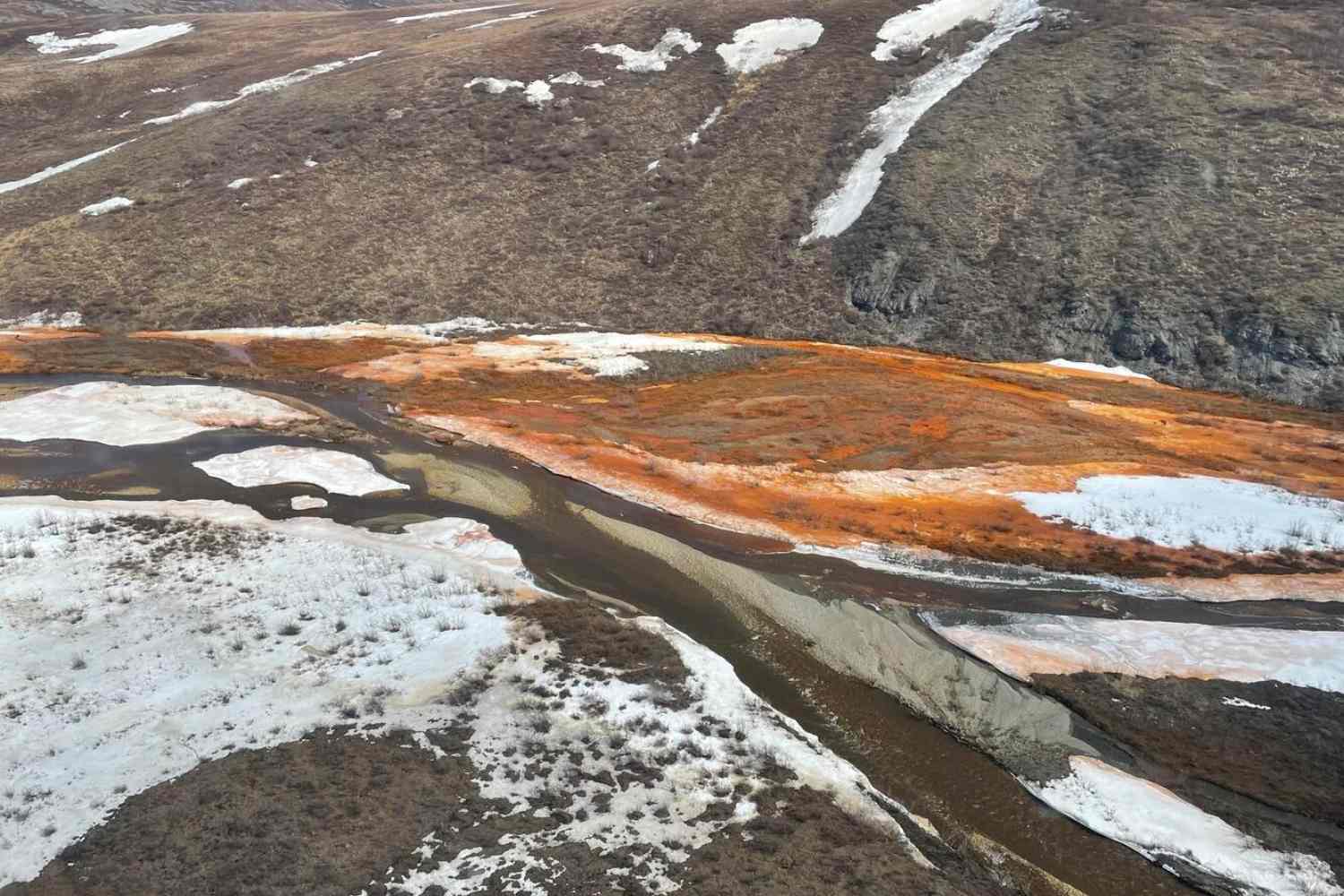
In recent years, Arctic rivers have been turning striking orange hues. The phenomenon was initially observed by pilots flying over northern Alaska, noticing waterways that suddenly seemed “rusty.” This is not industrial pollution: the surrounding areas are wild and free of human activity, indicating that the cause is natural and linked to climate change.
Melting permafrost
The cause of this color is the permafrost, the layer of permanently frozen soil that covers much of the Arctic. As temperatures rise, this soil is progressively thawing. As ice melts, water seeps into deeper layers, exposing minerals such as pyrite, an iron sulfide that reacts with oxygen and water to produce iron and sulfuric acid, coloring rivers and altering their chemical composition.
The discovery was reported in the National Oceanic and Atmospheric Administration’s annual Arctic Report Card. NOAA has been publishing this report for 20 years to monitor rapid changes in the northernmost part of the planet.
The impacts on the ecosystem and the global consequences
Orange rivers contain not only iron, but also other heavy metals such as aluminum, copper and zinc. This mixture can seriously disturb aquatic ecosystems, affecting insects, fish and animals that depend on the water. Salmon are particularly vulnerable: Chemical changes can interfere with their ability to navigate and reproduce, which could affect local fisheries and the economy, particularly in Alaska’s salmon industry.
The phenomenon of “rusty” rivers is a clear sign of climate change in the Arctic, a region that is experiencing the most rapid warming on the planet. In addition to melting permafrost, the Arctic is seeing shrinking ice, rising seas, and the penetration of warmer Atlantic waters into the Arctic Ocean, changing marine ecosystems and affecting the climate at lower latitudes.
To prevent further consequences, scientists and local authorities are intensifying monitoring of rivers, water resources and wildlife to better understand the impact of metals released from permafrost. Observations include aerial surveys, satellite images and field campaigns.
You might also be interested in:
