
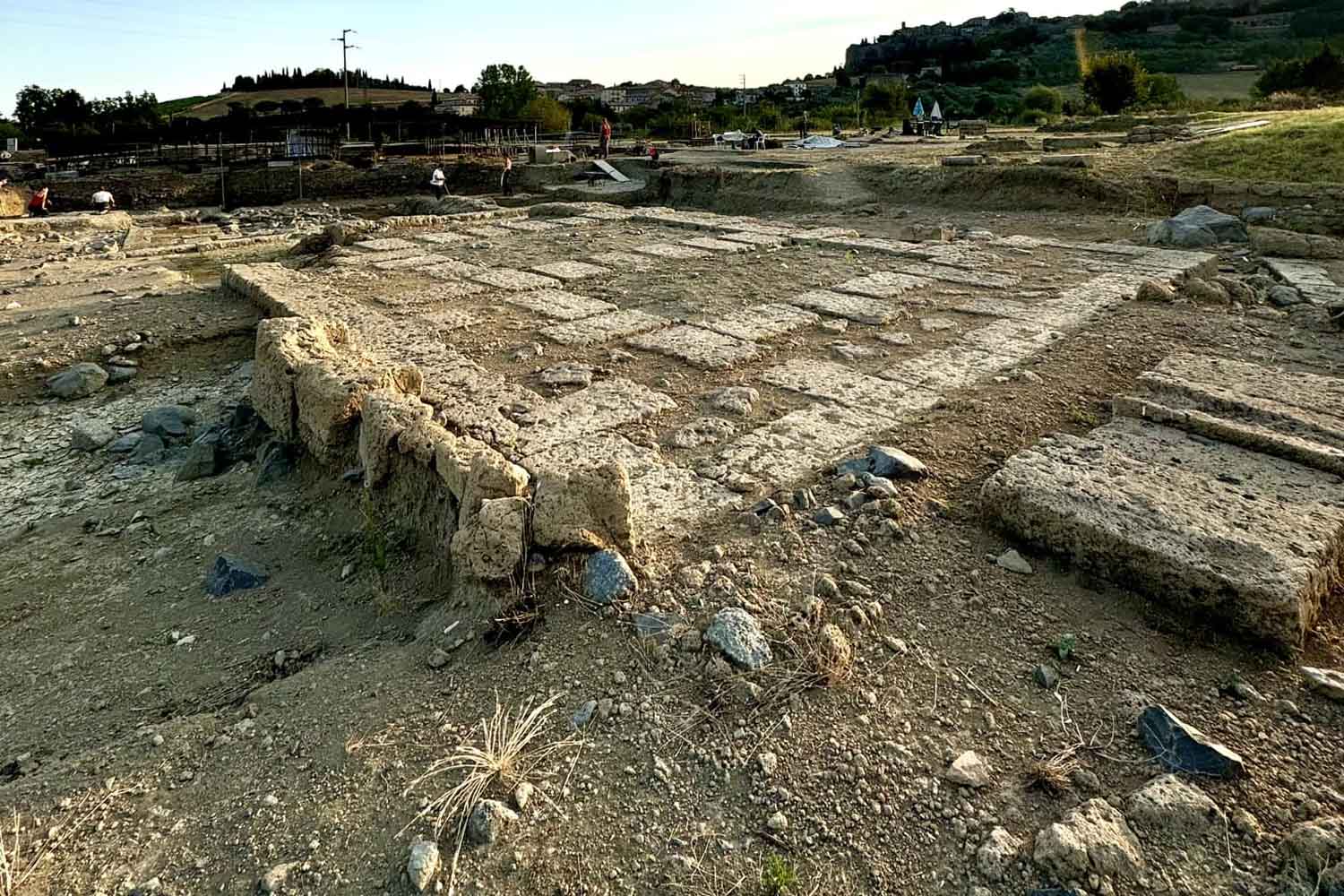
In Orvieto, in the heart of Umbria, a new chapter of Etruscan history is taking shape thanks to the latest excavation campaigns conducted to Field of the fairat the foot of the cliff. Here, after 26 years of investigation, the team directed by the archeologist Simonetta Stopponi has brought to light finds of exceptional value: Two heads of ram, a lion’s head and monumental altars.
The site is now identified by the international scientific community such as the Fanum Voltumnaelegendary federal sanctuary in which the representatives of the twelve Etruscan city-stations met annually.
From the 6th century AC to the flowering of the sanctuary: the history of the Voltumnae fanum
According to Professor Stopponi, the first signs of worship in the area date back to First half of the 6th century BCbut it was in the second half of the centurywith the urban reorganization wanted by Porsennaking of Chiusi and Orvieto, that the sanctuary reached its maximum splendor.
Located in a flat and strategic area, on the edge of the city, the complex housed temples, altars and monumental structurestoday partially brought to light.
Good morning from the building E (V AC)
Posted by Campo della Fiera on Monday, August 12, 2024
The most recent findings
In recent years some of the most significant finds have emerged. Among these, with impressive altarsthe largest ever found in Etruria, built with overlapping blocks and decorated with sculpted heads of ram and lion. The works, datable tobeginning of the fifth century BCaffect naturalistic precision and expressive force.
A surprising element is a bronze eye and vitrea pastawhich gave sculptures an extraordinary realism. Alongside these monumental testimonies, archaeologists have found thousands of finds: ceramics, votive objects, Roman coins and even a Cable gold pendant In the shape of an acorns, probably used to contain perfume.
Geophysical investigations indicate that the sanctuary extended for about 40 hectaresconfirming its political and religious importance in antiquity.
