
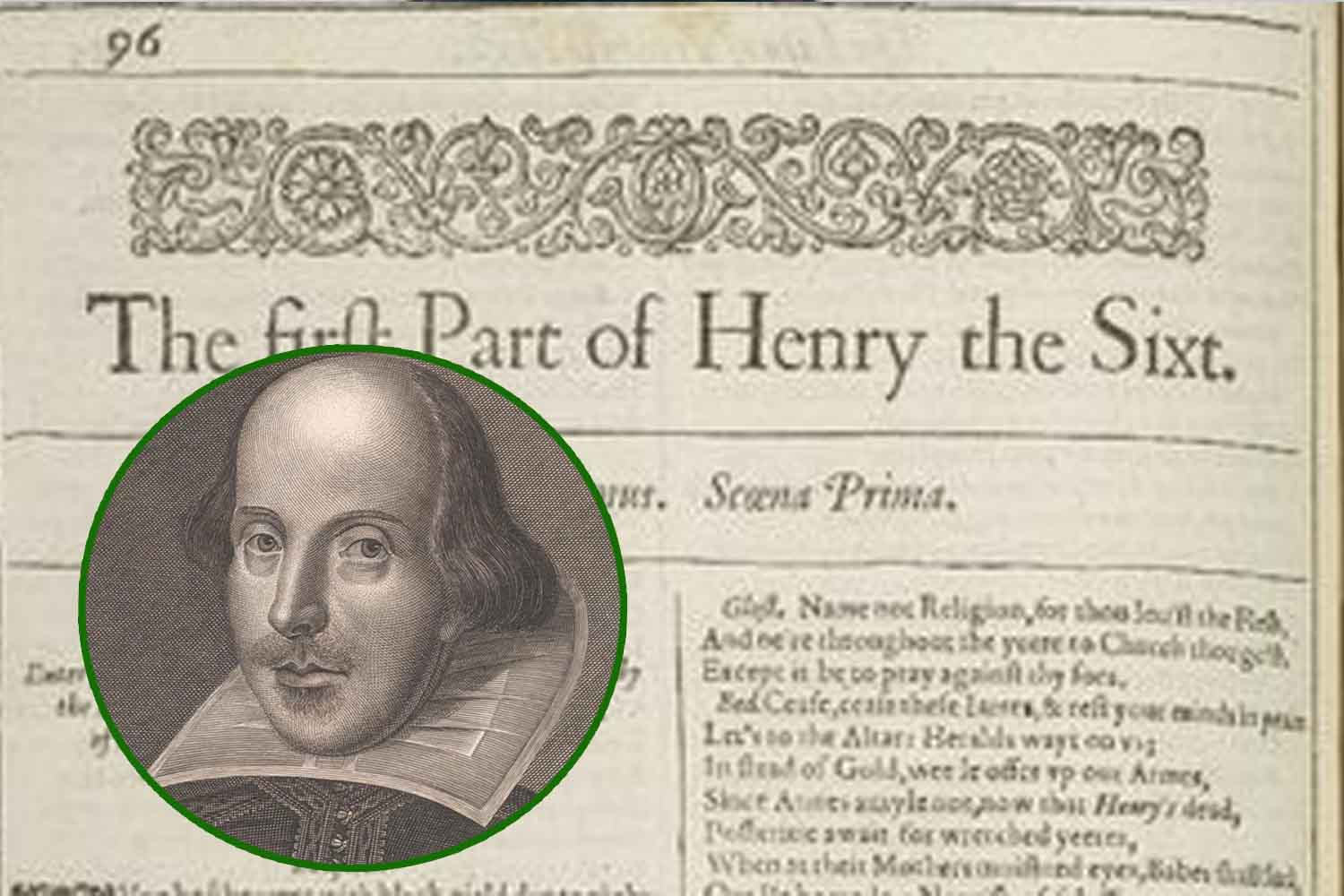
In 1596, Edward III it arrived in English bookstores without the author’s name. Four hundred and thirty years later, two British researchers tried to return a signature to him. Actually, two: William Shakespeare and Christopher Marlowe. And to do so they entrusted a computer with the task of recognizing their linguistic characteristics, hidden among battles, kings’ speeches and verses written in the midst of the Elizabethan era.
The computer identified characteristics attributable to Shakespeare in 23 sections of the play and to Marlowe in nine others. A collaboration which, if confirmed, would add another chapter to the professional history of two authors who for centuries we have learned to consider rivals.
The research was led by Rory Loughnane, from the University of Kent, and Brett Greatley-Hirsch, from the University of Leeds. The results, announced in October 2026 and intended for the scientific journal Shakespeare Quarterlyadd new elements to a question that has haunted scholars for centuries: the attribution of works that the Bard may have written together with other playwrights.
The words that made it possible to recognize Shakespeare
The scholars compared Edward III with works attributed with greater certainty to ten playwrights active between the end of the 1580s and the mid-1590s, looking for the recurring linguistic characteristics of each author. The method is called computational stylometry and allows us to statistically study a writer’s language: words he uses most often, particular constructions, lexical recurrences and other habits that can make a style recognisable. A kind of literary fingerprint, although writers, unlike fingerprints, can influence each other, imitate each other and even rewrite the pages of others.
As the University of Kent explains, the computer comparison identified 23 segments attributable to Shakespeare and another nine to Marlowe in one of the tests. These are portions of the text classified by the model, therefore not an exact distribution of all the verses between the two authors. An example comes from the thirteenth scene, when a sudden darkening of the sky terrorizes the French army. King John’s speech, according to the analysis, presents the characteristics of Shakespearean writing. In the final scene, however, a speech that celebrates a valiant fighter and recalls the god Mars seems to belong to Marlowe’s pen.
Researchers at the University of Leeds used different types of analyses, examining different features of language. The results converge in identifying Shakespeare as the main author and Marlowe as a possible collaborator. For Loughnane, the new evidence allows us to attribute much of this to Shakespeare Edward III with a very high level of safety. Marlowe’s presence, however, adds a new perspective on the relationship between the two playwrights.
Shakespeare and Marlowe, two rivals who wrote together?
William Shakespeare and Christopher Marlowe were both born in 1564, just weeks apart. They frequented the same London theater scene and belonged to a generation that was transforming English theatre. Marlowe, author of works such as Doctor Faustus and Edward IIwas already an established playwright when Shakespeare took his first steps. His death, which occurred in 1593 at just 29 years of age, interrupted a career that had already left a profound mark on English literature.
Edward III it would have been composed around 1592, when both were still alive and active. The drama tells the story of the English sovereign of the fourteenth century, intertwining the military episodes of the war against France with a sentimental story linked to the Countess of Salisbury.
Shakespeare’s possible participation had already been discussed for some time. Loughnane himself had edited the text for the New Oxford Shakespeare of 2016, recognizing some scenes as probably his and leaving the question of the others open. Now new analyzes suggest much more extensive involvement. And they add Marlowe, who may have contributed to a work considered for centuries of uncertain authorship.
For centuries Shakespeare and Marlowe have been portrayed as great rivals. Now we find out that they may have shared more than a few stages. Also because in sixteenth-century London, writing a play was a collective profession, with scripts that passed from one hand to another.
When Shakespeare wrote with four hands
London theater companies needed new plays, scripts went through revisions and adaptations, and multiple playwrights could work on the same play. In short, the solitary genius in front of the blank page is an image that is poorly suited to the daily functioning of those companies. And Shakespeare already had some precedents.
In 2016, the New Oxford Shakespeare recognized Christopher Marlowe as co-author of the three parts ofHenry VIa decision also supported by computerized linguistic analyses. The Folger Shakespeare Library has reconstructed the attribution work and collaborations between the playwrights of the time. If the results on Edward III will be confirmed, the professional relationship between Shakespeare and Marlowe may have been more continuous than hitherto recognized.
How they organized themselves, however, we do not know. They may have written different parts of the script or intervened at later times. Linguistic characteristics allow us to identify possible authorial contributions, while reconstructing the material writing process requires other evidence. The work also connects to Loughnane’s research on Shakespeare’s youth, collected in the volume Shakespeare at Thirtypublished by Princeton University Press in October 2026.
The portrait of a Shakespeare still far from the image of the literary monument emerges: a young author seeking work and recognition in a competitive environment, where texts are written, modified and performed at a fast pace. Far from being a genius locked in a room waiting for inspiration.
A literary mystery spanning over four centuries
Edward III did not appear in the First Folio of 1623, the famous collection of Shakespeare’s plays published seven years after his death. Over the centuries, various attributions and hypotheses of collaboration have been proposed, without reaching a definitive consensus on the entire work.
The new study strengthens the attribution to Shakespeare as the main author and identifies a possible contribution by Marlowe. The results announced by the two universities await comparison with the complete scientific work, expected for the winter issue of Shakespeare Quarterly.
The question also concerns how the theatrical works of the sixteenth century have come down to us. Texts represented, modified, passed through different hands and then consigned to history with a single name, or without any indication. For Edward III four centuries of studies had already been necessary. Now a computer analysis suggests two signatures where the publisher of 1596 had not placed even one.
