
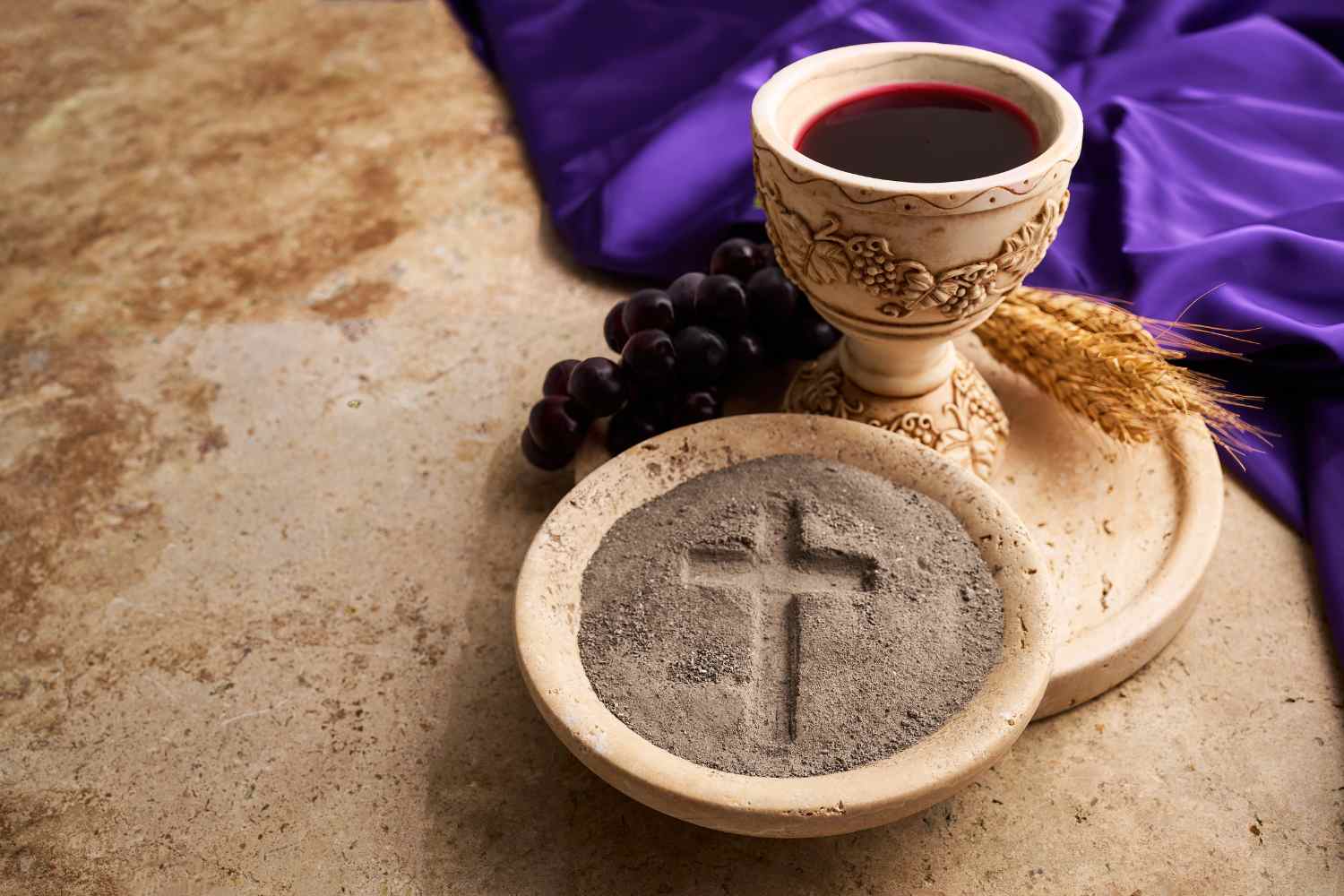
“Remember, man, that dust you are, and dust you will return,” recites the Ash Wednesday liturgy during which the priest, in purple vestments (symbol of penance), places the ash obtained from the olive branches of the previous Palm Sunday on the heads of the faithful. A gesture that symbolizes the precariousness of earthly existence.
Thus begins, according to the Roman rite, Lent, the 40-day period of penance and fasting preceding Easter.
An invitation to sobriety and austerity that encourages us to seek the essential, giving up futile distractions for a while, decentralizing attention from ourselves to make room for reflection and solidarity.
What are the origins of Ash Wednesday
Apparently the rite of ashes dates back to the 6th century AD but was originally reserved for penitents only. Following the abolition of public penance, it was extended to all the faithful as a reminder of human frailty.
Why is Ash Wednesday called that?
According to biblical interpretation, ashes have two main interpretations: on the one hand they symbolize the precariousness of human existence, reaffirmed by the imposition of ashes on the heads of the faithful, on the other hand repentance for the evil done, an indispensable premise for internal rebirth.
Traditions linked to Ash Wednesday
In addition to the religious celebration, on this special Wednesday of the year some interesting folkloristic traditions and unusual Carnivals are celebrated (or were once celebrated). Like that of Borgosesia, where the so-called “Mèrcü scüròt”, that is, Dark Wednesday, which celebrates the end of Carnival with a sort of funeral procession specially organized for the occasion.
In Sardinia, however, in Ovodda, the “Mehuris de Lessia“, whose main character is an anthropomorphic puppet called Don Conte, who on a cart crosses the streets of the town followed by SOS Intintos, men with faces black with soot, and give them Intinghidores, who smear passers-by with burnt cork dust. At the end of the party Don Conte is burned and thrown down a cliff.
Ash Wednesday around the world
The Ash Wednesday rite is not an exclusive prerogative of Italy: it is celebrated throughout the Catholic world with very different nuances and local traditions. In Poland, the previous day – Shrove Tuesday – large quantities of “pączki”, the typical donuts filled with jam, are consumed, almost as if to stock up on sweetness before the Lenten austerity.
In Brazil, where Carnival is one of the most sumptuous events in the world, the transition to Ash Wednesday is particularly heartfelt: the streets that a few hours earlier resounded with music and samba empty in silence. In the Philippines, a country with a strong Catholic tradition, the imposition of ashes is one of the most popular religious moments of the year, with churches packed with faithful from the first light of dawn. In some Anglo-Saxon countries, such as the United States and the United Kingdom, many Protestant communities have also reintroduced the rite of ashes as a moment of spiritual meditation.
What to eat on Ash Wednesday
Ash Wednesday is a day of fasting and abstinence from meat for the Catholic faithful. Tradition dictates that sober and frugal meals be consumed, favoring fish, legumes and vegetables. In many Italian regions it is customary to prepare stewed cod, chickpea soup or pasta and beans. In Campania, for example, it is traditional to eat “minestra maritata”, a soup rich in wild vegetables and poor meats, while in other areas dishes based on cod or stockfish are preferred. An essential diet, therefore, which reflects the spirit of penance and reflection of this day.
Curiosities and historical anecdotes
Did you know that the ashes used during the celebration are not purchased, but obtained by burning the olive branches blessed on Palm Sunday of the previous year? A circular and symbolic gesture, which transforms the joy of Holy Week into a reminder of human transience. Another curiosity concerns the color of liturgical vestments: purple, chosen for Lent, is historically associated with penitence and mourning, but also with royalty, as if to remind us that the Lenten journey leads towards something great.
Finally, it is worth remembering that the word “Lent” derives from the Latin quadragesima, which means “fortieth day”: a direct reference to the 40 days of fasting in the desert that, according to the Gospel, Jesus spent before starting his public mission.
Today is Shrove Tuesday: because the last day of Carnival is called that
