
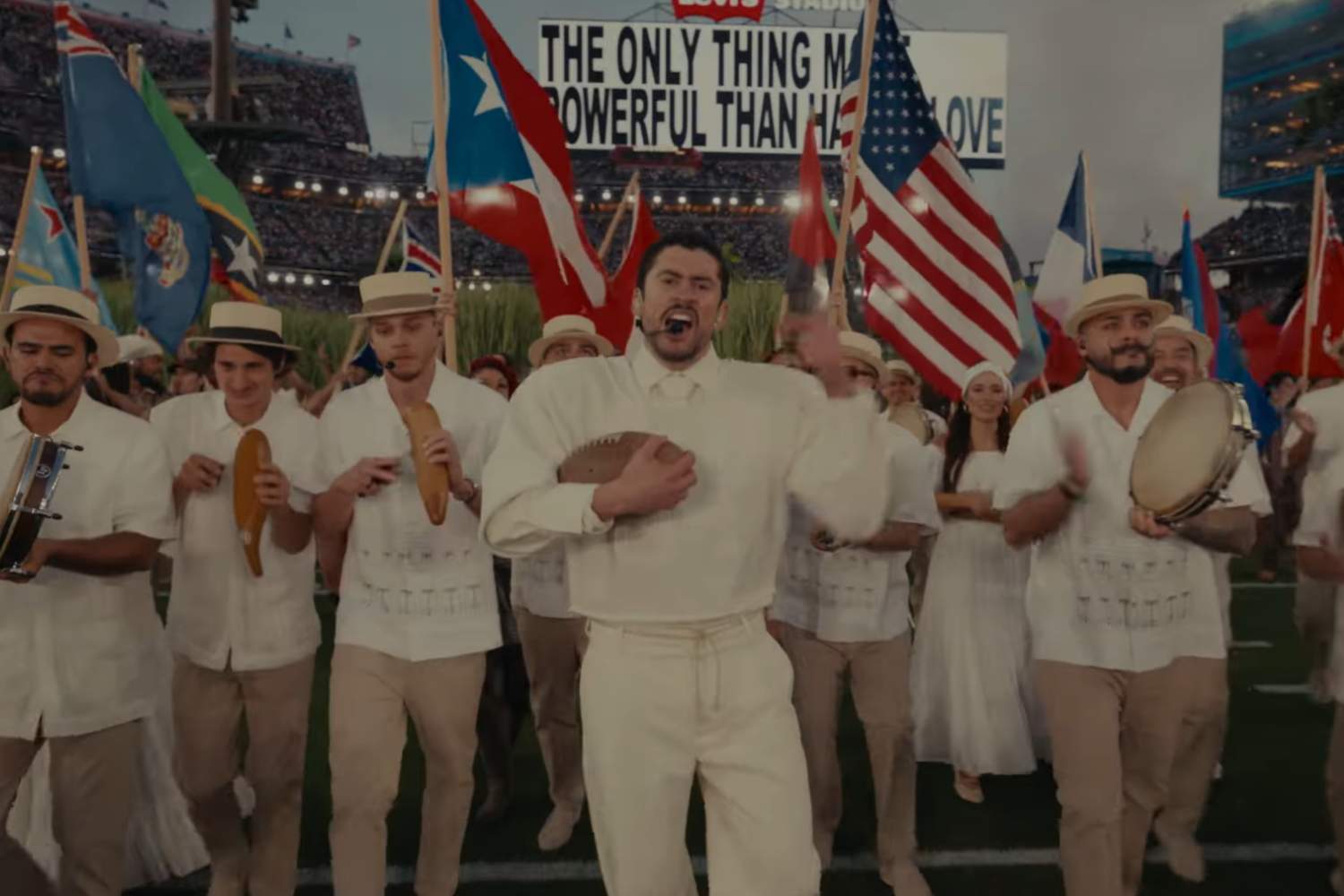
At the 60th edition of the Super Bowl Halftime Show, Bad Bunny signed one of the most symbolic and discussed shows in the history of the event. Dressed in white, with his last name on his shirt, the Puerto Rican artist opened with Tití Me Preguntóbringing to the field of Levi’s Stadium a visual story deeply linked to Puerto Rico and Latin American identity. Sugar canes, traditional pava and references to everyday life transformed the stage into a clear cultural statement, without the need for direct slogans.
View this post on Instagram
A show in Spanish in front of 125 million viewers
For the first time in Super Bowl history, the halftime show was primarily in Spanish. In thirteen tight minutes, Bad Bunny went through hits like Yo Perreo Sola, Monk And Nuevayolaccompanied by a cast of guests who reinforced the message of unity: Lady Gaga, Ricky Martin, Karol G, Cardi B, Pedro Pascal and Jessica Alba. Gaga’s appearance, performing a salsa version of Die With a Smilemarked one of the most commented moments of the evening in which the Seahawks defeated the Patriots.
While avoiding direct attacks as happened during the Grammys, the show was peppered with political and social references. From the shirt with the number 64, read by many as a reminder of the initially estimated victims of Hurricane Maria, to the presence of a child to whom Bad Bunny symbolically hands over the Grammy, after the replay of his recent speech against racism. On the big screen, the final message summarized the entire narrative structure of the show:
The only thing more powerful than hate is love.
View this post on Instagram
Trump’s anger and criticism from the right
Despite the absence of explicit references to the president, Donald Trump reacted harshly, calling the show “An affront to AmericaOn his social network Truth he then added: “Nobody understands a word what this guy says,” referring to Spanish despite it being the language spoken by more than 41 million people in the United States.
Bad Bunny was much more than just a show, but a precise cultural act. Without proclamations, he celebrated the roots, immigrants and plurality of the Americas, proving that music can be inclusive even on the most mainstream stage in the world. A memorable show, capable of uniting millions of viewers and, at the same time, infuriating the president of the United States.
You might also be interested in:
