
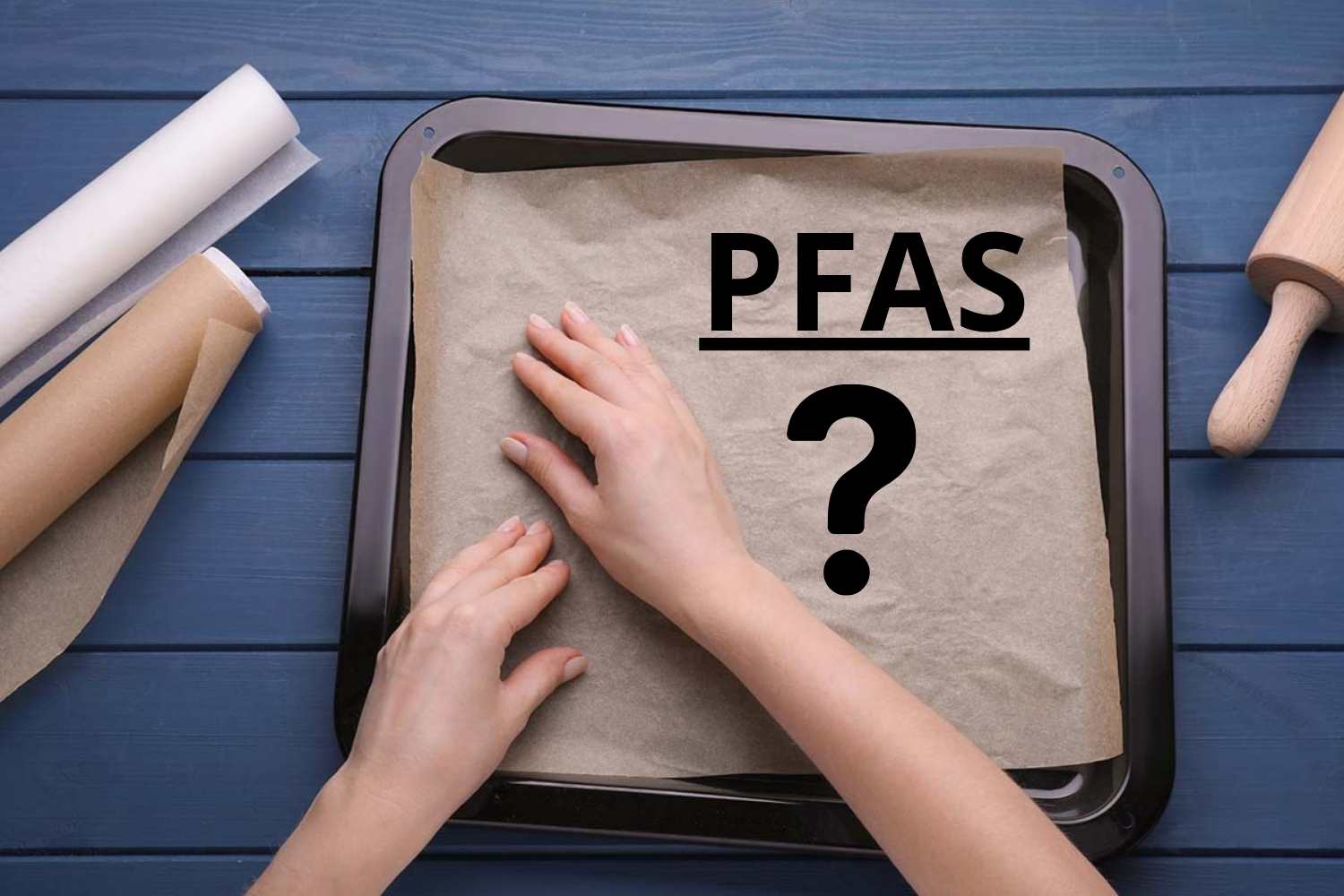
Baking paper is a practically inevitable component of the kitchen, which makes versatility its strong point, useful for roasting vegetables, baking biscuits and protecting both trays and moulds. Precisely because it is so common, the monthly magazine Il Salvagente, which has been committed to consumer protection for years, decided to subject it to verification. Sixteen products, chosen from well-known brands and private labels from large-scale retail trade, ended up under the lens of a specialized laboratory.
The outcome of the analysis brought to light an element that is now all too recurrent, namely the presence of perfluoroalkyl substances, known by the acronym PFAS.
What are PFAS and why are they worrying
The term PFAS – per- and polyfluoroalkyl substances – indicates an endless family of chemical compounds, which according to estimates includes around ten thousand different molecules. The industry has been using them for decades for a series of characteristics considered valuable: they resist high temperatures, repel water and grease, and withstand mechanical stress. It is therefore not surprising to find them in non-stick pans, food packaging, waterproof fabrics, firefighting foams and even cosmetics.
The downside is their persistence. These compounds do not degrade easily in the environment; for this reason they are often defined as “forever chemicals”, substances destined to remain. They accumulate in groundwater, soil, aquatic ecosystems and, through the food chain, also reach the human organism. Various molecules belonging to this family have been classified by international scientific authorities as endocrine disruptors, neurotoxic or carcinogenic.
The European regulatory framework
The European Union has started a process of progressive restriction in recent years. Some compounds are already banned: this is the case of PFOA, perfluorooctanoic acid, banned from 2020. A further step forward will come with EU regulation 2025/40, dedicated to packaging and materials intended for contact with food. From 12 August 2026, very specific limits will come into force: 50 milligrams per kilogram for total fluoride and 250 micrograms per kilogram for the sum of targeted PFAS, i.e. the approximately fifty substances considered most critical for health.
Baking paper is fully included among the materials intended for food contact. Generally these are sheets of cellulose fiber coated with silicone or parchment-like papers subjected to chemical treatments, such as that with sulfuric acid. Manufacturers must issue a declaration of conformity certifying the use of substances permitted by food legislation. However, there is no explicit reference to PFAS on the packaging, although analyzes have identified traces of it in numerous samples.
How the test was carried out
The Salvagente investigation involved 16 brands purchased in Italian supermarkets: Domopak, House, Ottimo, Arkalia Casa (Pam), Cuki, Home&Style (Todis), Lidl, Sistema Casa (Eurospin), Frio, Casa Coop, Esselunga, Conad, Selex, Ecor, Carrefour and Cuki natural baking paper.
The laboratory has adopted two complementary strategies. The first involved a screening of total and organic fluorine, useful for measuring the overall quantity of fluorinated substances present in the material, including those that escape targeted tests. This method does not allow the identification of every single molecule, but it offers an indication of the potential risk of migration towards the food: the higher the total fluoride content, the greater the amount transferred during cooking.
The second analysis specifically looked for approximately fifty PFAS already under regulatory attention.
Result? 14 of the 16 products examined contain at least one perfluoroalkyl substance.
There are three molecules identified.
The first is PFBA (perfluorobutanoic acid), the main degradation product of PFOA. It is among the 24 PFAS subject to restrictions to protect drinking water. It stands out for its high environmental mobility and its ability to easily infiltrate groundwater. Animal studies link it to alterations of the thyroid and liver, as well as effects on development and blood composition.
FTOH 6:2, a fluorotelomer alcohol, exhibits volatile characteristics and can develop into more persistent PFAS. Degradation compounds include perfluorohexanoic acid (PFHxA), already banned by the European Union in several areas, including materials in contact with food.
FTOH 8:2, also a fluorotelomer alcohol, is a direct precursor to PFOA, which the International Agency for Research on Cancer has classified as a human carcinogen. This substance is also volatile and can break down into persistent compounds found in human blood and wildlife.
Among the products analyzed, flavored Lidl baking paper showed the most loaded situation: all three identified PFASs were present in the sample at the same time.
Values below legal limits
There is also a reassuring element. None of the 16 samples exceeded the thresholds set by EU Regulation 2025/40, neither for total fluoride nor for the sum of targeted PFAS. From a formal point of view, all products comply with the legislation which will come into force in August 2026.
The issue, however, goes beyond compliance with the limit on the single article, because when it comes to PFAS the main problem concerns cumulative exposure. Migration into food during cooking appears limited according to the available analyses, what matters is the accumulation resulting from multiple sources. PFAS appear in everyday objects, from utensils to packaging, and baking paper adds to an already long list.
Then there remains the environmental aspect. During disposal and recycling, the substances present in the materials can disperse and contribute to the contamination of soil, water and air. The impact does not end in the time of a recipe, but extends far beyond the home kitchen.
Those who wish to know in detail the performance of each brand, with the specific values detected for each sample, can consult the comparative ranking published in the March 2026 issue of Salvagente.
