
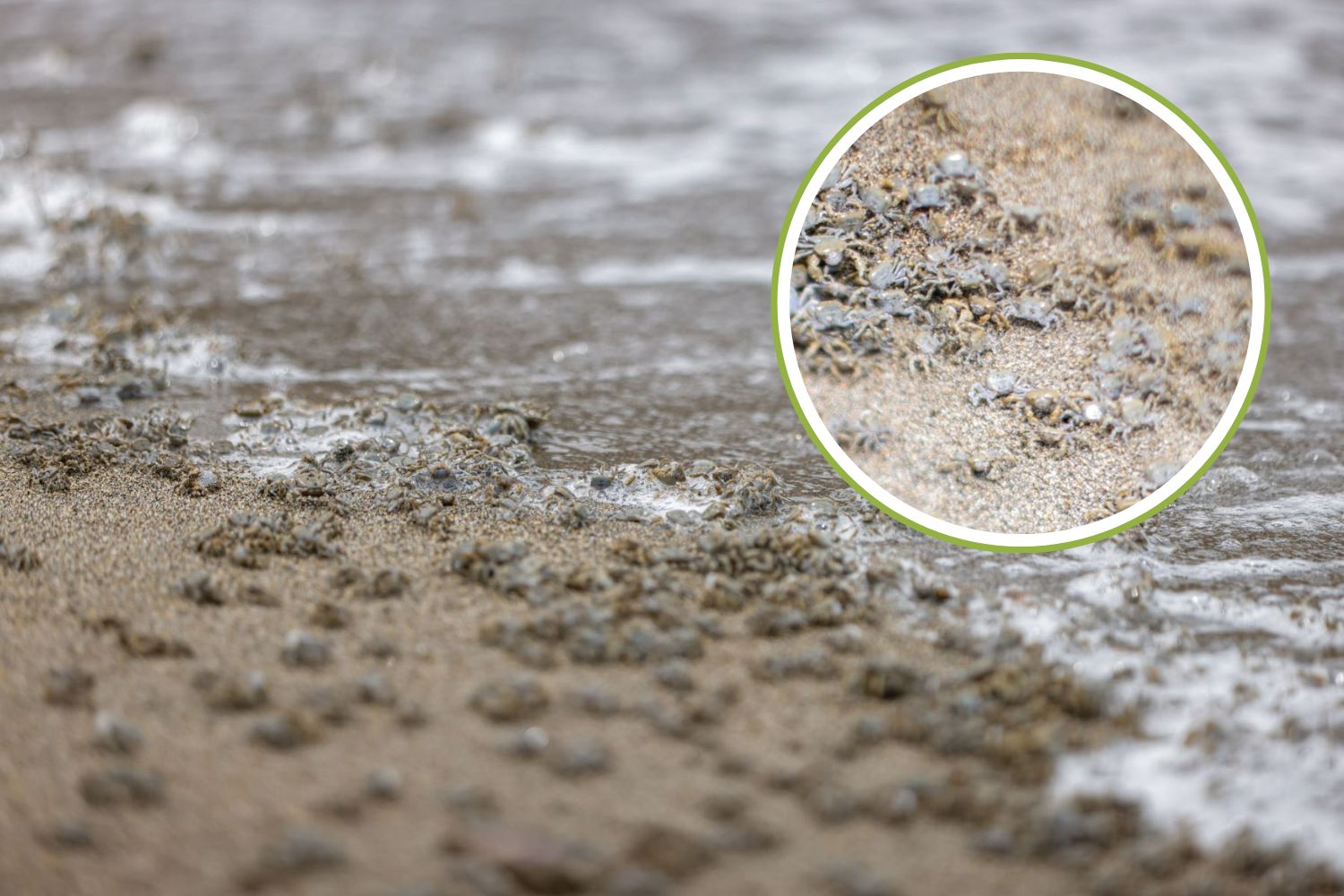
A’unusual migration of thousands of crabs He surprised residents and swimmers of the Peruvian beach of Herraduradurain the district of Chorrillos. The event, which occurred starting from the first days of February, led the local administration to make a drastic decision: The temporary closure of the Lido to the public from February 5th.
The goal is to safeguard both the same crustaceans, exposed to risks after the removal of the stones that for decades have been their habitat, and the vacationers, to whom it is forbidden to get in touch with these animals for Avoid possible accidents and interference with the natural migration process.
The extraordinary “invasion” highlighted how the restoration works undertaken from Municipality of Chorrillos, Started in November 2024, they have changed the balance of a rather fragile ecosystem. The wet area that was under the rocks removed, in fact, has long been hosted the species Ocypode Gaudichaudiiwhose specimens by color and size can be confused with sand. The removal of over 600 cubic meters of stones and the subsequent addition of sand have improved accessibility for swimmers, but They also forced the crabs to migrate in search of a new rocky and humid habitat.
From the early hours of the morning of February 5, you can observe a very long procession of these small animals to move in the Indian row on the shoreline. This show, if on the one hand aroused curiosity in the visitors of the beach, on the other has forced the authorities to intervene in order not to hinder the natural migratory phenomenon. To strengthen the decision to temporarily interdict the seaside area, the fear that many tourists, unaware of the delicacy of the event, intervened, they could capture or damage crustaceans involuntarily.
“Mayor Fernando Velasco asked that this natural process be respected. When we arrived at the beach, we saw that many people transported them by weight, which we want to avoid, so we thank the Peruvian national police for the support, which joins the measure, asking the bathers to leave. Our bathing entrepreneurs have respected the measure and are depositing their equipment, “he said Andrés Cruz Mazaresponsible for the image of the Municipality of Chorrillos, underlining the need not to further disturb small animals.
View this post on Instagram
The presence of national police officers, together with the municipal staff, has therefore made the evacuation of the vacationers effective, which for the moment will not be able to access the area. This closure will last until the studies of the environmental subdirections and the management of the risks of catastrophe. In addition, the Municipality has already started interviews with the Ministry of the Environment (Minam) and the Port Authority of Callao to understand if the phenomenon is also connected to a reproduction phase of the species.
According to the first findings, the reason for this migration It is linked to the removal of the stone substrate on which the crabs lived. To confirm this point of view is the scientific director of Oceana Peru, Juan Carlos Prietowhich highlighted how the choice of removing large quantities of rock could have distorted the ecological balance of La Herradura.
“It seems that (this phenomenon) has to do with the fact that it has been removed of the material from the sea, in particular stones. The stones are the substrate on which animals live. They have lived there for a long time and suddenly, in the absence of these stones, they are looking for a rocky area in which to take refuge“, Prieto said in an interview.
Expert assessments also suggest that The coupling of the crabs could coincide with the restoration phase of the beachaggravating the phenomenon. A further element of interest is represented by the possible influence of marine currents, which may have favored or accelerated migration. Effectively, the change of the waves and the new conformation of the coast – now more sandy – They are forced the crabs to move towards areas more suitable for their survival.
Andrés Cruzspokesperson of the Municipality, then stressed that before proceeding with the “sanding” and removal of the pebbles on the shore, the local administration had prepared an environmental impact study: “I understand that we have a technical study by our areas competent. We already have analyzes and assessments. Here the issue of sand has not been changed, only a sifting was made. Unlike other intentions in which the sand was poured on the stones, we respected it, the sand was sieved “.
However, some critics, including representatives of environmental associations, argue that the initial assessments have not completely foreseen the side effects on endemic species. For its part, the municipality of Chorrillos reiterates the importance of giving life to one of the most iconic beaches of Lima. Herradura, in fact, was once a place loved by surfers and wealthy families, but The progressive accumulation of stones had made it difficult and not very inviting.
The renovation has provided for the deposit of about 600 cubic meters of sand, radically transforming the coastal landscape. Today, where once there was a long expanse of rocks, there is a wider shoreline and suitable for bathers. However, this change has distorted the local ecosystemgenerating a naturalistic show as surprising as it is delicate.
Cierran Playa La Herradura en chorrillos Por Migración Masiva de Arañas de mar en on Orilla https://t.co/49bokiyzbs
Photo: Andina/Luis Iparraguirre pic.twitter.com/jwvgqqBrn
– Agencia Andina (@agencia_andina) Febration 5, 2025
The temporary closure of the beach therefore aims to encourage an “ecological corridor” Where the crabs can pass safely, without suffering the impact of tourist activity. In the meantime, the area remains under the vigilant gaze of the authorities, ready to reopen the Herradurament as soon as the conditions will allow it, hopefully before the end of the summer season. For swimmers, the curiosity remains to attend a phenomenon as unusual as it is the only one, which at the same time highlights the subtle balance between the need to enhance the natural heritage and that of protecting ecosystems.
When the migration is concluded and the studies will confirm that the environmental balance is no longer at risk, The beach will be able to return to play its role as a tourist destination.
