
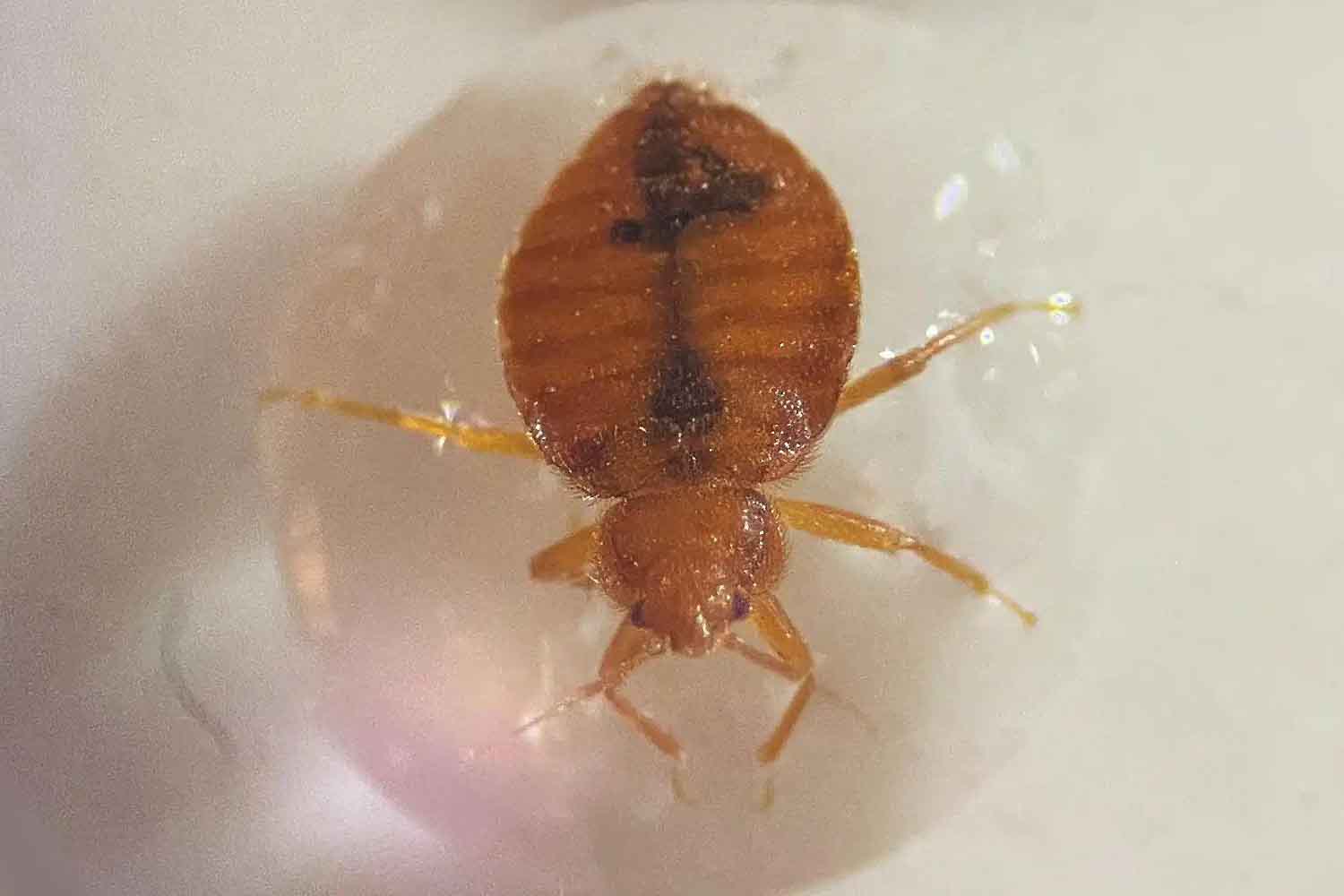
In recent years, bed bugs have become the symbol of a collective anxiety that has spread through homes, hotels and public transport, creeping into daily conversations and even political debate. The fall of 2023 marked the peak of this widespread concern, with viral images and reports fueling a climate of constant alarm. Today the media noise has subsided, but the problem remains real and concrete, so much so that health authorities continue to remind us how important it is to prevent and correctly manage infestations.
Just as it seemed impossible to find a weakness in these nocturnal pests, scientific research has identified a surprising, simple and accessible vulnerability: water.
A study conducted by the University of California Riverside and published in the Journal of Ethology has highlighted a behavior that could change the way we deal with home infestations. Bed bugs show a real aversion to damp surfaces. A detail which, read carefully, takes on strategic weight.
A discovery born from an unexpected event
Science often advances also thanks to errors. In this case it all started with a faulty power supply device in a laboratory. The entomologists noticed that the insects systematically avoided wet areas, as if they perceived the humidity as an imminent danger.
To test this intuition, the researchers used infrared cameras and video analysis software, observing the behavior of males, females and individuals at different stages of development. The result was consistent: all bedbugs moved away from moist surfaces.
The explanation is linked to their physical structure. The extremely flat body has small respiratory orifices on the sides, which are essential for survival. Contact with water can cause it to stick to surfaces and hinder breathing, making moisture a real threat. In an insect capable of hiding in the thinnest cracks, this biological limit becomes a chink in the armor.
What this means for our homes
When it comes to fighting bed bugs, the temptation is to imagine drastic and expensive solutions, made up of invasive chemical treatments and complex professional interventions. The discovery of aversion to water instead introduces a more subtle element of reflection.
Understanding that bedbugs avoid humidity also allows you to interpret the use of some water-based insecticides differently. If the product does not eliminate the insect immediately, the humidity can push it to move elsewhere, encouraging dispersion and making the infestation more difficult to control. This means that management must be aware and targeted, avoiding improvised interventions that risk worsening the situation.
At the same time, a practical indication emerges regarding daily life. In case of suspected contact with bedbugs on skin or clothes, a thorough shower can represent a simple but effective gesture, exploiting that biological vulnerability. An immediate action, accessible to all, which restores a minimum of control in a context that often generates impotence.
Towards smarter and more sustainable strategies
This discovery opens up interesting scenarios also from an environmental perspective. Reducing the indiscriminate use of aggressive chemicals and integrating protocols that take humidity into account could favor a more balanced and less impactful approach. Managing infestations requires specific skills, but knowledge of the insect’s weak points allows you to build more refined strategies.
Bed bugs remain a complex problem, especially when the infestation is already established. However, knowing that there is an intrinsic fragility changes the dominant narrative that describes them as invincible. Water, a daily element that we associate with cleaning and care, could become an unexpected ally in prevention and control.
You might also be interested in:
