
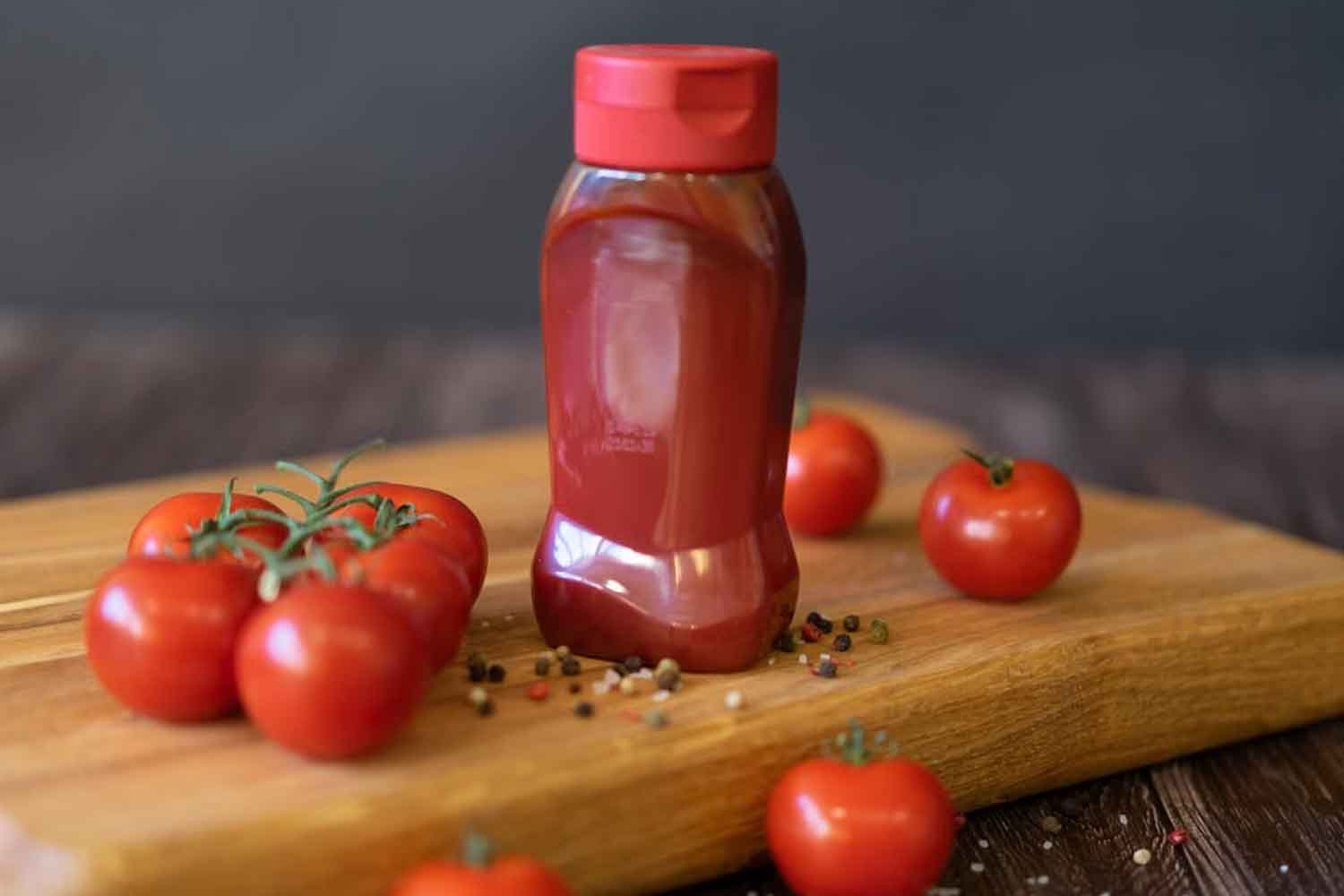
In the 1830s, the American doctor John Cook Bennett took office in Ohio and put the tomato against diarrhea, indigestion, dyspepsia and violent bilious attacks. He recommended eating it raw, cooked or “in catsup”. The red squeeze bottle on the chips was still far away; the medical promise, however, was already working very well.
Hence comes the story, often told online, of ketchup being used as medicine. Bennett mainly promoted the tomato and included the tomato catsup among the ways to take it. Soon after, tomato extract pills would arrive, sold as a remedy for almost every ailment.
Before the tomato there were fish, mushrooms and nuts
The name ketchup is much older than the sauce we know. The Merriam-Webster records its use in English around 1690 and traces it back, either directly or through Malay kecapa Southern Min Chinese term related to salted or fermented fish juice. Etymology does not return a single recipe. However, it provides a condiment that is very far from tomato.
In British cuisine, ketchup could contain anchovies, oysters, mushrooms, nuts, shallots and spices. In 1732 a recipe entitled Ketchup in Paste, From Bencoulin in the East Indies appeared in the American edition of The Complete Housewife. Mushroom and shellfish ketchup were still in circulation in the 19th century. In short, the red arrived very calmly.
One of the first American ketchups printed with tomatoes appeared in 1812 in the Archives of Useful Knowledgecared for by Philadelphia physician and horticulturist James Mease. The recipe called the tomatoes “apples of love”: they were sliced, salted, cooked with mace and allspice, then bottled with shallots and brandy. Both vinegar and sugar were missing. More than accompanying a portion of chips, that sauce seemed ready to preserve it for posterity.
The mysterious acid that was supposed to cure everything
Bennett turned the tomato into a small health program. In 1841 he published in the Mormon periodical Times and Seasons a long article on its properties. He wrote that no satisfactory chemical analysis of the fruit had yet been completed. A few lines later he declared himself “satisfied beyond a doubt” that his power resided in a hypothetical “tomatic” or “lycopersic” acid. The caution lasted the space of a page.
His statements also took root because the medicine of the time offered less than reassuring alternatives. Among the most used purgatives was calomel, a mercury compound. Tomato pills were thus presented as more pleasant and natural substitutes. In 1839 a Pennsylvania newspaper was already advertising the Miles’ Compound Extract Tomato Pills; other sellers followed, accompanied by the slogan “tomato pills will cure all your ills”. Tomato pills would cure every ailment. Advertising, at least, was in excellent health.
Formulas were not standardized and therapeutic evidence was lacking. Food historian Andrew F. Smith, in the study Tomato Pills Will Cure All Your Illsreconstructs a market populated by imitations, opaque ingredients and preparations that sometimes had very little to do with the tomato. Some pills contained purgative substances: a notable detail for products also advertised against diarrhea.
From universal care to the transparent bottle
The medicinal fad faded, while the tomato steadily conquered American kitchens. In 1876 the F. & J. Heinz company added tomato ketchup to its product line. Henry John Heinz focused on transparent glass bottles to show the contents and link the brand to the idea of cleanliness and purity: after years of miraculous extracts, seeing what you were buying was already progress.
In 1906 the Pure Food and Drugs Act prohibited interstate trade in foods and medicines that were adulterated or presented with false and misleading labels. The law did not invent modern ketchup, but it strengthened the market for packaged products with more controlled compositions and a reputation built on safety. The sauce settled around ripe tomatoes, vinegar, sugar, salt and spices. The white coat could now leave the scene.
The pills disappeared. The tomato remained, entered the factories and found a decidedly more lasting position: an upside-down bottle on top of chips.
