
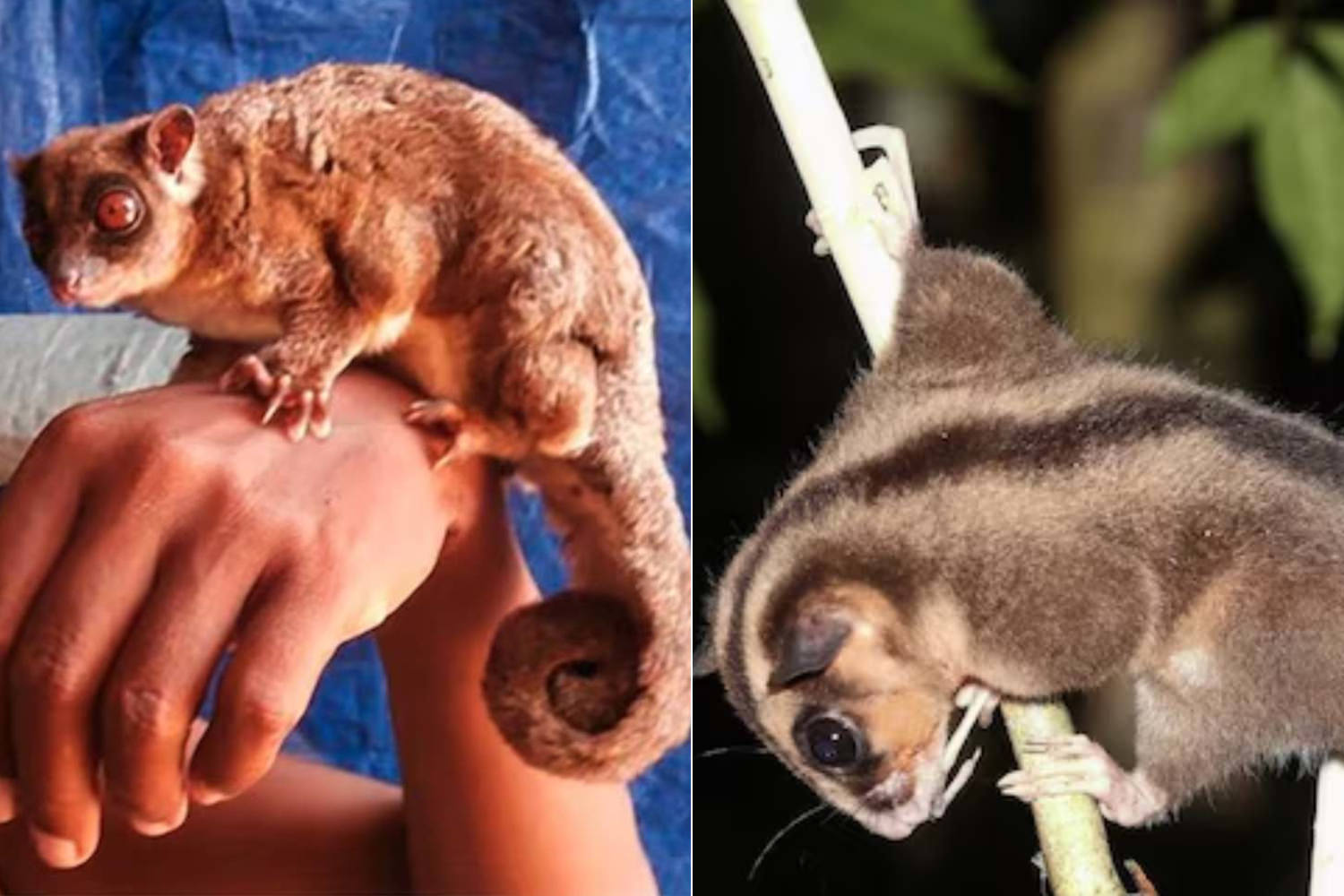
A perhaps once-in-a-zoologist’s discovery comes from the forests of western New Guinea, where a group of researchers have demonstrated that two marsupials thought to have been extinct for thousands of years are actually still alive. The expedition was led by Australian scientist Tim Flannery, who documented the presence of these animals in the forests of the Doberai Peninsula.
Scholars speak of an extraordinary case of “Lazarus species”, a term used in zoology to indicate organisms that disappear from fossil records and are considered extinct, only to be found alive after a very long time. In this case the phenomenon is even more surprising: two different species reappeared in the same territory.
The very long toed possum used for hunting
The first rediscovered animal is the long-toed pygmy possum, known scientifically as Dactylonax kambuayai. It is a small arboreal marsupial with a very particular characteristic: the fourth toe of the front legs is much longer than the others.
This finger works as a kind of natural probe. The animal uses it to crawl into tree trunks and retrieve larvae and insects hidden in the wood. A behavior that is very reminiscent of that of the aye-aye, the curious lemur from Madagascar with an equally elongated middle finger.
According to fossils, this species lived about 300,000 years ago in Australia, in central Queensland. The last traces in New Guinea suggested survival until about 6,000 years ago, after which it disappeared from all scientific observation. The turning point came in 2022, when the naturalist Carlos Bocos photographed an individual during a nature expedition, demonstrating that the species had never disappeared.
A mysterious glider with a prehensile tail
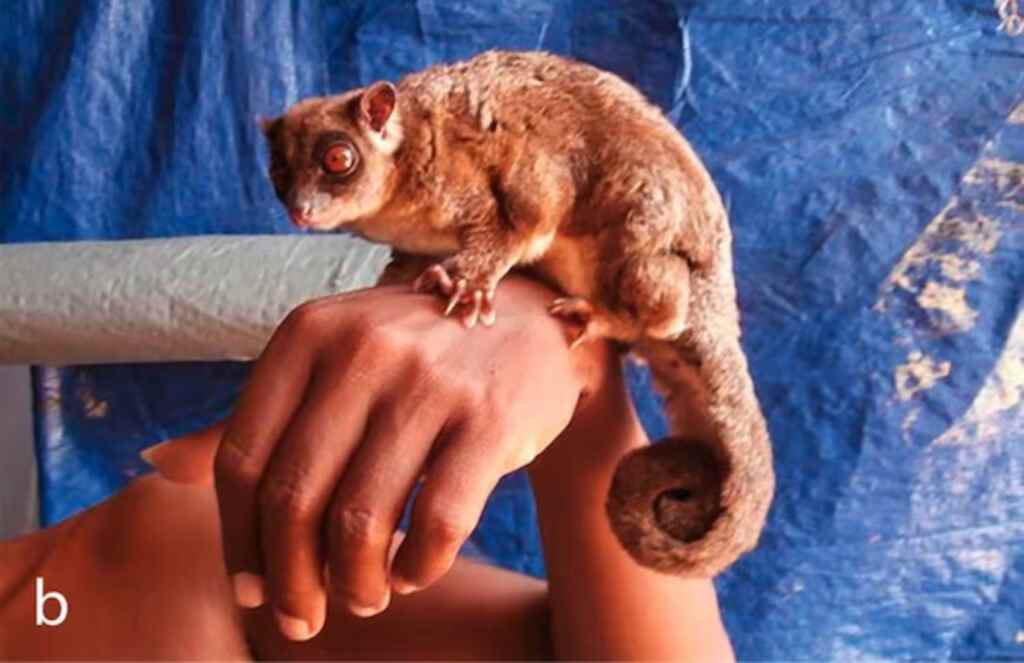
The second rediscovered animal is even more enigmatic. This is Tous ayamaruensis, a small gliding marsupial that vaguely resembles a flying squirrel. Like other similar mammals, it can glide between trees thanks to a skin membrane, but it has unique characteristics.
Among these, hairless ears and above all a highly prehensile tail stand out, used as a real fifth limb to grasp branches. For a long time the species was known only through fossil fragments, described by the Australian zoologist Ken Aplin.
The first evidence of its existence emerged in 2015, when an individual was captured near a river by a local researcher. Shortly afterwards another specimen was photographed in a forest in the region. By analyzing this data, Flannery’s team discovered that these animals even belong to a completely new genus, called Tous.
One of the richest and least studied forests on the planet
Both species live in the montane forests of the Doberai Peninsula in northwestern Indonesian New Guinea. It is one of the biologically richest areas in the world, but also among the least scientifically explored. The research was also possible thanks to the collaboration with the local indigenous communities, who in reality already knew these animals. In some traditions of the region, the Tous ayamaruensis glider is even considered a sacred animal linked to the spirits of the ancestors.
According to scientists, this discovery could be just the beginning. The area’s forests are still largely intact, but are threatened by deforestation, logging and palm oil cultivation. At the same time they could guard other “living relics”, ancient species that have survived for millennia in isolation.
You might also be interested in:
