
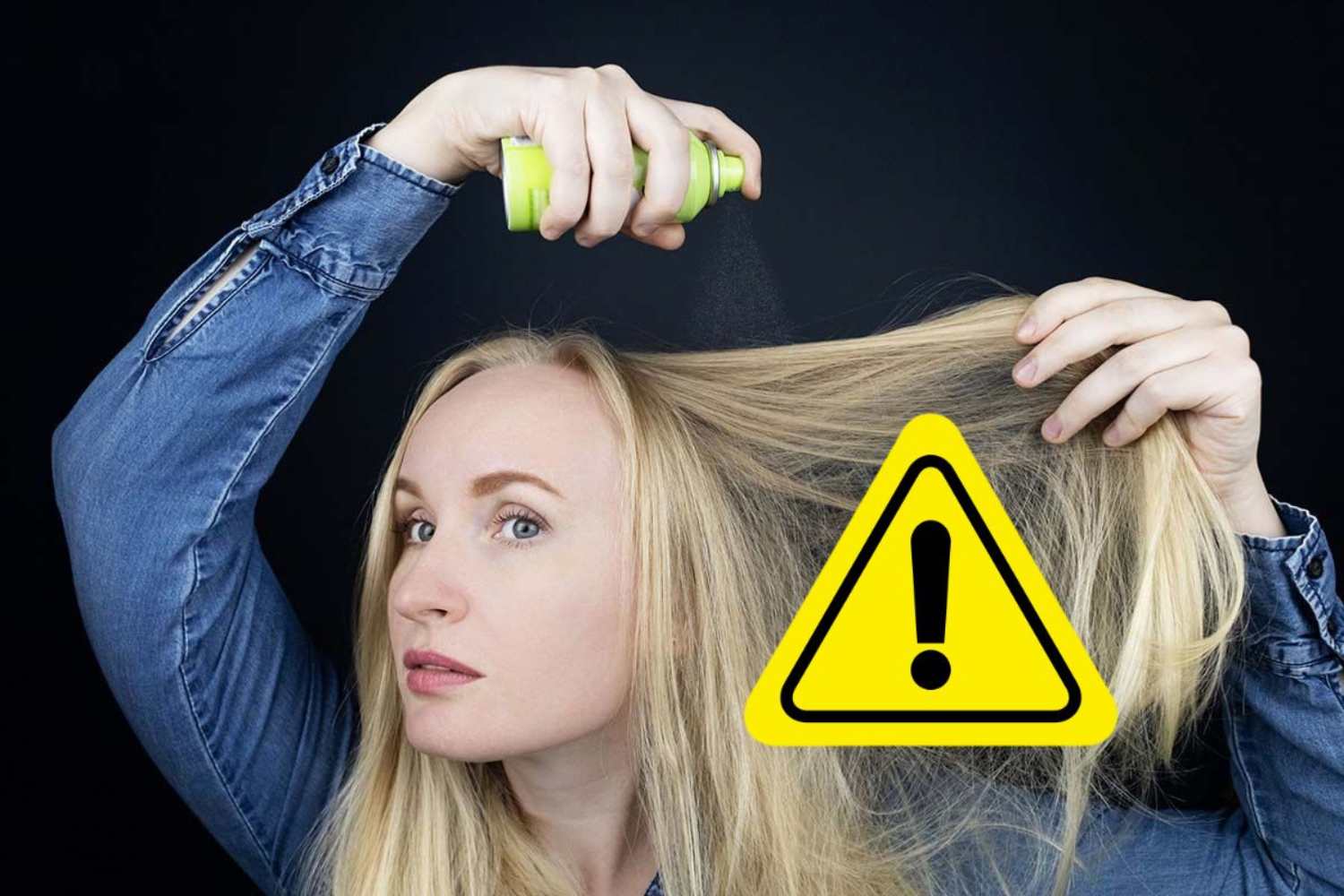
It seemed like a story destined to end with a huge compensation, but a federal judge called everything into question. At the center of the story are some of the most popular dry shampoo brands in the United States and a chemical substance that should never have been found in a cosmetic product: benzene.
The story began after some independent analyzes conducted by private laboratories, including the US laboratory Valisure, detected the presence of benzene in quantities exceeding the thresholds considered safe by the FDA (American Food and Drug Administration) in several dry shampoo sprays from Unilever brands: Dove, Nexxus, Suave, TIGI, TRESemmé and Living Proof. These results provided the scientific basis on which lawyers and consumers then based the complaints and class actions.
Benzene is a substance classified as a human carcinogen. Prolonged exposure is associated with the development of leukemia and other blood cancers, and this is why its presence – even in trace amounts – in a product to be applied to the hair and scalp has raised far from negligible concerns.
The class action and the Unilever recall
In September 2022, a class action lawsuit was filed against Unilever in the United States, in the District of Connecticut. The consumers involved claimed that they had been unknowingly exposed to a carcinogen, and that the company should have known – or at least should have verified – the presence of this contamination.
A month later, in October 2022, Unilever announced the voluntary withdrawal from the market of some batches of the offending shampoos. A move which, however, according to the appellants, was not sufficient: the recall concerned only part of the products, and did not adequately compensate consumers who had purchased them in previous years, unaware of the risk.
The cause then expanded. In December 2023, two supply chain suppliers also became involved in the proceedings: Aeropres Corp. and Voyant Beauty LLC, the companies that had supplied Unilever with propellants and components for aerosol sprays, materials which, according to some reconstructions, could be the source of the contamination. These companies have in turn called out other players in the supply chain, including Diversified CPC International, BP Energy Co. and Aux Sable Liquid Products.
The proposed agreement
To settle the matter, the consumers’ lawyers negotiated a settlement worth $3,625,000. The terms provided refunds for anyone who purchased one of the affected products between January 1, 2014 and December 31, 2022. Anyone who kept their receipt or proof of purchase could get a full refund for each product. Those who did not have documentation would receive 3 dollars per package, with a maximum of four reimbursements per family unit.
The judge blocks the agreement (but it’s not over)
In February 2026, however, District Judge Michael P. Shea rejected preliminary approval of the settlement. The objections raised by the court are substantial. The first: tracing the class of consumers back to 2014 is unjustified, because the evidence of benzene contamination emerges from the procedural documents only starting from 2018.
The second: the agreement included all dry shampoos of the mentioned brands, even those that were not found to be contaminated in the tests. An extension that is too broad, according to the judge, which cannot be based on the hypothesis of generalized contamination of the plants without concrete supporting evidence.
The refusal was pronounced “without prejudice”, which in legal language means that the door is not definitively closed: the plaintiffs’ lawyers will be able to reformulate the proposal, narrowing the definition of the class and better aligning it with the available evidence.
This story isn’t just about the American market. The brands involved – Dove, Suave and others – are distributed throughout the world, and the issue of the presence of benzene in spray cosmetics is a topic that has also affected Europe in recent years. Several similar products had also ended up in the sights of regulatory authorities on our continent, and the American affair could contribute to strengthening the pressure on companies to improve controls along the entire production chain, not just on the finished product.
What clearly emerges, beyond the legal issues, is how complex it is for consumers to obtain justice in these cases: proving that a product purchased years ago contained a contaminant, and that that contaminant came from a specific supplier in a global supply chain, is a significant legal challenge.
