
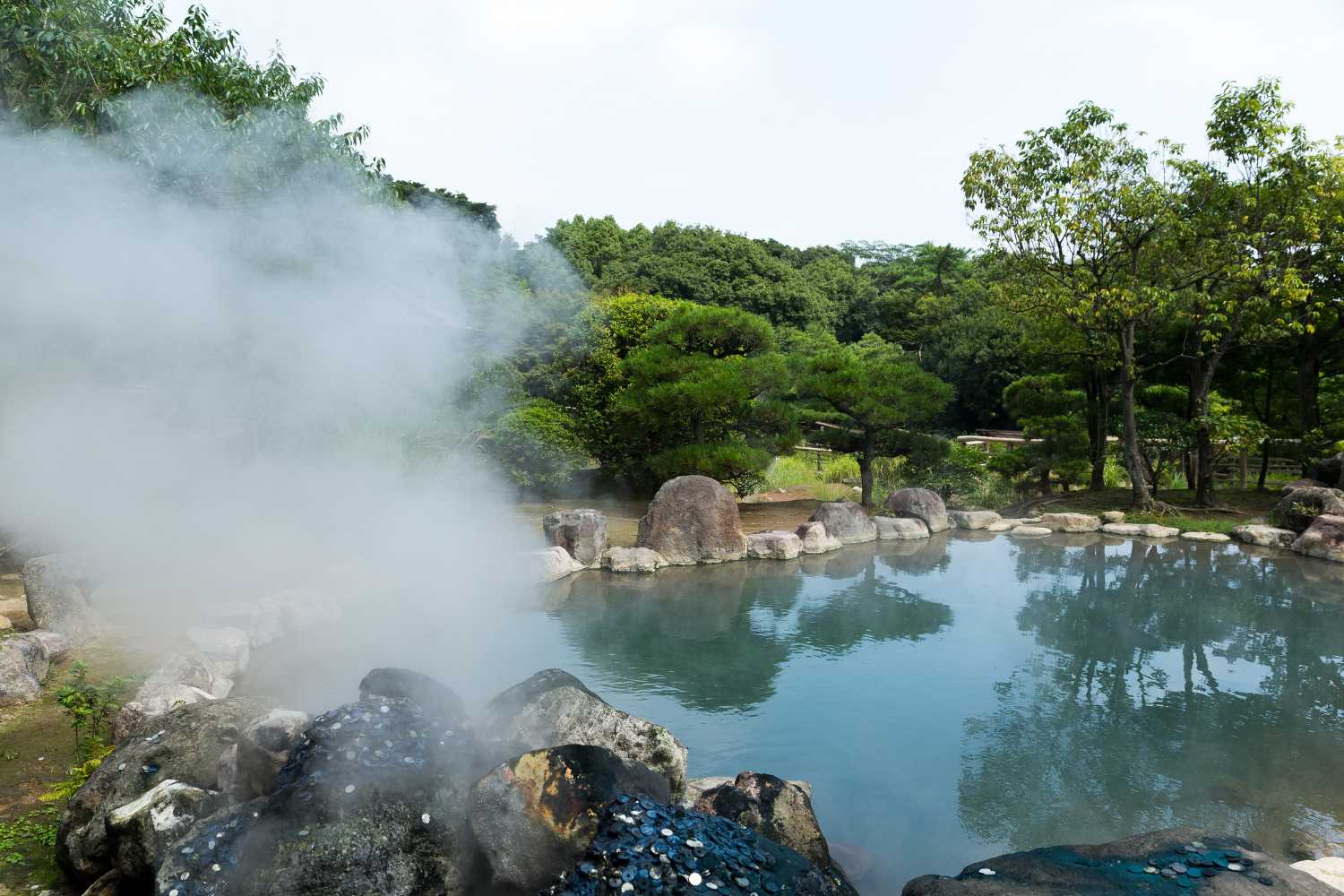
The first thing you see when you arrive in Beppu are the steam columns that get up from the city. They look like fires burning underground, but in reality you have just arrived in one of Japan’s most extraordinary thermal paradises. Welcome to the Jigoku, the seven hell who made this town of the island of Kyushu famous.
A name that frightens, an experience that enchants
The term Jigoku evokes the Buddhist beyond, a place of flames and demons where sinners discourage their faults. The ancient inhabitants of Beppu looked with terror these sources that ribbly and spit gas from the ground. Today, however, thousands of tourists seek them precisely for their wild and spectacular nature.
The city is located in Kyushu, the southernmost island among the main four of Japan. A territory that boasts a millennial history: here, in the 6th century, Buddhism landed for the first time, where the fusion between the new religion and the ancient Shinto cult of nature took place.
How to reach this corner of Japan
Getting to Beppu is simple. The trains expressed connect the city with Hakata, Oita, Miyazaki and Hitoyoshi. Once you go down to the station, four bus lines (2, 5, 24 and 41) lead in twenty minutes to the stops of Kannawa or Umi-Jigoku-but. From there we continue on foot between one hell and the other. Those who travel by car find parking on each site.
The hells are divided into two areas: five are in the Kannawa district, two in that of Shibaseki. The distances allow you to move walking, but get ready for an intense day.
When to go and how much to spend
Do springs open every day from 8 to 17. The best months for the visit? Autumn and winter, when the contrast between hot water and cold air gives unique sensations and tourists are scarce. In spring, during the flowering of cherries, some smaller onsens become unlivable for the crowd.
Prices remain affordable: 450 yen (about 3 euros) for each individual hell, 200 yen for the boys. The complete pass costs 2,200 yen for adults and 1,000 yen for children. An investment that is worth every penny.
Seven wonders, seven different experiences
Seven sites with unique features! Here they are:
Umi jigoku
Marine hell, deceives with the cobalt blue color. It looks like an alpine lake even if the water touches 98 degrees. The dissolved minerals create this unreal coloring, while around the well -kept gardens and water lilies contrast with the power of nature. The source was born 1,200 years ago from a volcanic eruption.
Kamado Jigoku
It takes its name from the ancient tradition of cooking rice with steam during the holidays of the Kamado Hachimangu sanctuary. A ceramic demon welcomes you while preparing food with geothermal heat. Here you will taste the Tamago onsen, eggs cooked in the steam of the source. The 90 degree water also allows pediluvi and charitable inhalations.
Tatsumaki Jigoku
Perhaps it offers the most dynamic show: a geyser that shoots water and steam at regular intervals, which give life to spirals reminiscent of small tornadoes. The water exceeds 105 degrees and the eruption occurs with chronometric precision, a phenomenon that leaves everyone speechless.
Chinoike Jigoku
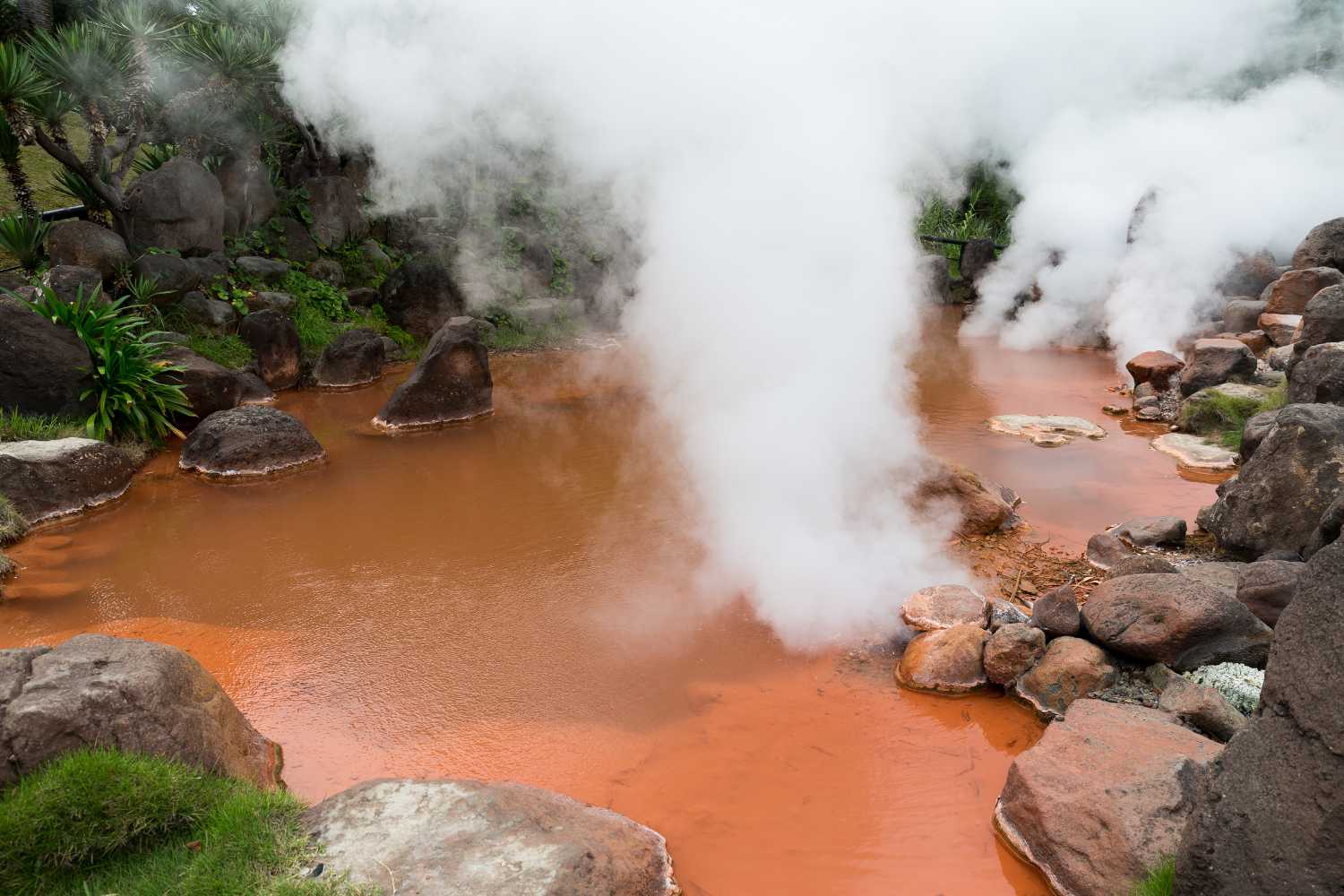
It affects the sight for the blood red of the boiling clay. It is the oldest natural Jigoku in Japan, already described in ancient texts such as Akayusen, “red thermal source”. The clay produces the Chinoike Nanko, an effective ointment against skin diseases. The temperature stops at 78 degrees, relatively fresh from the others.
Onishi Bozu Jigoku
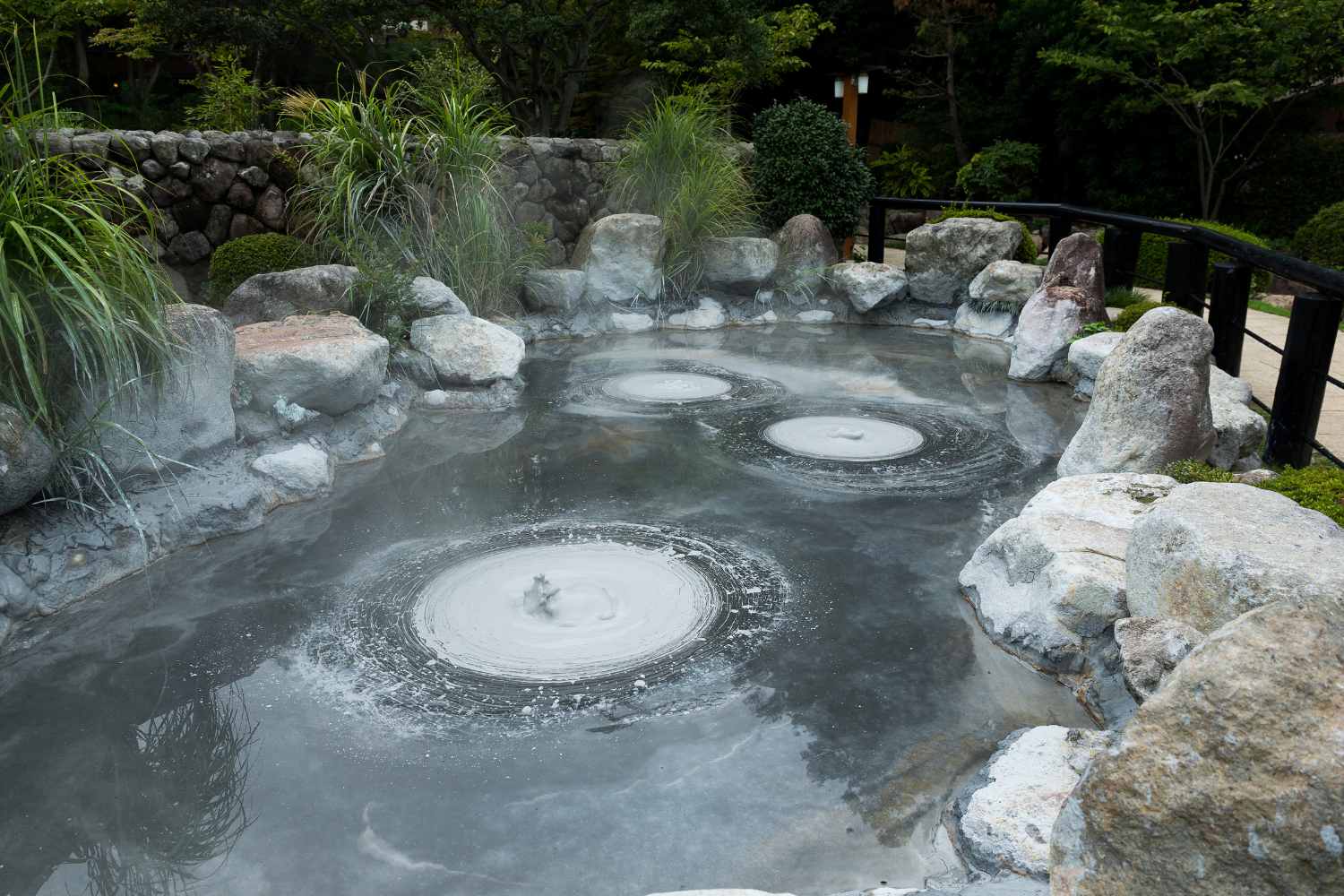
It has a hypnotic and singular phenomenon: the gray mud form bubbles that recall shaved heads of monks. Underground gases create these perfect spheres that emerge and burst constantly. At 99 degrees, the area remains wrapped in a fog of steam that adds mystery to the scene.
Onyama Jigoku
He changed identity in 1923, when he became the first crocodile breeding of Japan. Today eighty reptiles thrive thanks to the constant heat of the source. The Japanese also call him Wani Jigoku, “hell of crocodiles”, and visitors are fascinated by these predators who sunbathe next to the ribulent waters.
Sharaike jigoku
He closes the path elegance. Transparent water becomes white-bluade when it falls into the tank, an effect due to the change of temperature and pressure. The heat feeds tubs with large tropical fish, a surprising contrast in this land of volcanoes.
An experience that goes beyond tourism
Of course, you will find souvenir stalls and disturbing divinities statues, yet the seven hells tell a deep story of the relationship between the Japanese and the forces of nature. Once feared and avoided, today celebrated and sought after seeking because of the healing power they bring to the dowry and for their wild beauty.
Don’t you want to lose our news?
