
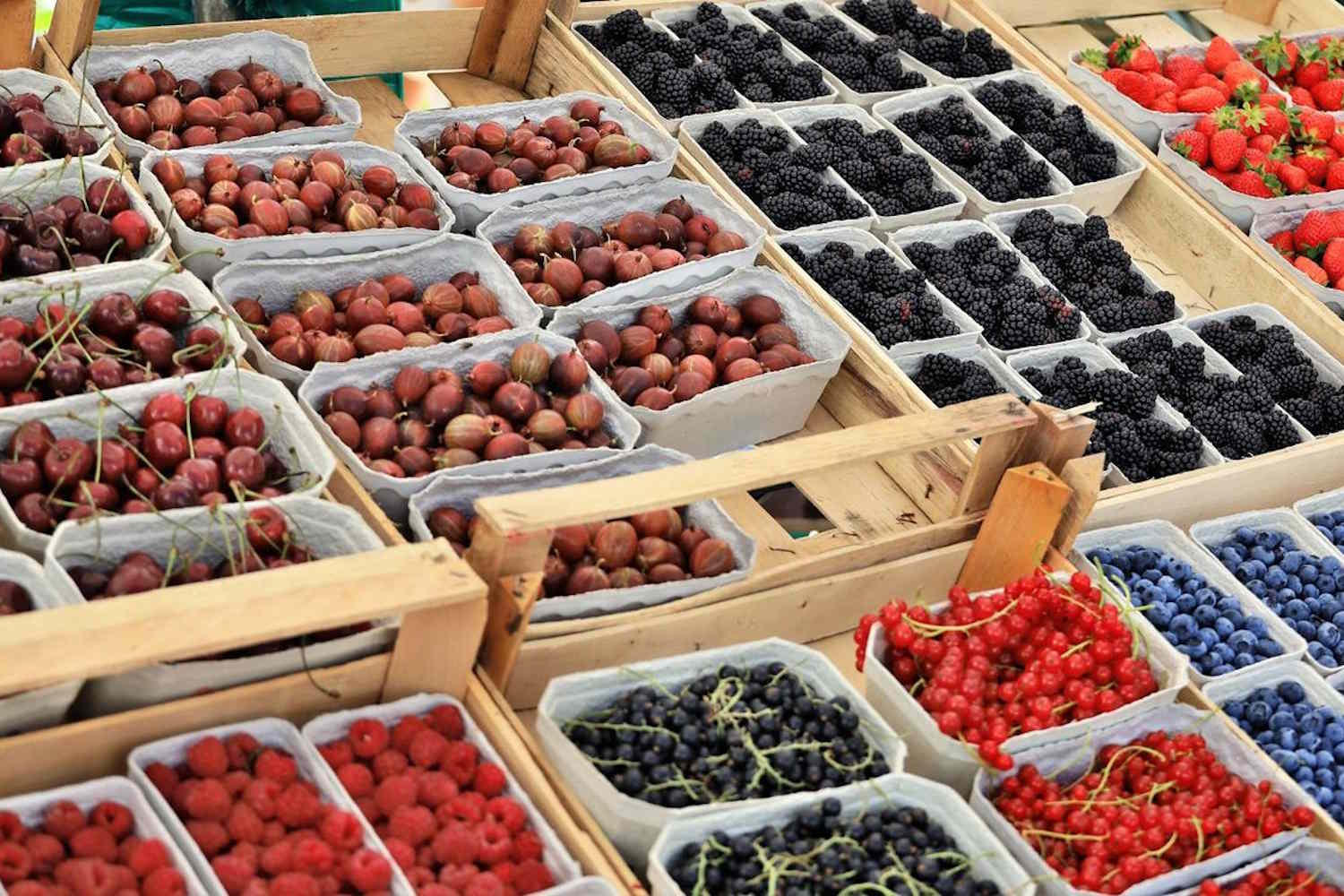
Cherries disappeared from the Apulian fields, almonds reduced by 60%, pears and apricots in crisis, milk less and less and more and more expensive. This is the photograph – bitter and concrete – of agricultural Italy in 2025, overwhelmed by the effects of the climate crisis.
WWF Italy is raising the alarm on the occasion of World Food Day, denouncing a production system that is now on its last legs between record heat, drought, unseasonal frosts and an agricultural policy that, instead of reacting, is taking steps backwards.
Record temperatures and chronic drought are rewriting the geography of food: where cherries and peaches once ripened, today mangoes and avocados are sprouting. Italy is changing its face, and not due to a conscious choice, but to adapt to a climate that no longer recognizes the seasons. Meanwhile, prices fly — the so-called climateflation — and fruit and vegetables become a luxury for many families.
The crisis does not even spare milk, with drops of up to 15% in Lombardy and 30% in Molise, while honey, a symbol of biodiversity, records almost zero production. Yet, in the South, something is moving: olive growing shows signs of recovery, and Italian wine is coping with the climate challenge thanks to more sustainable practices and resistant varieties.
Cherries, almonds and climate inflation
Today one of the most serious threats to many crops is the paradoxical combination of mild winters followed by sudden spring frosts, capable of compromising entire production seasons. The unusually high temperatures of winter anticipate the vegetative awakening of plants: buds, flowers and shoots develop earlier than expected and thus become extremely vulnerable to cold returns.
These events, increasingly frequent and intense especially in the north and hilly areas, have profoundly affected 2025. Crops have suffered extensive damage due to now recurring factors of the climate crisis: early vegetative phases, strong meteorological variability and sudden temperature fluctuations.
The tropical fruit boom
At the same time, Italy is experiencing an unexpected transformation: the tropical fruit boom. Precisely with the increase in average temperatures and the experimentation of new agricultural techniques, increasingly larger surfaces are dedicated to mango, avocado, papaya, lime and annone, cultivated above all in Sicily, Puglia and Calabria. Production is now so significant that it is not limited to internal needs: some supply chains have started to export Italian tropical fruit to Northern European markets, overturning the traditional role of importing country and showing how the climate crisis is redefining the national agricultural geography.
The solutions: from agroecology to the circular economy
At the same time, research centers and agricultural companies are focusing on the selection of new ones cultivars capable of better resisting both extreme heat and late frosts. Experiments are underway on vine varieties more tolerant to strong temperature variations, on stone fruit (peaches, apricots) with delayed flowering to reduce the risk of frost damage, and on cereals capable of dealing with periods of drought alternating with sudden rainfall. These new varieties, often considered a lifesaver against the challenges posed by the climate crisis, are however not an immediate solution: they require time to adapt to different local microclimates and, in some cases, prove to be of little use in the long term precisely because these same microclimates are constantly changing.
To truly enhance the potential of our agricultural sector, it is necessary to systematize more actions: from the circular economy to agroecology, from technological innovation to regenerative agriculture, through the prevention and adoption of less water-demanding crops, the restoration of agroecosystems and soil fertility, up to the recovery and reuse of purified waste water. It is also necessary to strengthen the diffusion of organic agriculture and fully implement water saving projects. Only in this way will we be able to build a more sustainable agriculture, capable of guaranteeing quality and competitiveness, but above all ready to face the challenge of the climate crisis with greater resilience, declares Eva Alessi, Head of Sustainability at WWF Italy.
In short, much more is needed. The WWF calls for immediate action to save soil, water and biodiversity: agroecology, circular economy, wastewater reuse, and a Common Agricultural Policy that rewards those who truly protect the land. Because the climate crisis is not a problem of tomorrow. It is already on our plates, in the costs of the shopping cart and in the health of those who can no longer afford a healthy diet.
The WWF invites everyone to sign the “Zero Excuses on Climate” petition to ask institutions to reverse course. Before nature presents us with the bill, again.
