
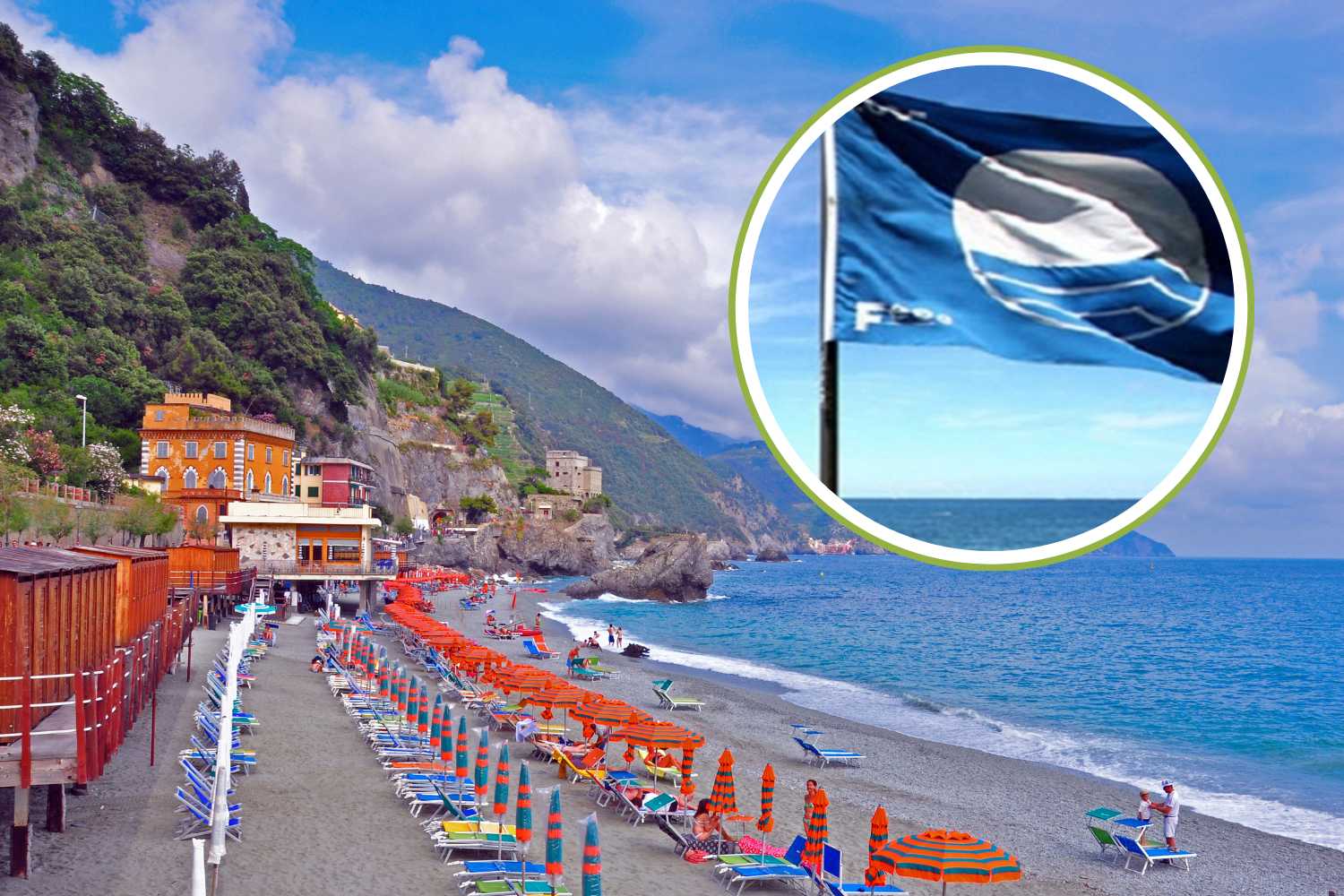
Italy shines more and more blue: the places that can boast of the prestigious blue flag have increased, the international recognition that rewards the excellence of bathing waters and the sustainable management of the coastal territory.
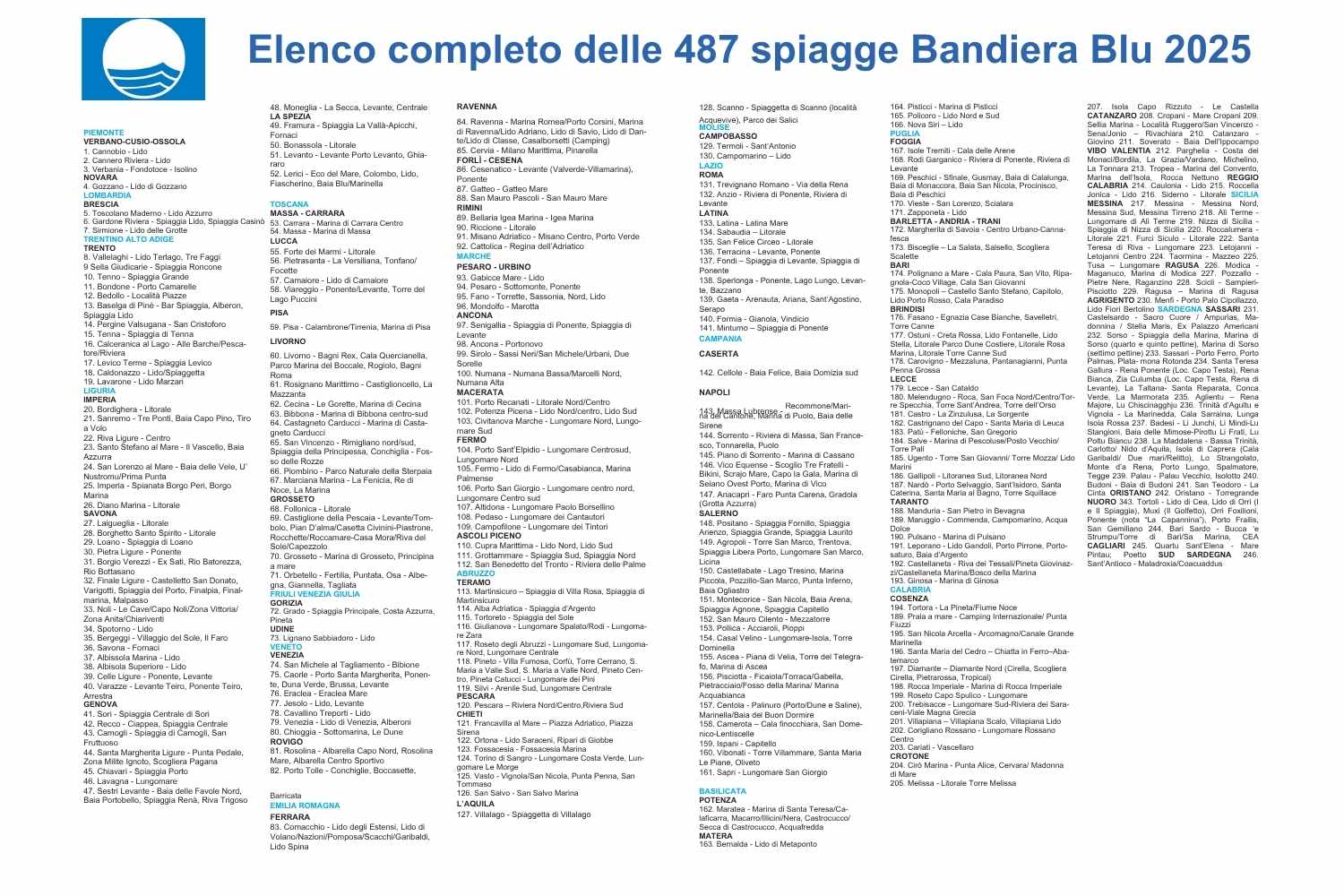
This year the banner that attests, among other things, excellent sea in the last four years, efficiency of purification and waste management and overall re -tightened municipalities in the territory (there were 236 in 2024) and 84 tourist landings (there were 81), for a total of 487 beaches (485 last year), which correspond to about 11.5% of the bent bent worlds.
The award ceremony took place this morning at the CNR headquarters in Rome, with the participation of the mayors of the rewarding locations and the representatives of the Foundation for Environmental Education (FEE), the non -governmental organization that manages the Blue Flag program at an international level.
Fifteen new revenues
The Italian panorama of blue flags is enriched this year by 15 new locations:
On the other hand, five municipalities have not reconfirmed the recognition: Capaccio Paestum (Campania), Ceriale (Liguria), San Maurizio d’Opaglio (Piedmont), Ispica (Sicily) and Lipari (Sicily).
The award -winning municipalities of the 2025 blue flags
Blue Blue Flags List 2025
The situation in the regions
Despite losing a flag, Liguria remains at the top with 33 rewarded locations.
Puglia rises to 27 awards thanks to 3 new entrances, while Calabria reaches 23 blue flags with three new locations.
As for the lakes, this year the blue flags descend to 22, with a municipality that has not reconfirmed the recognition.
The criteria for the assignment
The blue flag is assigned on the basis of 32 program criteria, periodically updated to encourage local administrations to commit themselves to resolving problems related to the management of the territory, with particular attention to the protection of the environment.
Among the indicators taken into consideration:
The increase in blue flags represents a positive sign for sustainable tourism in Italy and testifies the growing commitment of local administrations in the protection of the marine and coastal environment.
