
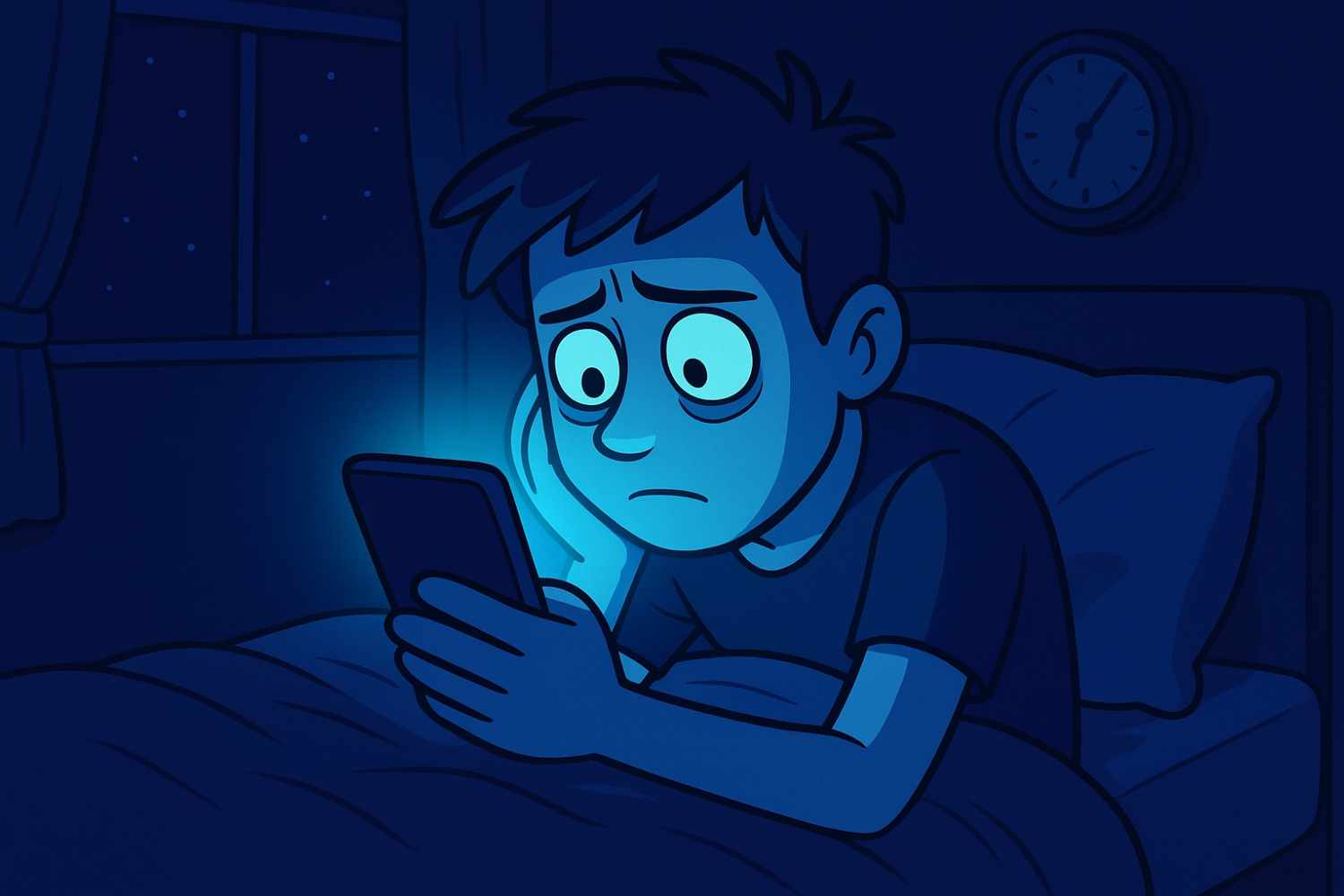
11pm, bed, ready to sleep. Before turning off the light, however, take a last look at the smartphone, there is certainly no shortage of activities, including messages, social media, news and so on. What seems like a harmless gesture actually represents one of the most common mistakes in our evening routine, namely exposure to screens in the hours before sleep. A behavior that is now widespread, both among adults and children, capable of seriously compromising the quality of night’s sleep through a mechanism that is as fascinating as it is insidious.
How our biological clock works
Our body works according to a natural rhythm of approximately 24 hours, called circadian rhythm, a sort of internal clock that regulates the sleep-wake cycle, body temperature, hormone production and many other physiological functions. The conductor of this system is located in a small area of the brain called the suprachiasmatic nucleus, which receives light signals from the retina and coordinates the body’s responses.
When it gets dark, this control center sends a message to the pineal gland, which responds by producing melatonin, a hormone that takes the form of a messenger, the main signal that tells the body that it’s time to sleep. Melatonin begins to be secreted in the evening hours and reaches its peak during the night, preparing the body for rest and making it easier to fall asleep.
Blue light: what it is and where it is found
As documented in a study published in NCBI, blue light represents a portion of the visible light spectrum with short wavelength and high energy, between 446 and 477 nanometers. The main source is the sun, but this radiation is also emitted by LEDs, smartphones, tablets, computers and televisions. During the day, exposure to blue light has positive effects: it improves attention, reactivity and cognitive performance. The problem arises when we expose ourselves to this form of light in the evening and night hours.
The cells of the retina contain special photoreceptors called light-sensitive retinal ganglion cells, which are particularly sensitive to blue wavelengths. These receptors communicate directly with the suprachiasmatic nucleus, influencing melatonin production much more powerfully than other forms of light.
The evening mistake that compromises sleep
As highlighted by NASA research published in PubMed, scientific studies have shown that blue light suppresses melatonin secretion more effectively than other wavelengths. As we use our smartphone or tablet before bed, we are actually tricking our brain into thinking it’s still daytime, so the suprachiasmatic nucleus receives the light signal and blocks the production of melatonin, delaying the onset of sleep.
Exposure to bright light can reduce melatonin levels to those typical of daytime hours even after just one hour, because the effect is not limited to very bright lights: even normal room lighting or the screen of an electronic device is enough to interfere with the circadian rhythm. The result? We struggle to fall asleep, sleep becomes more fragmented and the quality of rest decreases.
The consequences manifest themselves the following day: drowsiness, difficulty concentrating, irritability, reduced cognitive performance. Long-term, chronic melatonin suppression due to evening exposure to blue light can affect metabolism, immune system and mental health.
Children are more vulnerable
Scientific research has highlighted how young people are particularly sensitive to the effects of blue light, because the suppression of melatonin in children exposed to the blue lighting of screens is greater than that observed in adults. Children who use electronic devices late into the evening show a greater tendency to delay the circadian phase, resulting in difficulty falling asleep at the expected time and a reduction in total hours of sleep.
Effective solutions
The good news is that a few tricks are enough to reduce the negative impact of blue light on sleep. The most effective strategy, which many experts agree on, is to turn off smartphones, tablets and computers at least an hour before going to bed. , a sufficient amount of time that allows the body to naturally begin the production of melatonin.
Smartphone night modes, which reduce blue tones in favor of warmer ones, can help but don’t completely solve the problem. Melatonin concentration recovers quickly, within about 15 minutes of ceasing exposure to light, but prevention is better than cure.
Other useful strategies may include reducing the light intensity of screens, or preferring warm, soft lights in the bedroom. Creating a relaxing evening routine, away from screens, helps the brain prepare naturally for rest: read a paper book, take a hot bath, practice breathing techniques.
Technology offers undeniable advantages in modern life, but requires conscious use so as not to compromise essential elements such as sleep. Turning off your phone before sleeping is a small gesture with great benefits for your night’s rest and general well-being, don’t forget it.
