
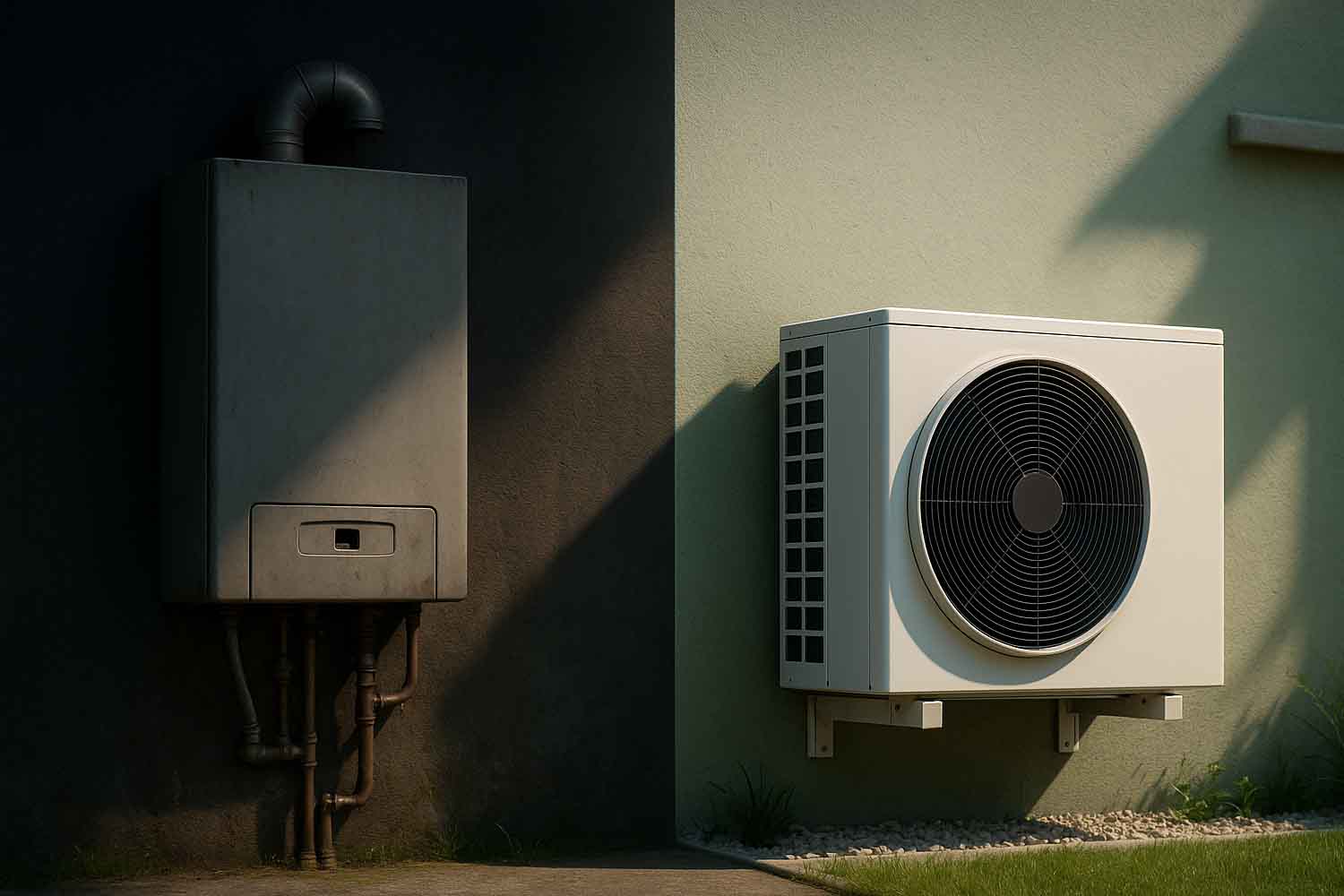
As of December 2025, the home equity incentive landscape has changed markedly compared to previous years, but it has by no means disappeared. Those who intend to improve the energy efficiency of their home can still count on advanced boiler bonuses, deductions for renovations and Ecobonuses, as long as the interventions comply with the new environmental and technological criteria imposed by European and national legislation.
The objective is clear: reduce emissions, limit the use of fossil fuels and encourage truly sustainable solutions. In this context, knowing what is still eligible makes the difference between a convenient investment and an expense entirely borne by the taxpayer.
Boiler bonuses in 2025: what remains eligible for incentives after saying goodbye to gas boilers
From 1 January 2025, boilers powered exclusively by gas – methane, LPG or diesel – no longer fall within any tax breaks linked to energy efficiency. The so-called “boiler bonus”, intended as the simple replacement of a gas generator with a more modern one, no longer exists.
However, systems that integrate renewable sources or guarantee a real leap in quality in terms of energy performance remain fully incentivized. In particular, they continue to benefit from concessions:
High efficiency heat pumps, both air-to-air and air-to-water, are today considered the reference technology for sustainable air conditioning. Hybrid systems, which combine a heat pump with a condensing boiler, as long as the operation favors the renewable source. Systems integrated with solar thermal or photovoltaic, if included in an overall building efficiency project.
These solutions can access the Ecobonus or the Thermal Account, tools which, although different from each other, continue to guarantee concrete economic support to those who invest in clean technologies.
Renovation bonus and Ecobonus 2025
Alongside incentives for systems, Renovation Bonuses and Ecobonuses remain central also in 2025. The percentages are lower than in the past, but the mechanism is stable and still convenient for many interventions.
The Renovation Bonus allows a 50% deduction for work carried out on the main home and 36% for other real estate units, with a maximum spending ceiling of 96,000 euros per property. The sums are recovered in ten annual installments of the same amount. Many energy efficiency interventions also fall into this area, if carried out as part of larger building works.
The Ecobonus 2025, however, is specifically dedicated to energy requalification. The rates are aligned with those of the Home Bonus – 50% for the first home and 36% for the second – and concern interventions such as the replacement of air conditioning systems with heat pumps, the installation of hybrid systems, the improvement of thermal insulation and the adoption of high efficiency technologies.
It is important to underline that the deductions cannot be combined with the Thermal Account for the same intervention, making a prior evaluation necessary to choose the most advantageous instrument.
Thermal account and direct incentives
In 2025 the Thermal Account, in its updated version, takes on an increasingly strategic role. Unlike tax deductions, this incentive provides for a direct reimbursement, provided by the GSE in a relatively short time, which can reach up to 65% of the expenditure incurred.
The Thermal Account is particularly convenient for those who install heat pumps, hybrid systems or biomass systems, especially when replacing old, inefficient generators. The speed of reimbursement often makes it preferable to ten-year deductions, especially for those who do not have a high tax capacity. Even in this case, however, the rule is clear: no cumulation with Ecobonus or Renovation Bonus on the same intervention.
Which incentives remain active in December 2025
In summary, in December 2025 the incentive system no longer rewards transition solutions, but pushes decisively towards sustainable technologies. Traditional gas boilers are excluded, while central heat pumps, hybrid systems and structural interventions on the building remain.
Those who plan an intervention today must think in terms of the overall energy project, carefully evaluating whether a long-term tax deduction or an immediate reimbursement such as the Thermal Account is worthwhile. The right choice depends on the property, the type of system and the owner’s tax situation, but the opportunities – if well exploited – still exist.
You might also be interested in:
