
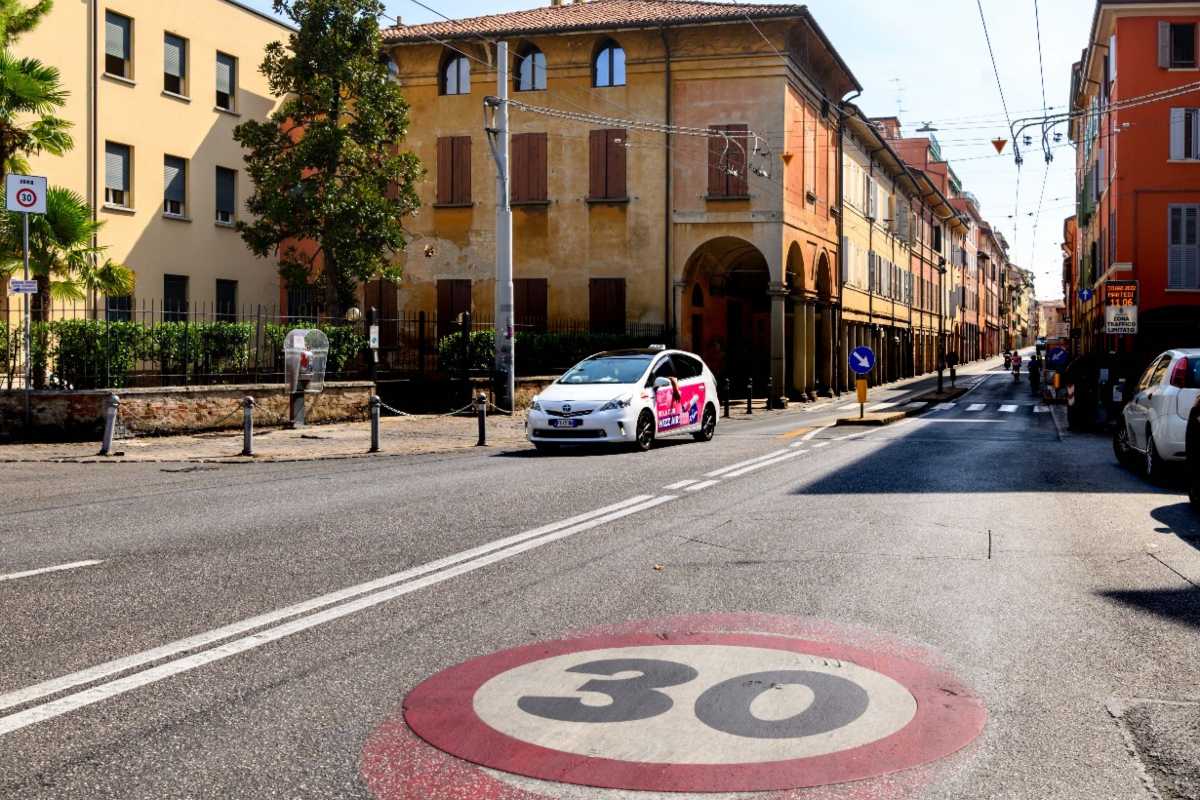
From 20 April Bologna will rekindle the “Città 30” project, introducing new speed limits on a large part of the urban network. The new detailed plan on speed management marks a structured return after the stop imposed by the TAR, with a more detailed approach supported by a solid technical base.
The measure involves 258 kilometers of roads, divided into 47 new Zone 30 distributed throughout all neighborhoods. This is not a generic measure: each section has been analyzed individually, with the aim of reducing accidents, protecting the most vulnerable users and improving environmental quality.
Street-by-street technical analysis
The heart of the plan is unprecedented technical work. A multidisciplinary team examined approximately 365 kilometers of secondary and local roads, excluding main arteries. From this analysis emerged a targeted selection of sections where the 30 km/h limit is considered necessary.
A detailed technical sheet has been developed for each road, documenting the specific conditions that justify the speed reduction. Among these: absence of sidewalks, presence of schools, intense pedestrian traffic, frequent intersections or dangerous curves. An approach that aims to overcome the criticisms of the past by introducing transparent and verifiable criteria.
Accidents, data and objectives for 2030
The plan is also based on hard data. Accident rates between 2018 and 2024 were analysed, considering the number of accidents, injuries and victims, as well as the social cost. The objective is clear: to drastically reduce the risk on urban roads.
Each sheet also includes an estimate of avoidable accidents in the next five years, linked to the objectives of the 2030 National Road Safety Plan. Speed reduction is indicated as one of the most effective tools for saving lives, especially in complex urban contexts.
Between mobility and quality of life
The return of Città 30 is not just about traffic, but a broader vision of the city. The plan is part of sustainable mobility strategies, with interventions on signage, redevelopment of public spaces and awareness campaigns. The central issue remains the balance between the right to mobility and collective security.
Reducing speed means changing habits, but also making streets more liveable for pedestrians, cyclists and residents. With the entry into force of the ordinances and the adaptation of the signs, Bologna is preparing for a new phase. A city that chooses to slow down, with the declared objective of achieving zero road deaths.
You might also be interested in:
