
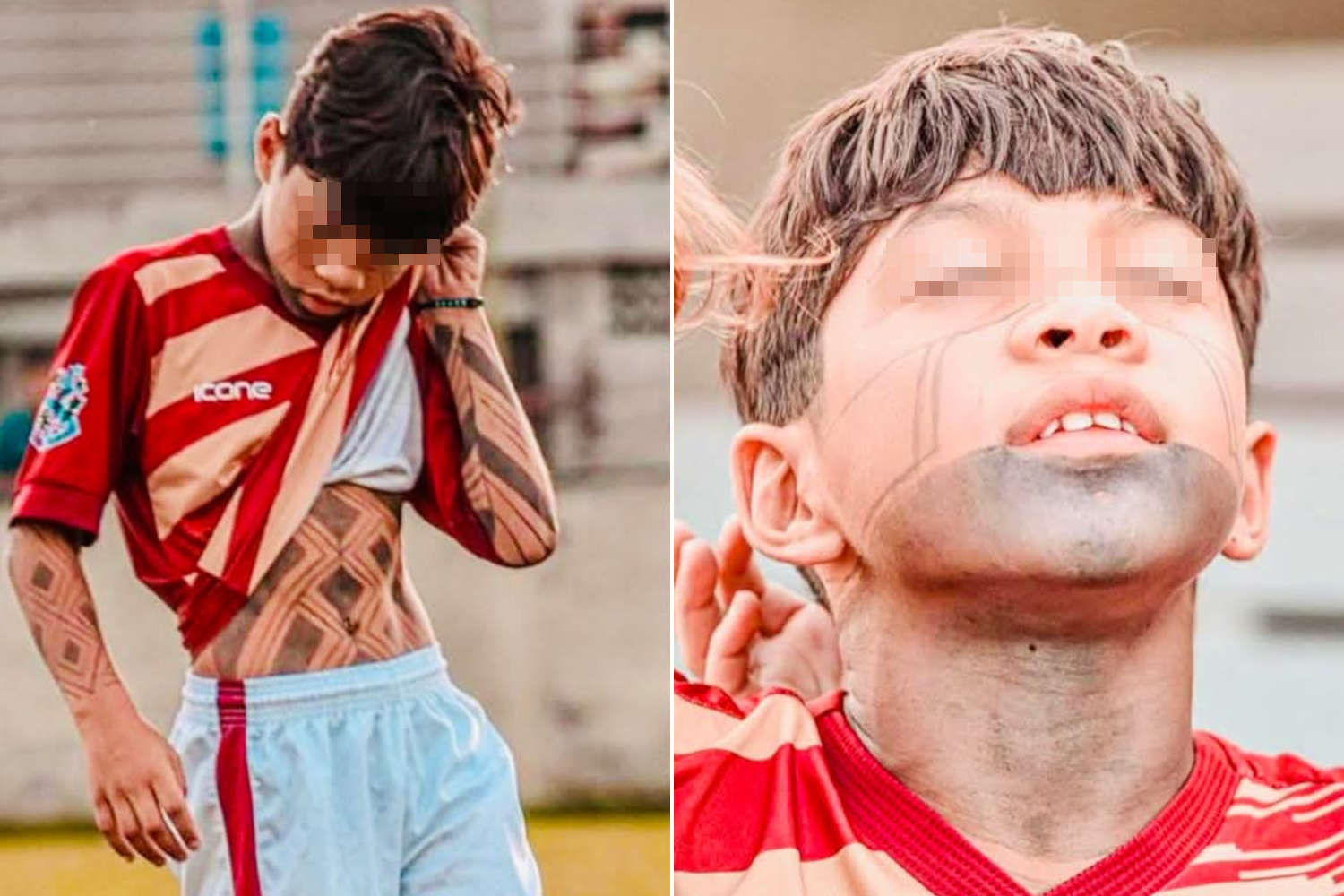
In a world where globalization often tends to standardize faces, habits and passions, the story of Bryana Brazilian child of only 10 yearsshines as an example of pride and cultural resistance. Originally of the community TupinikimBryan does not go unnoticed on the football field: His body is decorated with traditional paintings which tell much more than a simple aesthetic choice.
THE Tupinikim They are one of the over 300 indigenous communities of Brazil. Although they are frequently mentioned in history books, their culture is still little known from the general public. Today, with a population of just over 3,000 people, this struggle for preserve your identity in an often hostile context: from the loss of the mother tongue to the continuous battle for the recognition of ancestral lands.
In the heart of the state of Espírito Santo, Bryan plays in the youth team “Craques do future”, but brings something unique to the field: the living memory of his people. The body paintings he wears represent protection rituals, links with nature and spiritual symbols handed down for generations. This is not a simple decoration, but a real Declaration of identity.
Tradition and modernity can coexist
Bryan’s gesture moved thousands of people, showing that it is possible to coexist tradition and modernity Even in an apparently distant context like the sports one. While many peers emulate look of famous footballers, he prefers to wear the signs of their own proudly cultural belonging.
This young athlete represents a powerful symbol of diversity. In a country like Brazil, where over a million indigenous people belong to 305 Ethnic groups and with 274 different languagesstories like Bryan’s help to bring the wealth of original cultures back to the center of public speech.
His dream is not just become a champion of football, but honor its roots Every time he takes the field. And in doing so, it reminds the whole world that sport can also be a tool for celebrate cultural plurality and strengthen respect for indigenous identities.
Bryan, Niño Tupinikim de 10 Años, Juega al Fútbol with Pinturas que imitan tatuajes indígenas. Honra on Culture En Cada Partido y Se Volvió Viral Por on Bordus Ancestral.
¿Qué opinas de éste gesture?#Bordulloindígena #Upinikim #Fútbolinfantil #Culturaviva #Brasil pic.twitter.com/9tok7rszc9
– Libre preasa (@libre_prensa_) May 14, 2025
