
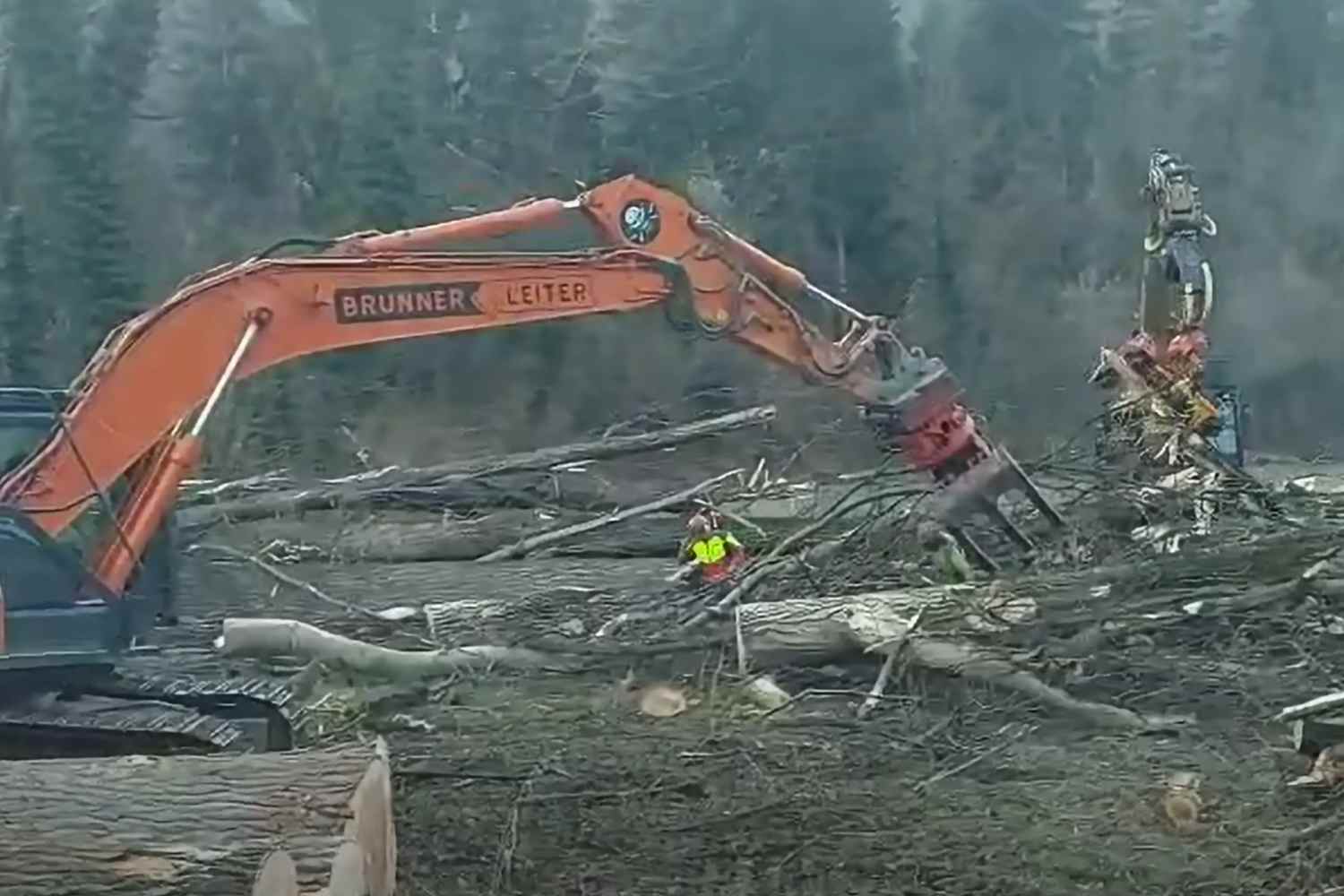
Last Friday, when the city was still sleeping, the bulldozers were already at work. In just a few hours, the riparian forest of Bressanone was cut down, one of the last remaining natural strips along the Isarco river. Trees up to 40 meters tall, centuries-old trunks and an ecosystem rich in life have fallen under the blades of chainsaws.
As reported by the WWF, it was the last large floodplain forest in the Isarco Valley, a natural environment that survived almost miraculously in the middle of the industrial area. In that area of about three hectares lived dozens of animal and plant species, many of which were rare or protected. An industrial settlement with warehouses and car parks will now rise in their place.
A treasure chest of biodiversity
The value of that forest was not only scenic. Above all, it was ecological. As highlighted by the WWF, up to thirteen pairs of gray herons nested in the treetops every year, while the entire area was home to 64 species of birds, of which 29 were nesting and 7 were included in the Red List of endangered species.
Not only that. The forest also offered refuge to seven species of bats and several reptiles protected by European legislation. An invisible world of insects, fungi and lichens, fundamental for the balance of the ecosystem, thrived in the dead trunks and fallen branches. Among the rarest inhabitants there was also the lesser spotted woodpecker, a species difficult to observe and closely linked to mature forest environments.
The industrial project since 2019
As reported by the WFF, the story has its roots in 2019, when the area – consisting of two hectares of forest and 7,000 square meters of meadow – was sold to the company Progress Holding AG. The land, initially classified as a water protection zone, had to be reclassified to become buildable.
The price of the operation: approximately 9 million euros. The project involves the construction of industrial structures dedicated to the production of 3D concrete printers. In the meantime, citizens and associations have tried to stop the plan with petitions, appeals and protests, collecting over 4,000 signatures.
WWF criticism and the question of compensation
According to the WWF Trentino-Alto Adige, the decision-making process ignored numerous naturalistic studies that highlighted the value of the area. And even the provincial commission for territory and landscape had recognized that the project could not be evaluated positively from an environmental point of view.
Despite this, the intervention was approved. As environmental compensation, the renaturalization of approximately 17,000 square meters of agricultural land near the Millander Au biotope, currently occupied by orchards, is planned. For environmentalists, however, it doesn’t add up. WWF highlights:
Square meters are compensated, not ecosystems. The 17,000 m² of new future nature are not worth the 9000 m² of centenary forest and 7000 m² of meadow which no longer exist as of this morning. You don’t compensate a hundred year old tree with a plot to be renaturalized. The colonies of herons, the bats in the cavities, the lesser spotted woodpecker are not compensated.
Renaturalized land will not be able to restore centenary trees, heron colonies or natural cavities for bats in the short term. A mature forest is the result of decades of natural evolution, made up of complex relationships between species, soil and water. With the felling of the riparian forest, environmentalists claim, a part of the natural history of Bressanone has been erased. And what has been lost today is unlikely to return to existence in a generation’s time.
You might also be interested in:
