
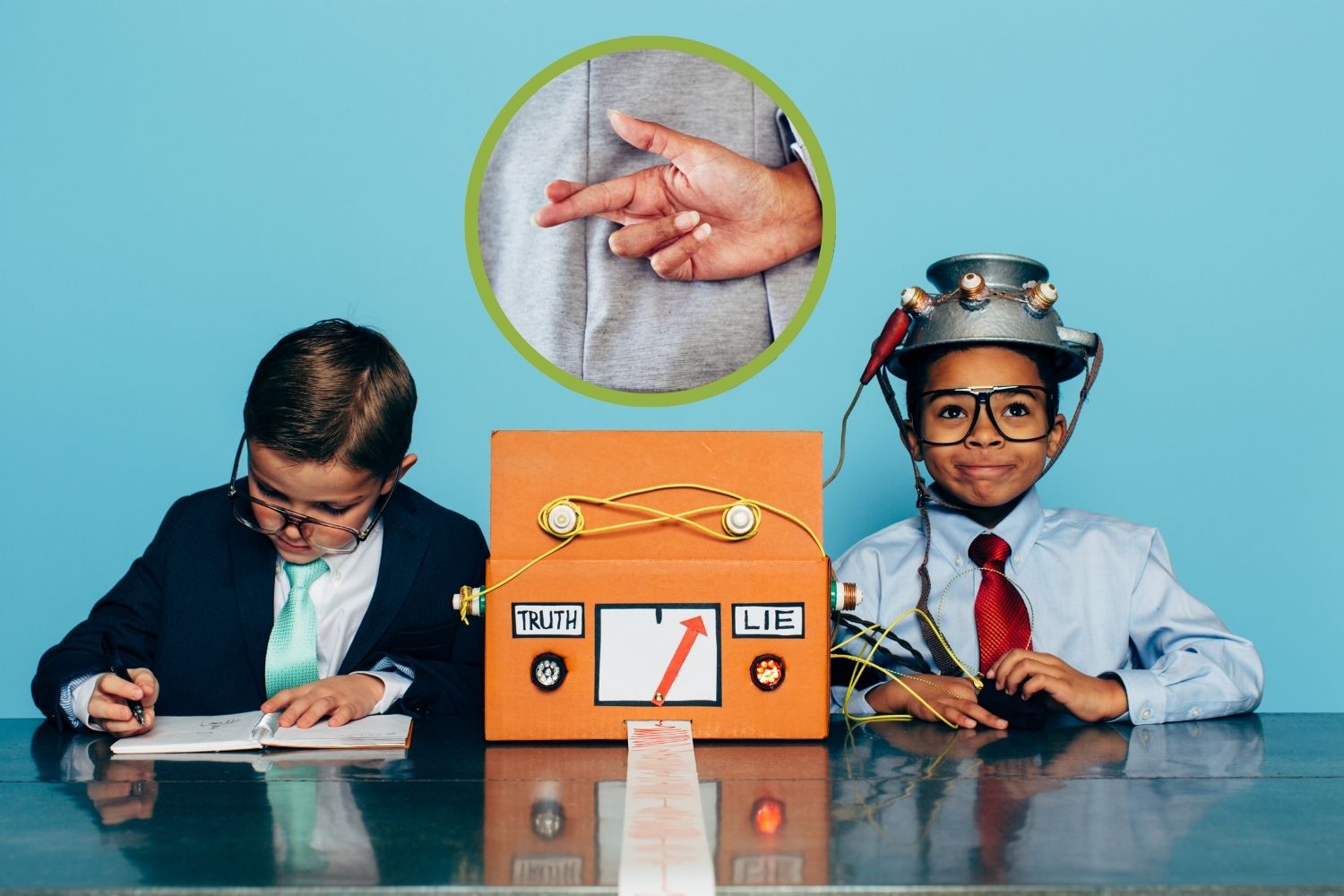
We are convinced that we can do it. That is enough a look, a phrase hesitant or a nervous gesture to detect lies. Maybe we think that a policeman, an investigator or even just a “careful” person can notice it immediately. But scientific studies say the opposite: nobody is really good at understanding if someone is lying. Not even those who received specific training.
This is confirmed by an investigation published in 2021, which compared the thought of ordinary people with that of psychologists experts in interrogations. The results are clear: many of us overestimate the ability to recognize a lie, especially when it comes to police officers or investigators.
In everyday life we tend to trust. It is a natural mechanism, known as Truth Bias: we think people tell the truth, unless we have reasons to doubt. Investigators, however, often develop the opposite effect, the light bias: after years of interrogations, they end up suspecting anyone, even when there is no reason.
The problem is that both bias take off the road. And if an investigator makes the mistake during an interrogation, the consequences can be serious. There are false confessions that ended up before a judge, considered valid even when concrete evidence, like DNA, said the opposite.
But then: can we really learn to understand if someone mind?
Almost half of the people interviewed in the 2021 study believe that a trained policeman knows how to recognize the lies precisely. But only a third of the experts agrees. The most alarming data? Even with training, the ability to distinguish a lie from truth stops at 54%. Just over the case. Practically like pulling a coin.
Yet many courses continue to teach that there are clear signals: those who mind avoids, move too much, use less words or seek apologies. But the truth is that these behaviors mainly indicate anxiety, not lie. And anxiety, during an interrogation, is completely normal.
Science changes approach
In recent years, scholars have started to shift attention from signs visible to mental processes. Thus was born a new method, called Cognitive Credibility Assessment (CCA). Instead of looking at how a person behaves, we analyze how difficult it is for her to tell the lie.
Here are the three most used techniques:
Ask unexpected questions
Whoever usually prepared a story. But just a question outside the script – on a secondary detail, an irrelevant detail – to put it in difficulty. The prepared lies fall easily in front of unexpected questions.
Increase mental load
Lie is tiring. We need to remember what he invented, avoid contradicting himself and remaining credible. Asking to tell the facts on the contrary or maintain fixed visual contact can make the lie more difficult to support.
Ask for more details
Those who say the truth speaks of what he has lived. Who mind invents. And the more details ask, the more the possibility of finding contradictions, empty or errors increase. Insisting on information, therefore, is a good way to unmask deception.
These methods work better than behavioral signals, but be careful: they are not infallible. And above all, they are still far from being reliable tools on which to base judicial decisions.
The study that dismantles everything
To strengthen the doubt, a study published on Perspectives on psychological science by the psychologist Timothy J. Luke. His work is an in -depth analysis – with simulations and reviews of dozens of research – which questioned most of the scientific literature on the detection of lies.
What did Luke have discovered?
Luke uses a simple and powerful image: he compares scientists who study lies in Pinocchio in the country of toys, attracted by the shortcut, by the freedom to “do as they want”. But this approach has a very high cost: a mountain of studies with wrong or unusable results.
And now?
To avoid that these illusions continue to influence justice and society, the scientific community must change method. According to Luke, and many other scholars, it is necessary:
Until all this will not be a practice, continue to teach (or believe) that there are clear signals to detect the lies is misleading. And it can do more damage than we imagine.
Don’t you want to lose our news?
You may also be interested in:
