
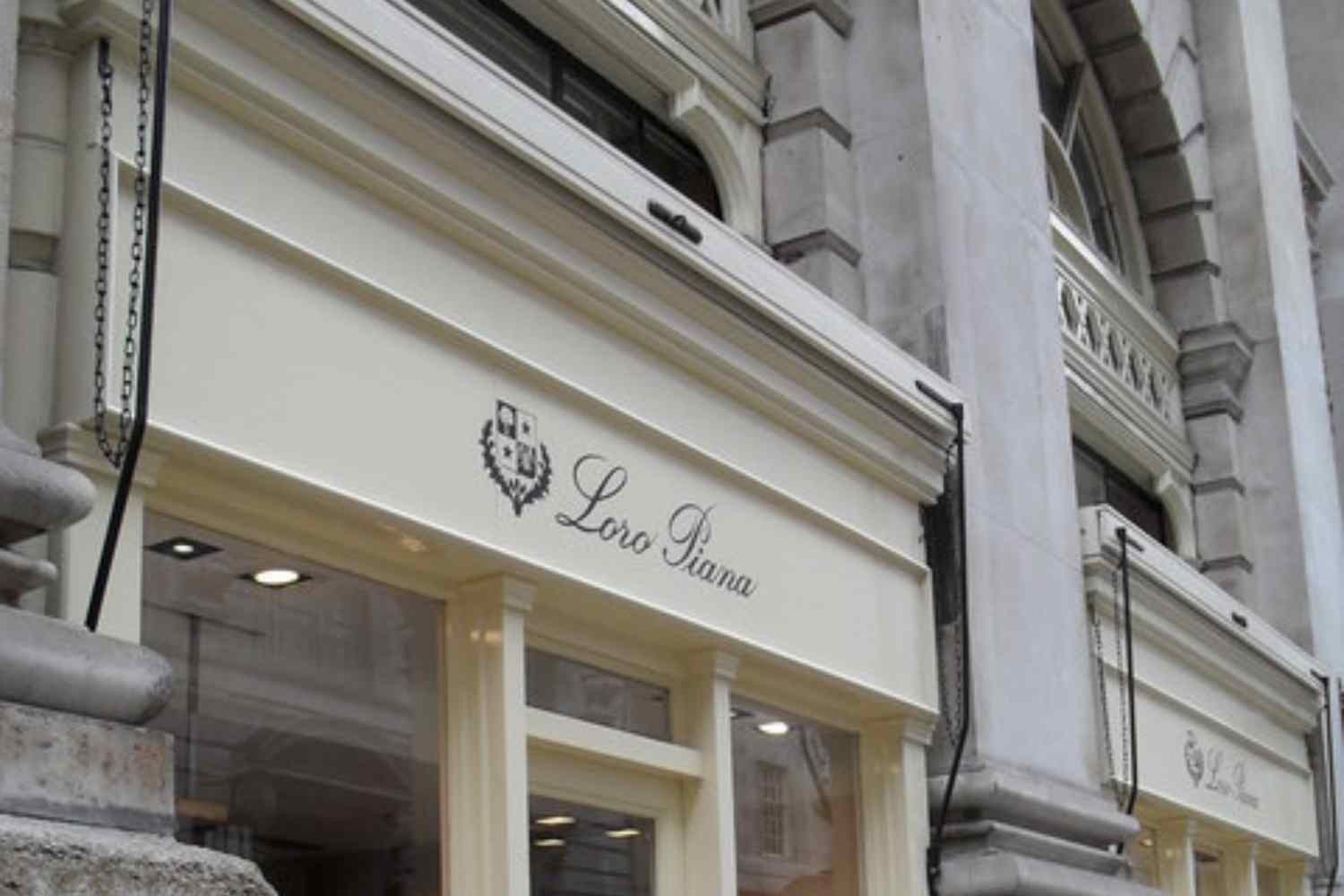
Work exploitationomissions in controls and a culpablely opaque production system. These are the elements at the center of the provision that led the Court of Milan to order the judicial administration for a year against the Their plain spa., Historical Italian Maison of Luxury Textile, today part of the French giant LVMH.
According to the Milanese Prosecutor’s Office, the company would not have guaranteed adequate vigilance on working conditions in its production chain, permitting – you are without willful misconduct – the diffusion of practices of severe exploitation in some of the factories involved in the realization of its clothing.
The investigations conducted by the Carabinieri of the Command for the protection of work, coordinated by the prosecutor Paolo Storari and the chief prosecutor Marcello Violahave reconstructed a supply chain that from the apparent excellence of the final product reaches workshops in which workers’ rights seem to be systematically ignored.
The supply chain under accusation
At the center of the investigation, the company Evergreen Fashion Group Srlappointed by them plain of the production of cashmere jackets. Evergreen, according to what emerged, would have in turn subcontracted to subjects without the necessary entrepreneurial and structural skills.
It is in one of these laboratories, managed by Clover fashion srlwho worked HX, a tailor of Chinese origin, who denounced that he had been brutally beaten with plastic tubes and aluminum for simply requesting the payment of the backward salaries. The aggression would have lasted several hours, confirming the total absence of protections for the workers involved.
According to what emerged from the investigations, their plain would have outsourced the production of some garments – in particular cashmere jackets – entrusting it to third -party companies operating in conditions of exploitation. These garments were packaged at very low costs, around one hundred euros each, and then be put on sale in stores at prices between 1,000 and 3,000 euros.
The responsibilities of the maison
The provision of the Court of Milan, as stated in the reasons, is based on the “omitted supervision of the supply chain by their Piana Spa”, which “has not verified the real entrepreneurial capacity of the contracting and subcontracting companies” nor has it conducted sufficiently effective audit.
“The mechanism has been colposately fed by them plain,” the judges write. Although the awareness of the inadequate conditions of the contractors was easily verifiable by public sources and chamber, the Maison would not have put in place internal structures capable of preventing the risks related to the corporal.
A case not isolated
The measure against them plain is part of a wider investigation that also involves other luxury brands active in Italy. In recent months, similar measures have been adopted against Giorgio Armani Operations, Dior manufacture, Valentino Bags Lab And Alviero Martini Spa.
What emerges is a worrying picture, where the distance between the parent company and the laboratories in which the production is made often translates into a total lack of control. In this void they proliferate practices that have nothing to do with the ethical and aesthetic values that the brands declare to embody.
The knot of responsibility
The judicial administration does not imply a suspension of the activity, but requires an external supervision with the aim of correcting critical issues and preventing the repetition of irregularities. In essence, the state temporarily flanks the company to reorganize the internal control mechanisms.
The case of them Piana once again poses in the spotlight the increasingly urgent question of corporate social responsibility. Relying on thirds can no longer represent an alibi sufficient to evade the supervision of the production chain, especially in a sector such as that of luxury, which feeds on narratives related to crafts and excellence.
For a brand like their plain, synonymous with quality and manufacturing tradition, the accusations risk affecting the image built in over a century of activity deeply.
In 2024, an investigation by Bloomberg had raised questions about the supply of the Precious wool of Vigogna in Peruhighlighting precarious working conditions e questionable practices in the capture of animals.
Today, the survey of the Milan prosecutor’s office returns a new alarm bell. It is not enough to work the most precious fibers in the world: we need transparency, along the entire supply chain. And above all, it is necessary to guarantee it to those who work those fibers.
