
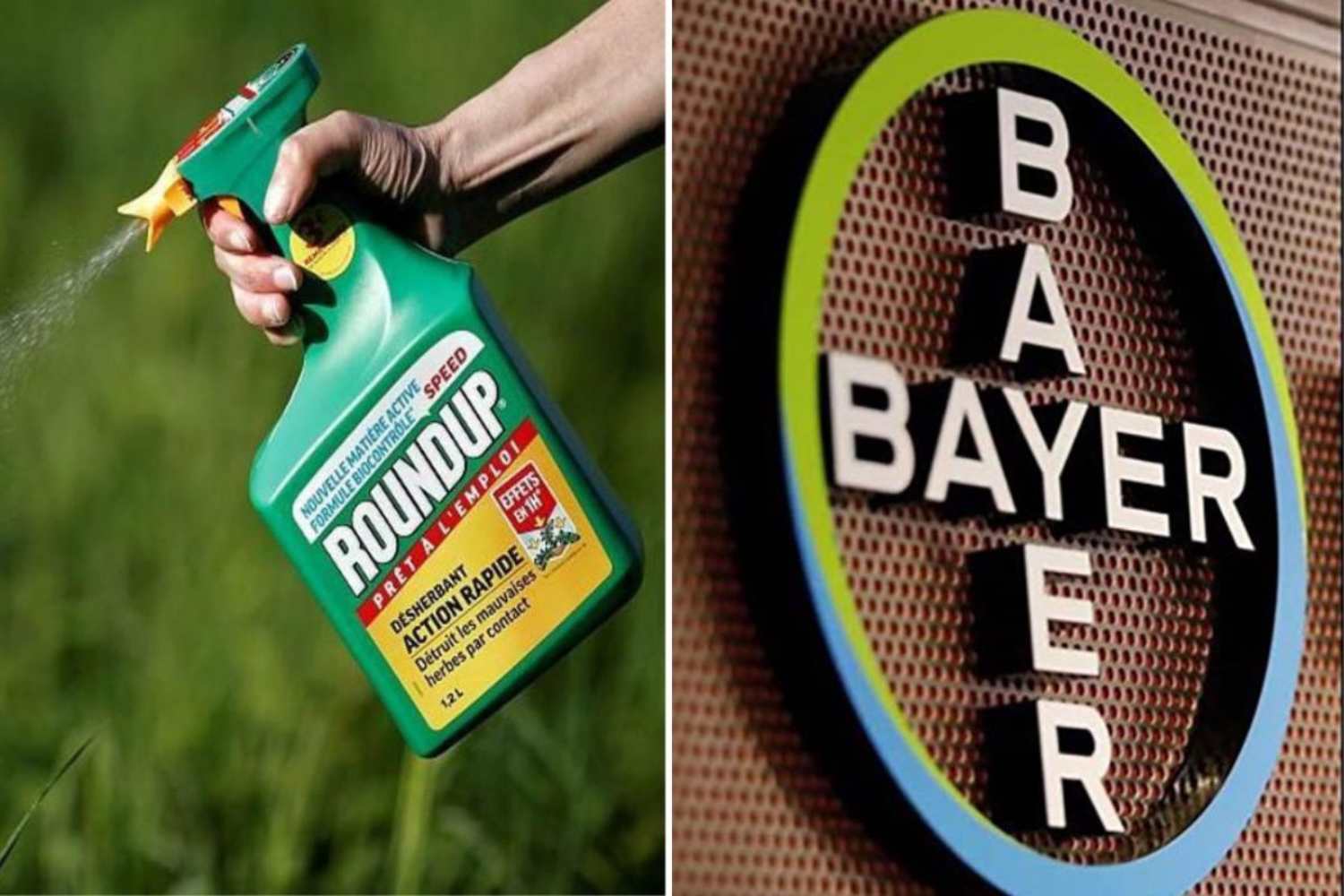
Anyone who follows environmental events and is interested in public health has probably heard of Roundup. For years, this glyphosate-based herbicide produced by Monsanto — now owned by the pharmaceutical and chemical giant Bayer — has been at the center of one of the most massive legal battles in recent history.
Now the news is that Bayer has announced that it wants to reach a 7.25 billion dollar agreement to resolve the tens of thousands of lawsuits brought by American citizens convinced that the use of the herbicide has caused them serious forms of cancer.
The agreement, filed in state court in St. Louis, Missouri, calls for annual payments spread over 21 years, with decreasing amounts over time and an annual cap. This is not a simple signed and delivered check but a complex financial mechanism, designed to guarantee Bayer a certain economic stability as it attempts to put an end to one of the darkest chapters in its corporate history.
The plaintiffs’ allegations
At the center of the controversy is glyphosate, the active ingredient in Roundup, used both in agriculture and in home gardens. About 65,000 people have sued Bayer in the United States, claiming they developed non-Hodgkin’s lymphoma – a cancer of the lymphatic system – after being exposed to the product over the years.
Bayer has always defended the safety of glyphosate, citing decades of scientific studies and the fact that the US Environmental Protection Agency (EPA) has never mandated carcinogenic warning labels. Yet American juries have often seen things differently, in some cases going as far as awarding billions in compensation, such as the 2.1 billion dollar verdict issued in Georgia in 2024.
How compensation will work
The agreement does not imply any acknowledgment of liability on the part of Bayer, and provides the possibility for the company to withdraw if too few plaintiffs agree to join. Individual compensation will be calculated according to a tiered system that takes into account the extent of exposure to the product, age at diagnosis and the specific type of cancer. According to lawyers who negotiated for the plaintiffs, individual settlements could reach nearly $200,000 or more.
The settlement also covers future cases: Anyone who can prove they were exposed to Roundup before February 17, 2026 and received a diagnosis of non-Hodgkin’s lymphoma will be able to apply for compensation up to 21 years from today. A very significant aspect, considering that the previous 2020 agreement – which cost around 10 billion dollars – did not include this protection, leaving Bayer exposed to new waves of lawsuits.
The shadow of the Supreme Court
In parallel with the agreement, Bayer is counting on another front to finally close the matter: the US Supreme Court has agreed to hear an appeal filed by the company which, if successful, could drastically limit the ability of citizens to sue the company under state laws. Oral hearings are expected in late April 2026.
Bayer’s argument is that because the EPA has found no health risks and does not require any warnings on labels, federal laws should take precedence over state regulations that allow these causes. A victory at the Supreme Court would significantly reduce the company’s future legal exposure, making the newly reached agreement even more solid.
The financial consequences for Bayer
On an economic level, the impact is heavy but expected and planned. Bayer announced that litigation provisions will rise from 7.8 billion euros to 11.8 billion euros, and that cash flow for 2026 will be negative. The initial payments will be financed through an $8 billion credit line, excluding the possibility of a capital increase. The press conference on the annual results was postponed to March 4th to integrate these data.
Despite the cost, markets welcomed the news: Bayer shares gained as much as 7.7% on the day of the announcement, returning to September 2023 levels. Investors appear to value certainty over uncertainty, even when that certainty comes at a steep price.
