
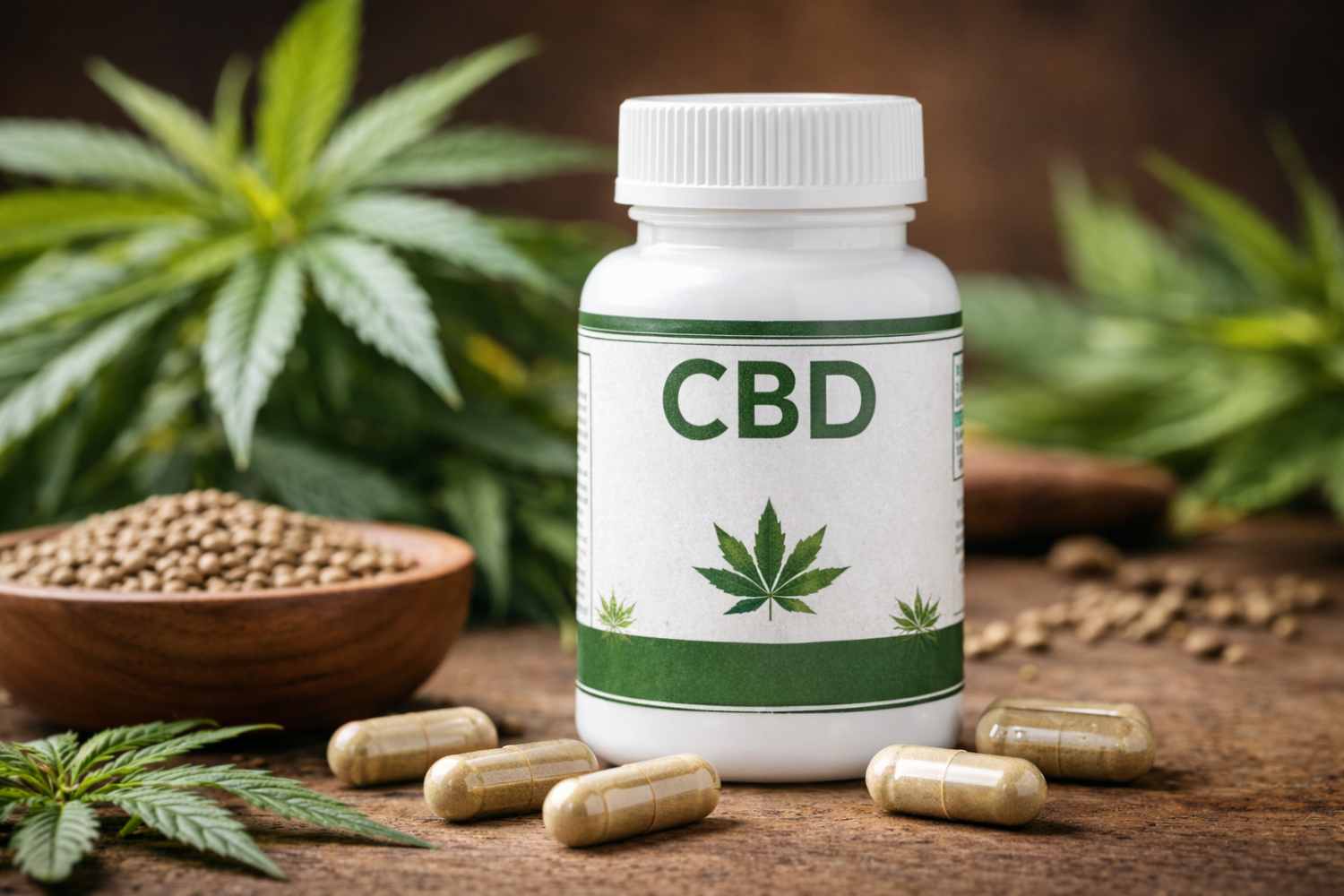
Cannabidiol (CBD) is increasingly present on the shelves of herbalists and pharmacies, in the form of supplements, oils and food products. Now the European Food Safety Authority (EFSA) has decided to take an important step: the Panel of Experts on Nutrition, Novel Foods and Food Allergens (NDA) has published an updated statement in which it sets a provisional safe intake level for adults of 0.0275 milligrams per kilogram of body weight per day. In practical terms, this corresponds to approximately 2 mg per day for a 70 kg person.
This is a result long awaited by producers and consumers, but which must be read carefully: the term “provisional” is not a marginal detail, but the heart of EFSA’s scientific message.
What does “provisional level” of security mean
When the available scientific evidence is incomplete or not sufficiently robust, EFSA can still set a safety level, but applying an additional factor of uncertainty – a sort of margin of caution – to protect public health. In this case, gaps in toxicological data on CBD were already reported in a previous statement from June 2022 and have not yet been filled.
This means that the value of 2 mg/day does not represent a definitive “promotion” of CBD as a safe substance, but rather a precautionary threshold calculated while waiting for applicants – i.e. companies that want to market CBD-based products as novel foods – to provide the missing data.
Which products does it apply to?
The provisional safety level applies very specifically: it only concerns food supplements containing CBD with a minimum purity of 98%, free of nanoparticles and for which a safe production process has been verified, with genotoxicity excluded. It therefore does not apply to any product that contains CBD, but only to formulations that comply with these stringent criteria.
Equally important is knowing who is excluded from this evaluation. EFSA has clarified that the safety of CBD cannot be established for the following categories: under 25s, whose nervous system is still developing; pregnant and breastfeeding women; people taking medications (due to the risk of interactions).
This is anything but a secondary clarification, considering that CBD is often proposed as a natural remedy in contexts of vulnerability – anxiety, chronic pain, sleep disorders – which also concern these segments of the population.
The data gaps that are still concerning
Despite the step forward, EFSA strongly reiterates that there are significant areas of scientific uncertainty. In particular, the possible effects of CBD on fundamental organs and systems remain to be clarified: the liver, the endocrine system, the nervous system and the reproductive system. These are exactly the same gaps reported three years ago, in 2022, which gives a measure of how slowly research in this sector is moving and how much manufacturing companies have struggled to provide complete and reliable data.
The responsibility for filling these gaps falls directly on the applicants: it is the companies that want to place CBD-based products as novel foods on the European market that have to produce the necessary studies. To support them, EFSA had already organized an information session in June 2022 and is now planning an in-depth webinar scheduled for April 2026.
The European regulatory framework: CBD as “novel food”
From a regulatory point of view, the European Commission considers CBD to be an innovative food, i.e. a substance that did not have significant food consumption in the EU before May 1997. As such, before it can be marketed it must obtain a specific authorization, based on safety assessments such as those conducted by the EFSA.
EFSA will now proceed with the risk assessment of each new application for authorization relating to CBD, examining the data provided by each applicant on a case-by-case basis. This is a process that could still take years before leading to definitive authorizations and a stable regulatory framework.
What changes for consumers
For those who already purchase or are considering CBD-based supplements, the threshold of 2 mg/day currently represents the limit within which European scientists consider consumption tolerable for a healthy adult. This is a very low dose compared to that found in many products currently on the market, which should encourage consumers to read labels carefully and compare dosages.
