
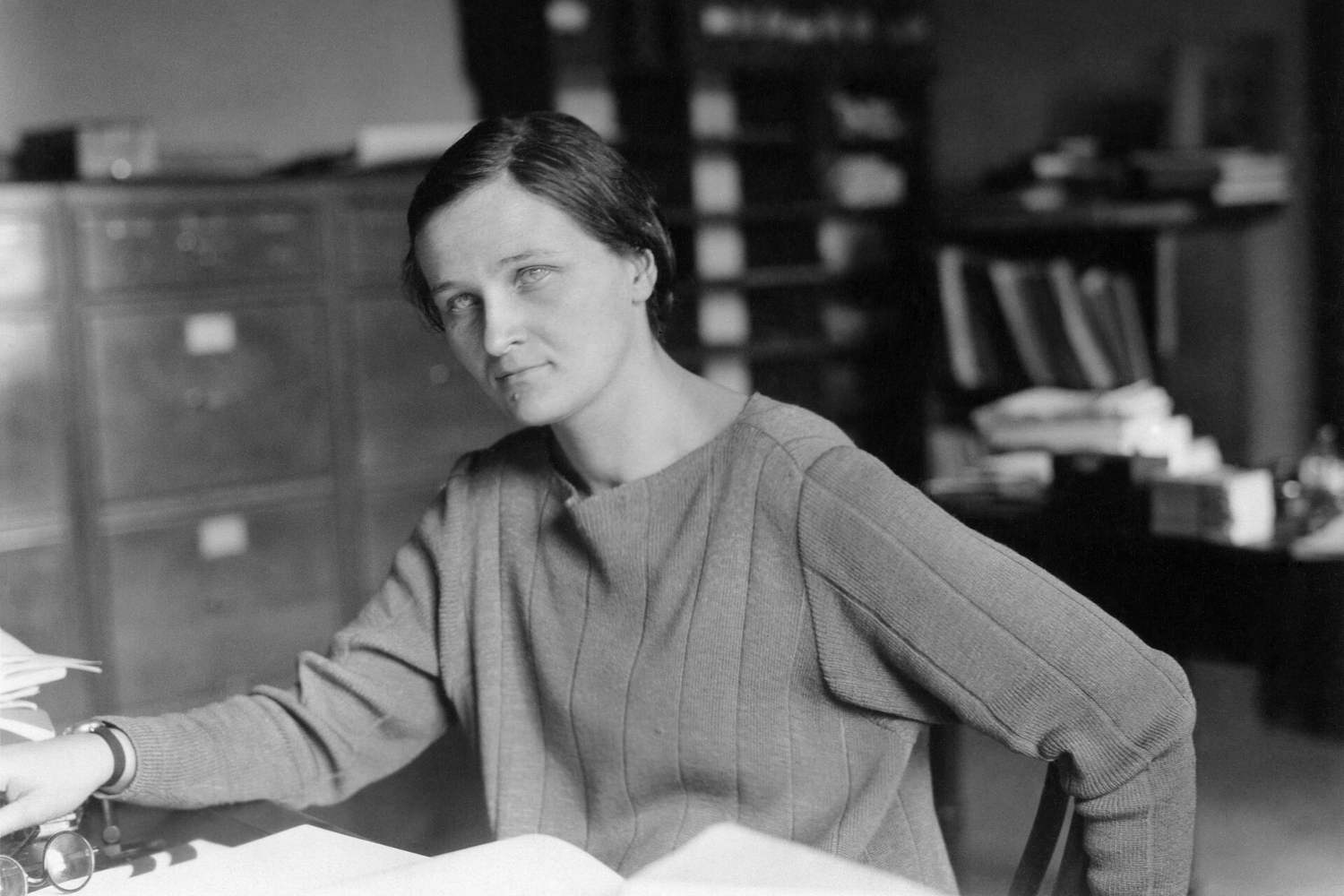
Cecilia Payne Giposchkin It is a fundamental figure in the field ofastrophysicsbut his inheritance has long been Time darkened by prejudice of his time. Born the May 10, 1900 In Wendover, England, Cecilia faced a series of challenges from a young age, including the difficult family context due to the premature death of the father.
Despite the difficulties, he distinguished himself early for his intellectual skillsdeveloping a deep interest in science and in particular for astronomy. Initially he found no support in the schools he attended, but it was thanks to the meeting with some teachers and the Reading of Newton’s principia who decided to embark on his scientific career.
In 1919, thanks to a ScholarshipCecilia enrolled in the Newnham College of Cambridgewhere he distinguished himself in chemistry and botany, even if his heart belonged to physics and astrophysics. It was in this period that it was deeply influenced by the Arthur Eddington conference on the solar eclipse, that confirmed Einstein’s general relativity. This event marked a turning point, pushing it to concentrate on astrophysics.
It was the first woman to direct the Astronomy Department in Harvard
In 1923, Cecilia moved to the United States to continue her studies at theHarvard Universitywhere, in 1925, it became the First woman to achieve the doctorate in astronomy. His thesis, which studied the Star atmospheresrevealed a shocking discovery: the sun and the stars are mainly composed of hydrogen and heliumnot from heavy metals, as it was thought at the time.
This revolutionary discovery, which would have changed our understanding of the universe, came initially ignored by colleagues olderincluding eminent scientists like Henry Norris Russell who forced her to change her conclusion. Only years later, Russell would have recognized the validity of his work.
Cecilia continued her career as an assistant, always underpaid Compared to male colleagues, but without ever giving in to frustration. In 1956 he became The first woman a direct the Astronomy Department in Harvardwhere he remained until his retirement in 1965.
Cecilia did not seek fame or material awards, but found her reward in the passion for science and in the contribution that made to understand the universe. His life And his career are examples of determination And his work, although initially ignored, had a profound and lasting impact in the field of astronomy.
