
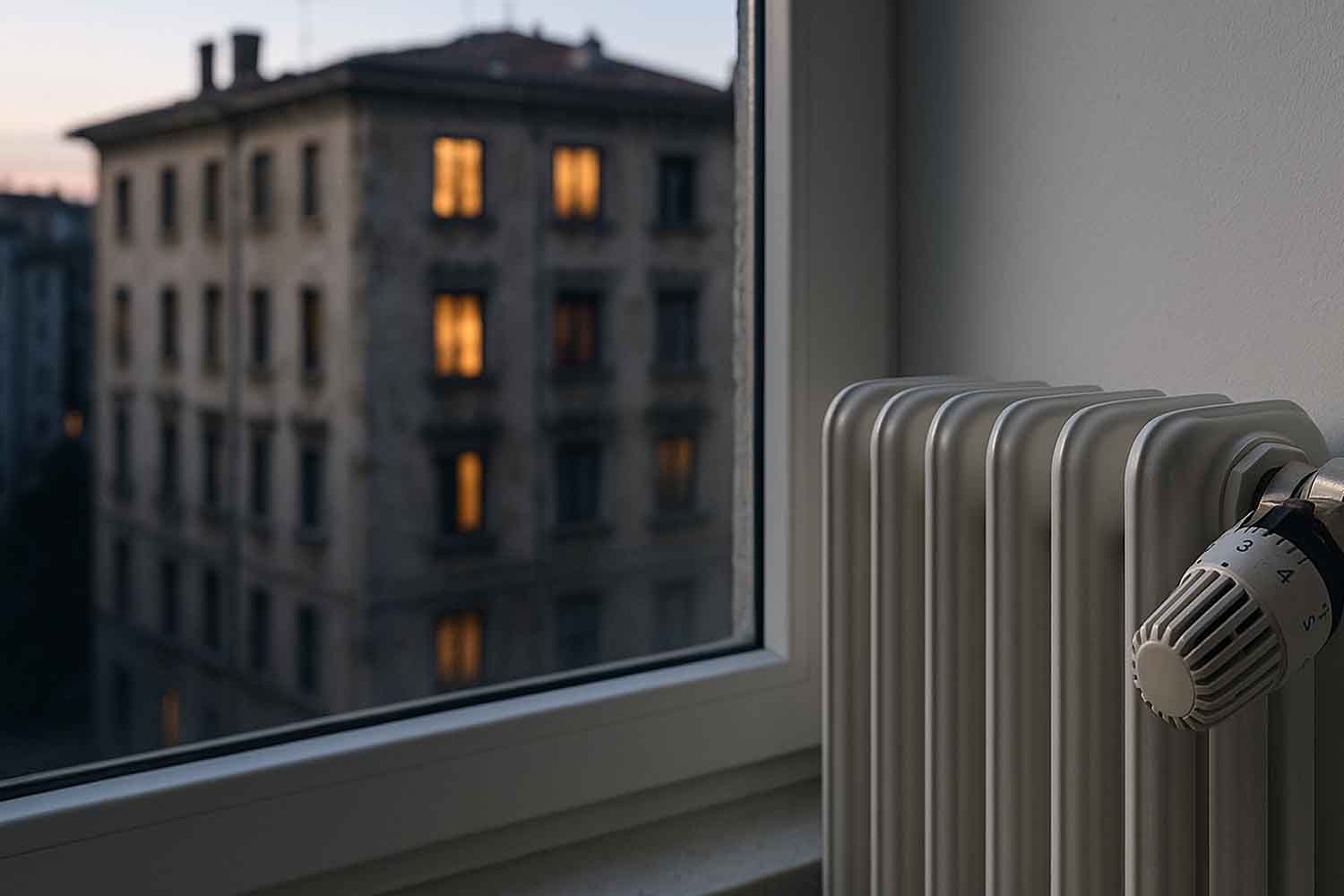
Central heating is one of those things you always remember too late: when it’s cold, when the bills arrive or when the condominium meeting suddenly becomes crowded and noisy. Yet, it is right there, in that room (physical or virtual), that it is decided whether a system becomes a shared comfort tool or a money-eating machine that wastes energy.
Understanding what you can really decide and what responsibilities you have is not just a question of bureaucracy. It is an environmental, economic and also very daily issue. And no, you don’t need to be an expert in condominium law: you just need to know where to look.
Centralized heating in condominiums: what is decided at the meeting
The condominium assembly is the command center for central heating. Here the switch-on times, operating periods, maintenance interventions and any improvements to make the system more efficient are established. They are not abstract decisions: they directly affect how much we consume and how much we pay.
Participating is not a formal act. It is the moment in which you can understand if the system is used wisely or if, on the contrary, it continues to heat too much, for too long and often unnecessarily. Staying out means letting others decide for you too.
The rights of condominiums when heating is centralized
When it comes to central heating, the first right is to be informed. Every condominium owner has the right to know how expenses are calculated, how much it costs to manage the system and on what basis consumption is divided. Where there are heat accounting systems, this right becomes even more concrete: you pay based on how much you use, not just based on square meters.
Then there is an often misunderstood issue: the separation from the centralized system. The law allows it, but under specific conditions. Disconnection must not create technical imbalances or increase costs for those who remain connected. Even those who detach themselves, however, continue to contribute to the maintenance and conservation costs of the common system. It is not a free escape, but a regulated choice. Knowing this avoids endless discussions and, above all, false beliefs that still circulate in many condominiums.
The duties that we often forget (and that make the difference)
Alongside rights there are very concrete duties. The first is to contribute to the common expenses related to central heating, even when personal consumption is low. The plant remains a common good and must be maintained safely and efficiently.
Then there is a less obvious but increasingly central duty: avoiding energy waste. Italian regulations push towards the use of thermoregulation and accounting systems to reduce unnecessary consumption. In the assembly this translates into choices that look at the medium and long term, not just immediate spending. Opposing efficiency measures without a real motivation often means postponing future savings and continuing to consume more than necessary.
Switching times: it’s not just a question of comfort
Central heating times are not decided at random. The law establishes precise limits, which differ based on the climate zones. The assembly can adapt the timetables to the needs of the condominium, but cannot ignore these constraints. Keeping the system on longer than necessary does not make homes more welcoming: it only increases consumption and emissions. Careful time management is one of the simplest and most effective tools for reducing waste without sacrificing well-being.
An old, poorly regulated or oversized system consumes more and pollutes more. The assembly can decide on modernization interventions that improve the efficiency of central heating, reduce bills and increase the value of properties. It’s not just about technology, it’s about mindset. A shared facility only really works well when there is collaboration. And today, with energy costs and climate urgency, this collaboration is no longer optional.
You might also be interested in:
