
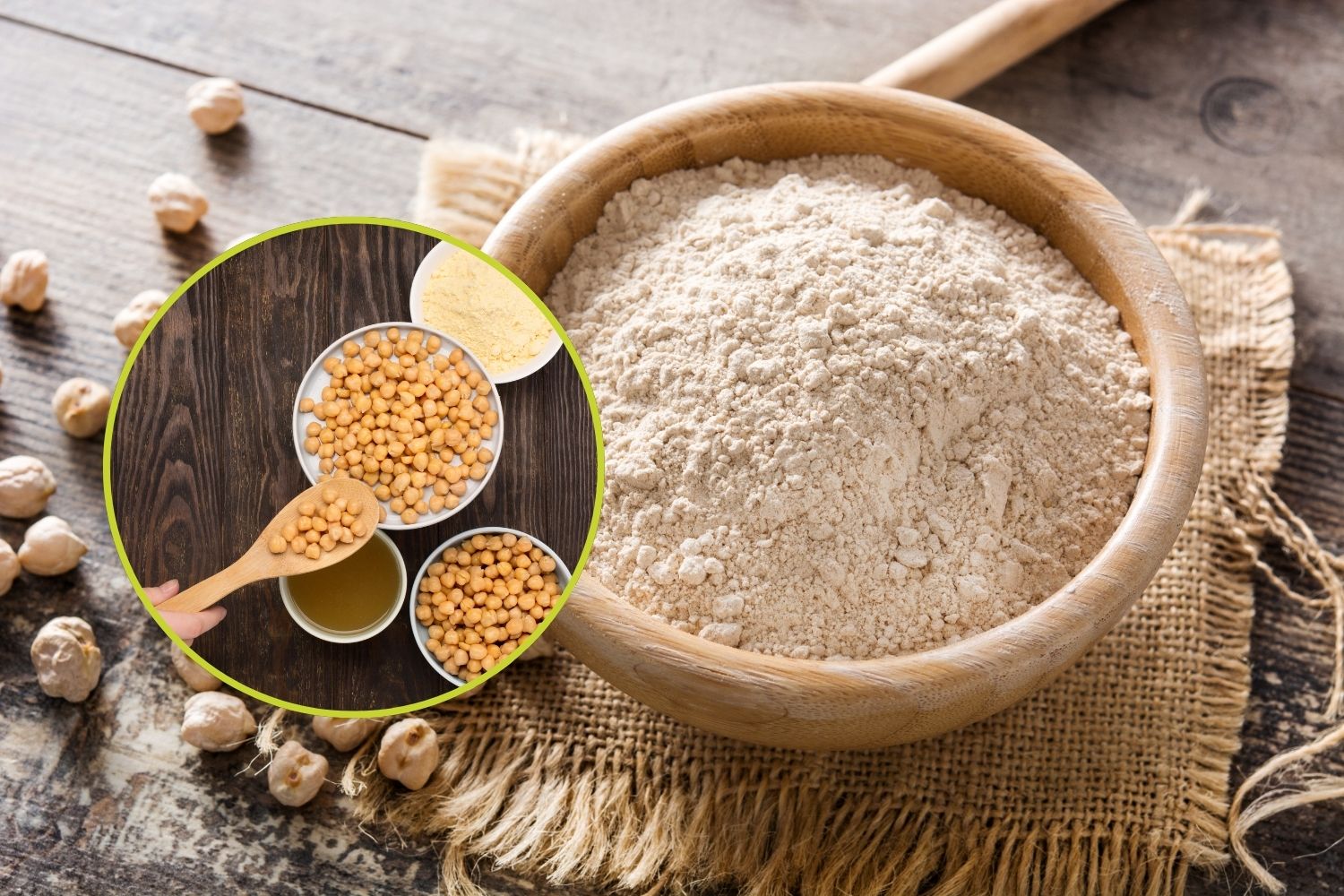
Vegan omelettes, Sicilian Panelle, Ligurian Farinata, Protein Pancake: chickpea flour is one of those discoveries that can revolutionize the approach to the kitchen, a versatile, cheap and gluten -free product, so much so as to seem a sort of perfect ingredient, ready to be asserted in many situations.
Yet, the amazing peculiarities of chickpea flour hide a passage that many jump at the foot, with disastrous results. Do you want to know what this red circular error consists of? Use chickpea flour as if it were normal flour: pour it into the bowl, add water, mix and go is a huge error, which will transform a potential Ligurian flour from applause into a yellowish flying jug that the dog will not want to taste.
This is because chickpea flour must be soaked for at least 12 hours. It looks like a detail of fussy grandmothers, right? In reality it is pure science, and now I explain why jumping this step means ruining both the flavor and the nutritional benefits of your recipes.
Because you need soak
Soak is not a waste of time, it is a process of transformation. When mixing the chickpea flour with water and let it rest, a fundamental biochemical reaction begins, in which proteins moisturize, the starches soften and – more importantly – specific enzymes are activated that neutralize antinutrient substances.
The difference with dry chickpeas? With whole legumes, soaking is mainly served to rehydrate them, with flour, on the other hand, the process is more complex: each grain must absorb water uniformly to create a homogeneous batter. We need at least 12 hours, better if you dedicate 24. The water must be abundant (ratio 1: 3) and room temperature.
What happens if you jump so
Preparing a flour without soaking is like building a house without a foundation. First of all, the phytic acid in the flour blocks the absorption of iron, zinc and calcium. Practically eaten chickpeas but your body does not absorb the precious minerals they contain.
Then there are lectins and tannins, compounds that cause abdominal swelling and slow down digestion. That’s why after an omelette of Ecet in badly you feel heavy as boulders. The taste? Bitter and metallic, while the consistency will appear gessive, with lumps impossible to eliminate. And you will have to cook everything longer, with disappointing results anyway.
The scientific explanation
When the flour remains soaked, the fitasi is activated, an enzyme that degrades phytic acid. Studies speak clearly,
The soaking is among the most used domestic transformation methods to improve the nutritional quality and increase the digestibility of proteins. During the soaking, the widening of phytic acid occurs, an antinutrication factor that hinders the digestion of carbohydrates and proteins and reduces bioavailability of minerals and vitamins. Studies report that the soaking also reduces the activity of the tripsin inhibitors (TIA), which limit protein digestion. In some cases, the reduction in the activity of the Tia was quantified up to 16.15%.
So the soaking of chickpeas is not only a technological practice useful to reduce cooking times, but a real functional treatment: decreases the antinutrial factors and increases the overall nutritional value of legumes.
How to do it in practice
Mix the flour with cold water using a whisk, then cover and let them rest 12-24 hours at room temperature. After 6 hours, change the water: you will eliminate even more antinutrient. The foam that forms on the surface? Remove it with a spoon. Industrial flour also benefits from the spoken, contrary to what is thought. Indeed, often it needs it because industrial processes do not completely eliminate problematic substances. After soaking, cook normally: the soaking soaking combination guarantees maximum benefits.
The secret is waiting
The biggest error with chickpea flour is to treat it as a normal flour, because it is not! He needs time to express his potential. The benefits? More digestible dishes, sweeter and more round flavor, perfect consistency, maximum nutritional value. With chickpea flour, science is clear: the secret is not in the recipe, but waiting.
Don’t you want to lose our news?
