
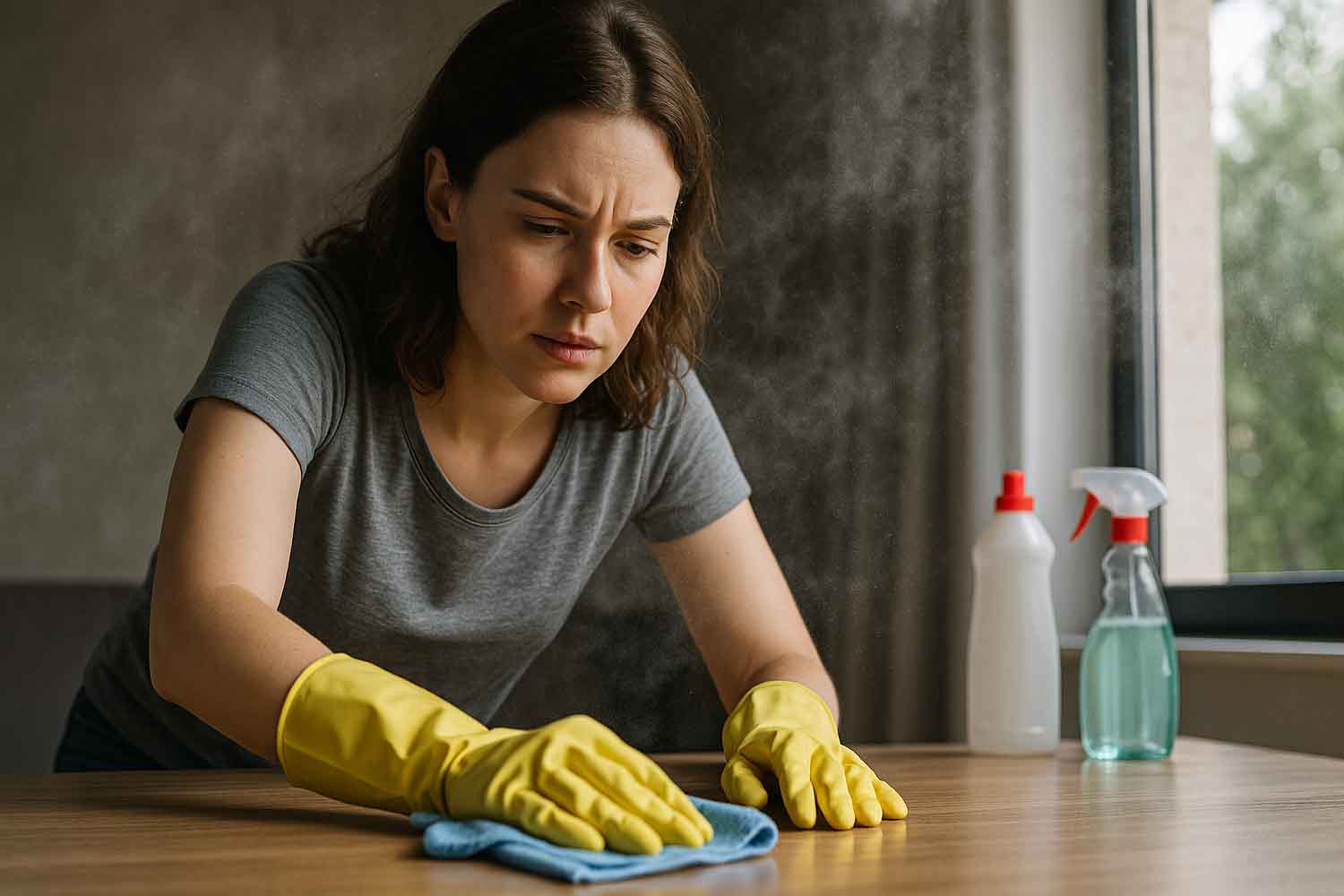
A daily gesture how to clean the house, for many people – and above all for many women – can hide an underestimated risk: damage the lungs like those who usually smoke.
This was revealed by a long -term study conducted by the University of Bergen, Norway, which has followed more than 6,000 people for 20 years to understand the effects on the respiratory health of those who often clean, both at home and for work.
The result? According to researchers, women who regularly make domestic cleaning or work as a cleaning workers undergo a drop in lung function comparable to smoking of 20 cigarettes per day. A fact that makes you think, above all because it is often a silent and constant exposure, which accumulates over time.
The respiratory risks related to the daily use of spray and chemical detergents at home
According to Norwegian researchers, daily exposure to cleaning products, in particular those in spray format, can cause chronic inflammatory inflammations over time and early aging of the lungs. The effects are especially noticeable among women, probably because they spend more time in direct contact with these products, both at home and in the workplace.
The problem lies in the ultra-seactile particles that are released in the air during the use of detergents: get in touch with these substances every day, even without realizing it, can seriously compromise the health of the lungs.
In addition to the reduction of respiratory capacity, the study also highlights an increase in the risk of developing asthma and other chronic respiratory pathologies.
What can we do to clean safely?
The good news is that we can reduce the risks with simple tricks. Experts advise to limit the use of spray and to choose more natural and less invasive methods for daily cleaning. Here are some useful practices:
Even small changes in habits can make a big difference over time. Cleaning consciously means taking care of the house without compromising health.
Don’t you want to lose our news?
You may also be interested in:
