
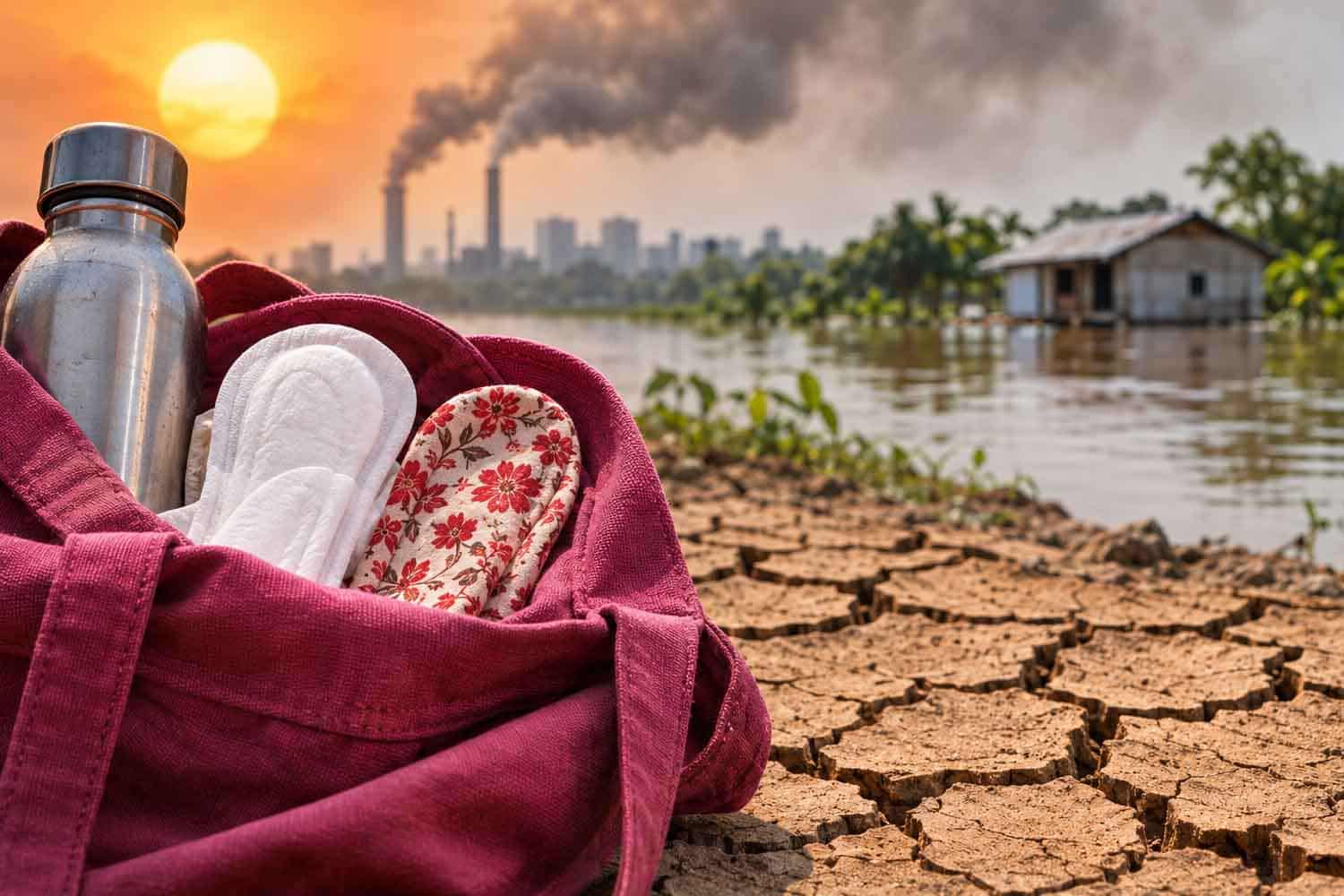
We also lacked the climate to complicate women’s lives during their periods. As if cramps, pain and days to face with a painkiller in your bag weren’t already enough. Not to mention the taboos, the ones that die hard, which even today transform something absolutely natural into a matter to be hidden. And now we’re finding that environmental changes can also put menstrual health at risk.
This is documented by a systematic review published in PLOS Climatecreated by a group of researchers from the London School of Hygiene & Tropical Medicine. 25 studies conducted in different countries were analysed, from which associations emerge between air pollution and cycle alterations, but also hygiene and health difficulties linked to climate catastrophes. Documented consequences include irritation, symptoms of infections, barriers to accessing care and lack of privacy. In some contexts, greater risks of harassment and violence have also emerged.
Smog could also affect your menstrual cycle
Six of the 25 studies analyzed concern air pollution and were conducted in the United States, France, Poland, South Korea and Taiwan. Researchers have identified associations between exposure to some pollutants, earlier onset of the first menstruation, cycle irregularities and dysmenorrhea, i.e. painful menstruation.
A South Korean study published in Environment Internationalconducted on 639 girls between 13 and 17 years old, found an association between greater exposure to PM10 and an earlier age of menarche, the first menstruation. In the United States, research published on Human Reproductionbased on data from 34,832 women, associated greater exposure to airborne dust during adolescence with a slightly higher chance of developing menstrual irregularities.
In Taiwan, a study on dysmenorrhea found a higher incidence in groups exposed to high concentrations of certain pollutants, including PM2.5 and nitrogen dioxide. We continue to treat menstruation as a private matter. Too bad that even the air we breathe can have something to do with their regularity.
Studies therefore suggest a possible link between air pollution and alterations in the menstrual cycle, although further research will be needed to better understand the causes. Smog shares some origins with climate change, despite being a distinct phenomenon. However, we still know surprisingly little about extreme heat: none of the 25 studies examined directly investigated its effects on menstrual health. Yet, with increasingly higher temperatures and problems of water scarcity, this aspect also deserves some more attention.
When the floods arrive, there is also a shortage of sanitary pads
In Bangladesh, during the floods, 81% of women involved in a study reported washing clothes used during menstruation in flood water. 44% did it without soap. There was too much water around. The clean one was another matter.
Seven of the studies reviewed cover floods in Bangladesh, India and Pakistan, where floods have affected access to sanitation and menstrual products. Many women said they had used old rags, pieces of cloth and even leaves or newspapers, often reusing materials washed with contaminated water and put back while still damp.
A study conducted in Jamalpur district, Bangladesh, found that 24% of participants suffered irritation in their intimate areas and 21% reported urinary infections. These are problems declared by the interviewees, which the research associates with difficult hygienic conditions without being able to establish a causal relationship in each case.
But there is also another issue: the lack of privacy. In overcrowded shelters, women and girls said they did not have a separate bathroom or a private place to change. Some were forced to move away for kilometres, sometimes at night, exposing themselves to the risk of harassment and attacks.
In Pakistan, during the 2022 floods, several women reported feeling embarrassed when receiving menstrual products distributed by male workers. The cultural taboos linked to menstrual blood continued to influence even the management of aid. A disaster can wipe out homes, roads and toilets. The modesty imposed on women, apparently, can withstand even a flood.
Drought and salt water also complicate menstrual hygiene
Water also becomes a problem when it is lacking. In some Bangladeshi communities affected by seasonal scarcity, girls interviewed reported washing less frequently during menstruation and forgoing regular cleaning of reusable materials.
In a survey conducted among 242 indigenous adolescents in Bandarban district, 54% said they experienced water scarcity during their last menstruation. In the same sample, 36% reported symptoms compatible with urinary infections and 29% with bacterial vaginosis. Self-reported complaints, which cannot be automatically attributed to lack of water.
Along the coasts of Bangladesh, salt water infiltrates sources used daily. The women said they also washed their menstrual cloths with that water, which became stiff and uncomfortable to wear, causing irritation and itching.
Water scarcity is also intertwined with domestic responsibilities. When you have to choose how to use the few resources available, washing a reusable pad can end up behind the needs of the entire family. And, coincidentally, in many of the communities examined it is women who take care of water and household tasks. They must find ways to wash, cook and care for others, while trying to conserve enough water for themselves.
Climate emergencies exacerbate inequalities that already exist
The review also has important geographic limitations. Ten of the 25 studies are from Bangladesh and five from India. No eligible research conducted in Africa, the Middle East or Latin America was identified. The findings, therefore, cannot be automatically extended to women around the world.
Even people with disabilities still receive little attention. Research published in PLOS Climate documented the difficulties faced by women with disabilities and their carers during floods and cyclones in Bangladesh. When toilets became unusable, maintaining menstrual hygiene required even greater effort, often without adequate support.
Lauren D’Mello-Guyett, first author of the review and researcher at the London School of Hygiene & Tropical Medicine, highlighted how the consequences of climate emergencies can extend to reproductive health, education, work and safety, especially affecting already marginalized people, as reported in the university’s official communication.
The researchers therefore call for menstrual health to be included in climate adaptation programs and disaster response plans. You need sanitary pads, clean water and bathrooms with a door that can close. Pretty basic requests, at least on paper. Because, apparently, among the many things to organize during an emergency, remembering that women continue to menstruate is still a challenge. We have learned to measure the damage of disasters in billions, destroyed hectares and submerged homes. What happens to women still struggles to be taken into account.
