
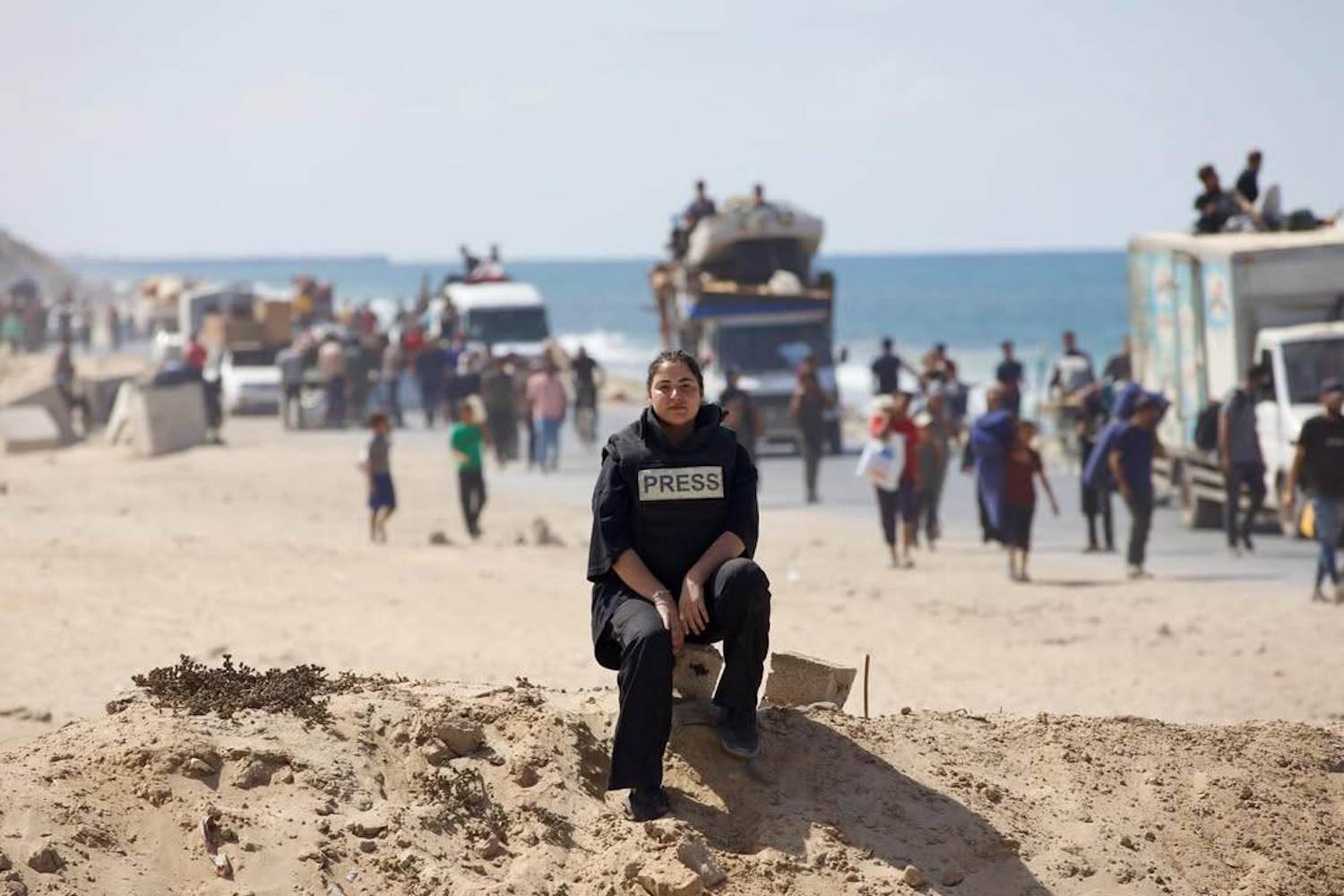
He shared daily videos chronicling his experiences in Gaza during Israel’s genocidal war. But some people liked them. Thus, the award-winning Palestinian journalist, Bisan Owdaa contributor to Al Jazeera’s AJ+, said she was permanently banned from TikTok, just days after the social platform was acquired by new investors in the United States.
Her account, followed by 1.4 million people, was deleted without clear public explanations and she announced it with a video published on Instagram and X:
TikTok deleted my account. I had been building that page for four years. I expected a limitation, as has already happened in the past, not a definitive ban.
TikTok’s move to the USA
The news comes at a very politically delicate moment. TikTok has just completed a deal to create a separate version of the platform in the United States, controlled by American investment funds, some linked to Donald Trump’s political camp. A change that has rekindled fears about greater political control of content.
According to Owda, his ban is not accidental. The journalist links the decision to the statements of Israeli Prime Minister Benjamin Netanyahu, who already in 2024 had defined TikTok as “the most important purchase” to win the communication battle on social media:
The most important weapons today are social media – he said, explaining that controlling TikTok means controlling the narrative of the conflict.
To strengthen these suspicions there are also the words of Adam Presser, new CEO of TikTok USA, who in a video explained how the platform considers the use of the term “Zionist” potentially classifiable as “hate speech”. A position that risks transforming political criticism of an ideology into a violation of the rules, with direct effects on the possibility of speaking openly about what is happening in Palestine.
A technical detail makes the matter even more problematic: Owda’s account was visible in Australia, but not in the Middle East. A sign that the ban may not be global, but geographically selective. A “zone” censorship, which modifies access to information based on the place from which you connect.
Bisan Owda became famous for her daily videos from Gaza, which always began with a phrase that has become symbolic:
It’s Bisan from Gaza – and I’m still alive.
View this post on Instagram
A declaration of survival, but also of journalistic resistance, among stories of bombings, destruction, fear, but also of daily life under siege, without filters and without mediation.
In 2024 his documentary “It’s Bisan from Gaza – and I’m still alive”, made with Al Jazeera’s AJ+, won an Emmy in the Hard News category. A recognition that certifies the quality and value of his journalistic work.
View this post on Instagram
Its digital silencing occurs while journalism is also being physically affected in Gaza. According to the Committee to Protect Journalistsat least 207 Palestinian journalists and media workers have been killed since 2023, the vast majority at the hands of the Israeli army. An unprecedented massacre.
The Owda case shows an inconvenient truth: today information is not only controlled with weapons, but also with algorithms.
If a platform can eliminate in an instant one of the most authoritative voices describing Gaza, it means that social media are no longer just spaces of expression, but real political battlefields.
