
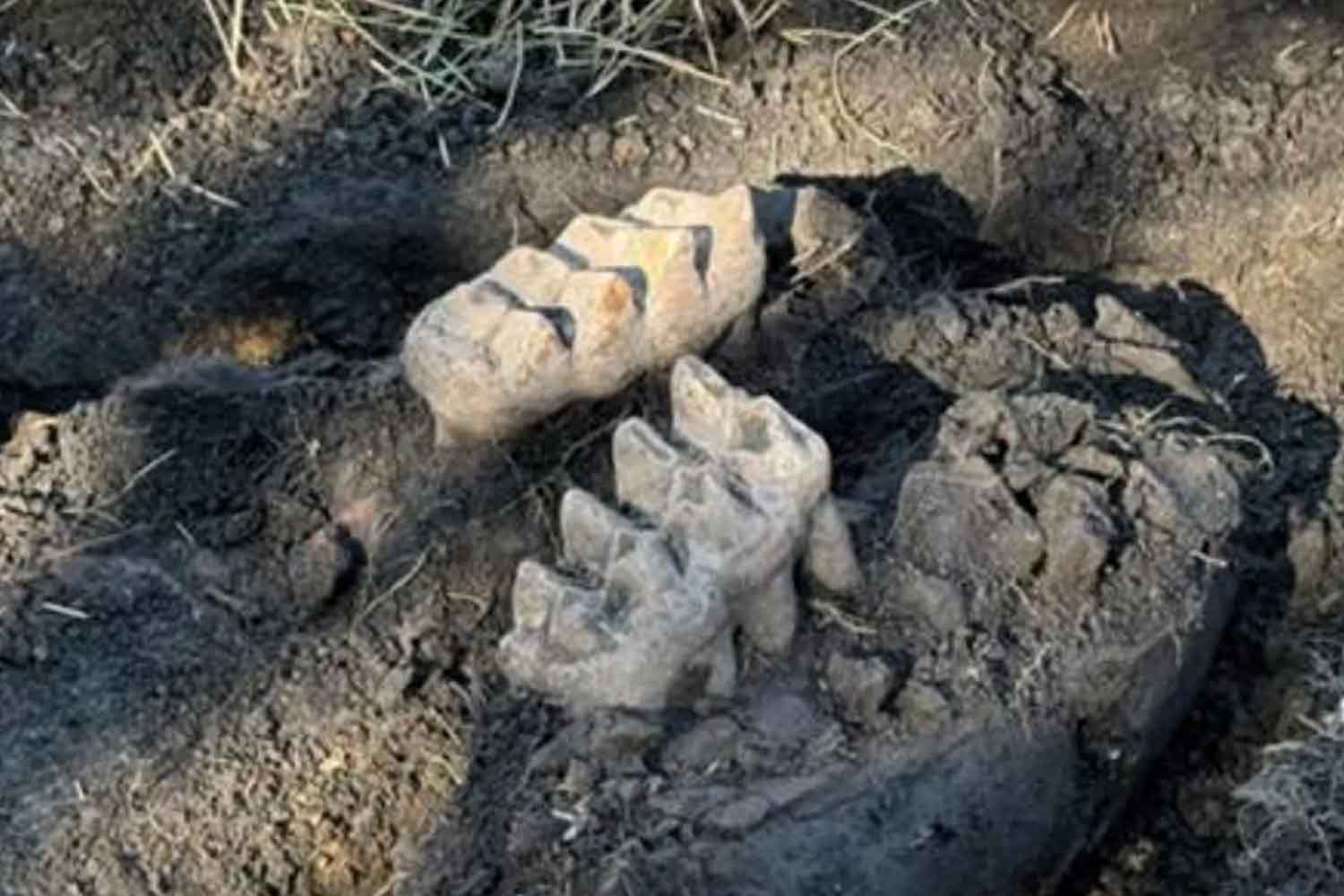
It looked like a day like many others. A couple of Scotchtownin the state of New Yorkhe was simply placing his garden when he came across something he could certainly not imagine. From the ground a rounded object emerged, similar to a baseball ball. Only after digging a few centimeters, did they realize that it was large fossil teethsmooth by time but well distinguishable in form and structure.
The two collected the finds and delivered them to Cory Harrisprofessor of archeology at the Suny Orange. The archaeologist, accustomed to receiving “strange stones” from citizens, did not expect anything in particular. But when he opened the cardboard box that contained those yellowed teeth, any doubt has vanished. He was faced with something authentic and extraordinary: one well preserved jaw belonging to an adult mastodona gigantic herbivore of the glacial era, cousin of the mammoth, who disappeared from the earth about 10,000 years ago.
A discovery that took place by chance
Immediately after the discovery, Harris contacted Robert Feranetdirector of the Research and Collections section of New York State Museum. Together they organized a small excavation directly in the garden of the spouses, from which not only the two original teeth emerged, but also other fossil remainsincluding fragments of A rib and a foot bone.
According to the researchers, these fossils may have about 13,000 years. Will be sent to a laboratory in California to be subjected to dating to the radioocarbonso as to determine more precisely the era to which they date back. The analyzes may also provide valuable information on animal dieton the environmental conditions in which he lived and on his mobility, offering a new piece to the understanding of the ecosystems of the past.
Feranet underlined the importance of the discovery, stating that each fossil contributes to reconstruct the ecological mosaic of the glacial eraand better understand the dynamics that led to the disappearance of these great mammals.
Orange County is a mine of fossils
Even if it might seem like a unique stroke of luck, in reality Orange County It has long been considered one of the most fertile areas for the discovery of Fossil remains of Mastodonti. Throughout the State of New York they have been documented beyond 150 specimensand about A third comes from this area.
This part of the state, thousands of years ago, was covered by Torbiere and northern forests which offered an ideal habitat for mastodons. However, precisely those humid soils that nourished them often proved to be dangerous: Many animals ended up trapped in the swampsdying and being buried under layers of organic matter which, over time, have guaranteed its conservation.
Dan Fisheremeritus paleontologist of the University of Michigan, explained that the mastodos would be established in the region approximately 14,500 years agofeeding on pine needles and fir. But the wealth of peat and water has made the ground a mortal trap for many specimens, whose remains today represent an invaluable scientific heritage.
From the garden to the museum
Now the New York State Museum will take care of the conservation, analysis and future exposure of fossils. It has already been announced that the Mastodon’s jaw will be shown to the public in 2025in an exhibition that wants to combine scientific rigor and dissemination for all ages.
According to the museum, this discovery confirms the importance of promoting the accessible scientific research and to enhance the paleontological testimonies present in the area. Each fossil tells a story that speaks of evolution, environment, and climate change that have radically transformed our planet.
Professor Harris admitted that he is impatient to return to dig in the ground, but to do so he will have to wait for the owners’ consent. The idea that other remains can be found a few meters from the surface makes it impatient, but aware of the importance of respecting times and people.
Even the two citizens who found the fossils have said each other excited and proud to have contributed to such an important discovery. They expressed the hope that their discovery may inspire other people to observe more carefully the world around them, because the earth still has a lot to tell us – even under our own lawn.
