
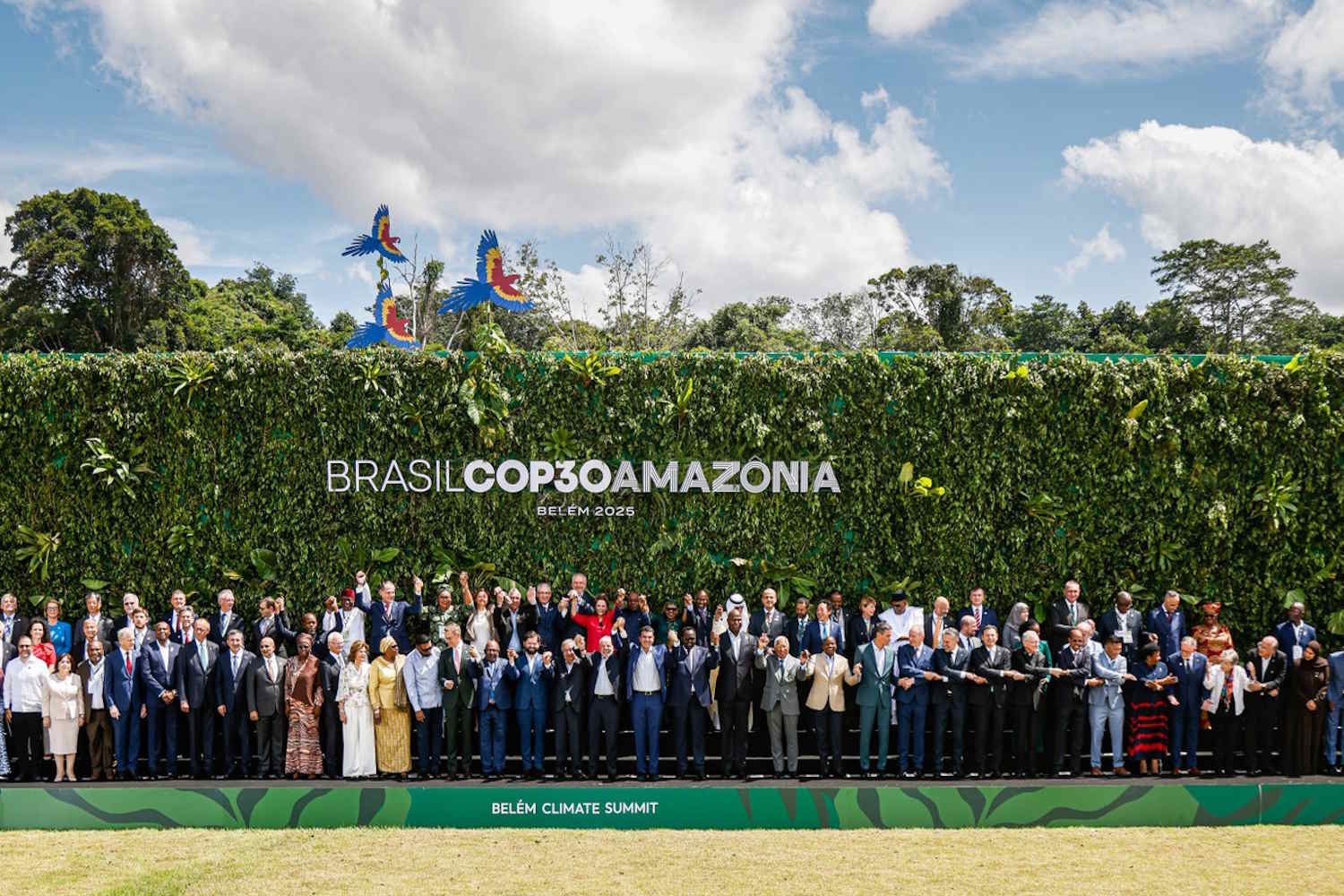
Last year in Baku the absence of von der Leyer and Emmanuel Macron weighed heavily, but also of Joe Biden who was about to end his term as president of the United States. Likewise, the 30th Conference of the Parties to the United Nations Convention on Climate Change, which begins today in the Amazon, will also be characterized by three main absentees: the world’s largest polluters, in fact, namely the United States, China and India, will not be present with their highest authorities.
And our Prime Minister? Well, she didn’t arrive either.
And so, for a change, the COP in Belém, on the edge of the largest tropical rainforest in the world, also raises the curtain in a climate of growing uncertainty and a real slowdown in international cooperation on the climate crisis. Precisely what we don’t need to revive our fortunes.
Beijing will be represented by Vice Prime Minister Ding Xuexiang, New Delhi by its ambassador to Brazil, while Washington has not sent any delegate. According to 2024 data from the EU Joint Research Centre, China, the United States and India are responsible for almost 50% of global emissions, while the EU contributes just 5.9%.
And Italy?
Italy participates in COP30 with the Minister of Foreign Affairs Antonio Tajani and the Ministry for the Environment and Economic Development, speaking at various events both within the Italian Pavilion and within the Cities and Regions Hub, of which MASE is a sponsor this year.
President Meloni has decided not to participate in COP30, delegating Tajani to represent her: a choice that clearly demonstrates the executive’s lack of attention towards one of the most serious emergencies of our time, declares the director of Greenpeace Italy, Chiara Campione.
According to Campione, the minister claimed a European agreement which in reality “it is a step backwards: a weak plan, based on accounting tricks and on mechanisms that allow part of the emission reductions to be moved outside the Union“. An agreement which, essentially, instead of responding urgently to the climate crisis, ends up offering new loopholes to the fossil fuel industry and once again postponing the necessary courageous choices.”
Greenpeace also recalls the words of the UN Secretary General António Guterres, who warned that failure to respect the 1.5°C limit represents a “moral failure and mortal negligencee”, and also attacks the “rhetoric of climate wait-and-see“, which – explains Greenpeace – “uses nuclear power and other pseudo-solutions as alibis to not change course and keep the country anchored to fossil fuels. Tajani’s words seem to have been written by Eni rather than by a representative of the institutions”.
Financing the transition, COP programs
Meanwhile, COP action programs are based on voluntary commitments rather than binding laws. But the scale of the change needed is enormous: at least $1.3 trillion in climate investments every year by 2035.
Without urgent action, scientists warn that global temperatures could rise between 2.3°C and 2.8°C by the end of the century, leaving vast regions uninhabitable due to floods, extreme heat and ecosystem collapse.
At the center of the talks in Belém will be the Baku to Belém Roadmap Report for $1.3 Trillionprepared by the COP29 and COP30 presidencies, which sets out five priorities for resource mobilization, including strengthening six multilateral climate funds, strengthening cooperation on the taxation of polluting activities and converting sovereign debt into climate investments, a move that could unlock up to $100 billion for developing countries.
The report also calls for dismantling barriers such as investment treaty clauses that allow companies to sue governments over climate policies. These disputes have already cost governments $83 billion in 349 cases.
Another key focus for Belém is the latest set of Nationally Determined Contributions (NDCs), national climate plans that outline how countries plan to reduce emissions. To keep warming below 1.5°C, global emissions must fall by 60% by 2030. Current NDCs would provide only a 10% cut.
Of the 196 parties to the Paris Agreement, only 64 had submitted updated NDCs by the end of September. Delegates will also need to approve 100 global indicators to track progress in climate adaptation, making results measurable and comparable across nations. Today, 172 countries have at least one adaptation policy or plan, although 36 are outdated. The new indicators should help define more transparent and effective policies.
With the planet warming faster than ever, adaptation is now a central pillar of climate action. But the United Nations Environment Program (UNEP) warns that adaptation funding must increase twelvefold by 2035 to meet the needs of developing countries.
COP30 will also advance the just transition work program to ensure that climate measures do not exacerbate inequalities. But the fact that there are no big polluters, well, this is already a great and serious inequality.
Sources: COP30/ UN / Ministry of Foreign Affairs / Greenpeace
