
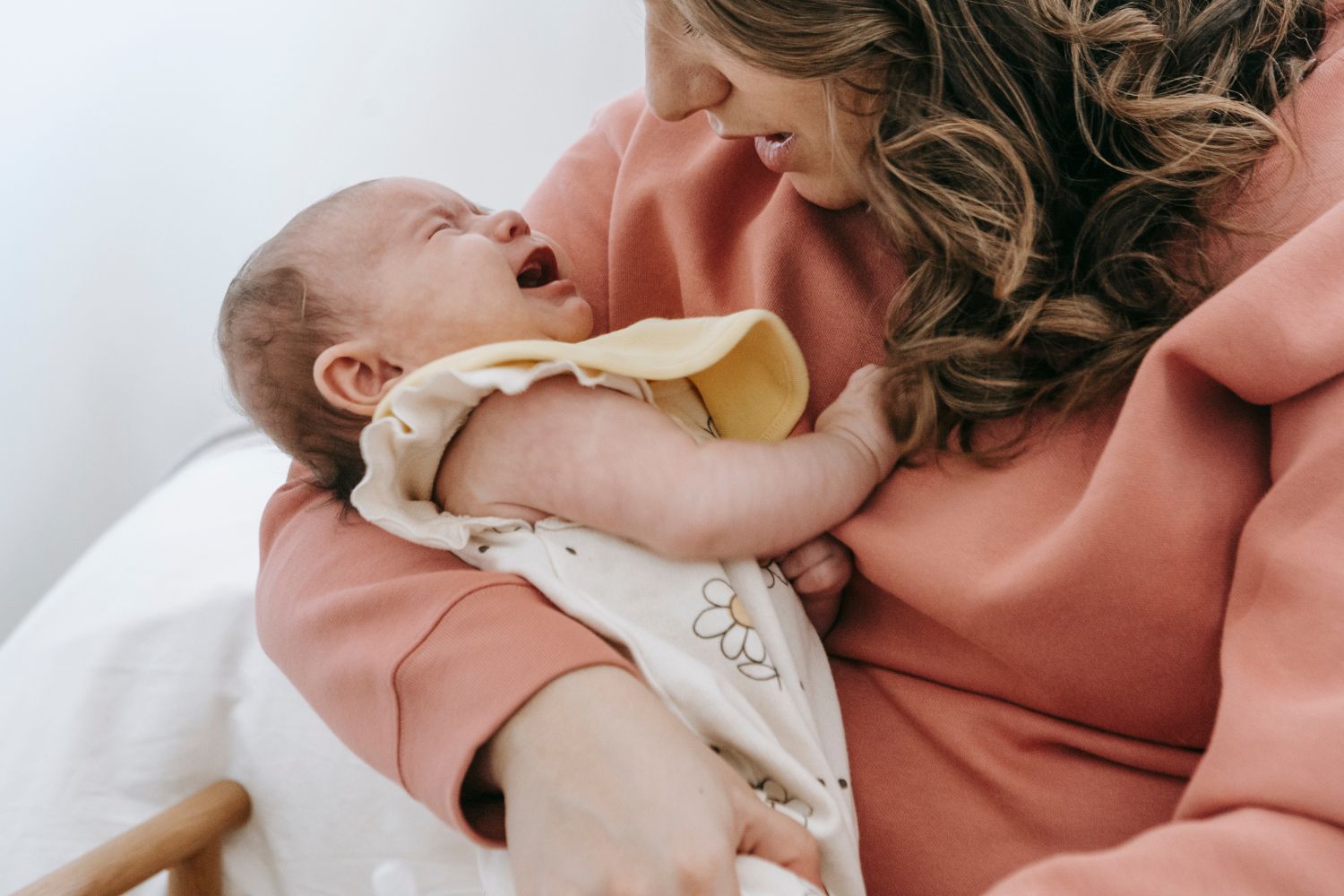
No, that mothers are more sensitive to the crying of newbornsnature did not plan them like this, the society we built did it: they are (almost) women always get up at night when the children cry because “they do so”, fathers can sleep, even if they feel crying exactly like their companions. This is demonstrated by a study led by Aarhus University (Denmark).
Yes, it is only a myth to dispel that of women “planned” by nature to listen to even the smallest wandering of children: men have an almost identical hearing, but they sleep the same because The company lets them sleep.
The researchers found only minimal differences between the auditory ability of men and women, but mothers take care of children during the night Three times more often than fathers. Moms and dads react to the night crying in equal measure from the “technical” point of view, but mothers are almost always getting up.
The researchers conducted two separate studies: the first experiment, conducted on 142 adults without children, noted that women were only slightly more reactive to very weak sounds.
Contrary to what is commonly represented by the media, our male participants did not sleep during the crying of the child – explains Christine Parsons, who guided the work – we found a significant variability in the way people woke up because of the sounds during the experiment, and a remarkable overlap among our male and females participants
The researchers found that women had about 14% more likely to wake up Due to whispering sounds, regardless of whether it was the crying of the child or a normal alarm sound. But with higher volumes it was not found no significant difference between men and women.
In the second study, 117 newbies in Denmark documented their night assistance for a week.
The results showed that mothers had one probability three times greater To deal with night assistance to the newborn compared to the Fathers-reports Arnault this-Vermillet, co-author of the research-our mathematical model has shown that the big difference in night care cannot be explained by the small differences that we have observed in sensitivity to the sounds between men and women
So why are women always (almost) to stop their rest to deal with children?
The researchers indicate social factors rather than biological differences to explain the disparity in assistance.
We believe that there are several factors that explain our results, probably interconnected – continues Parsons – first of all, mothers generally take maternity leave before fathers take paternity leave. Mothers therefore acquire greater experience in calming their child from an early age than the fathers. Secondly, when mothers breastfeed at night, it could be sensible that the fathers sleep all night
The study contributes to the wider debate on gender equality in parentingquestioning the hypotheses on the reactivity of men towards infants. It also highlights how the recent political changes in Denmark, which have increased paternity leave from two to eleven weeks, could contribute to balance the responsibilities of care of children between parents.
And in Italy? Unfortunately, our country continues not to shine in gender equality: the Mandatory paternity leave is still 10 dayseven if – small step forward – for 2025 mothers and dads will be able to benefit from 3 monthly parental leave paid at 80% and the remaining monthly paid for 30%, with the increase in the allowance that can be request from both the father and the mother within 6 years of life of the newcomer or from the entrance to the family in case of adoption.
The researchers now hope that there are other studies that examine as fathers and mothers adapt to parenting, with the change of hormones and rhythms of sleep. And we continue to hope that the differences induced by the company change as soon as possible.
The work was published on APA PSYCNET.
Sources: Aarhus University / APA Psychnet
