

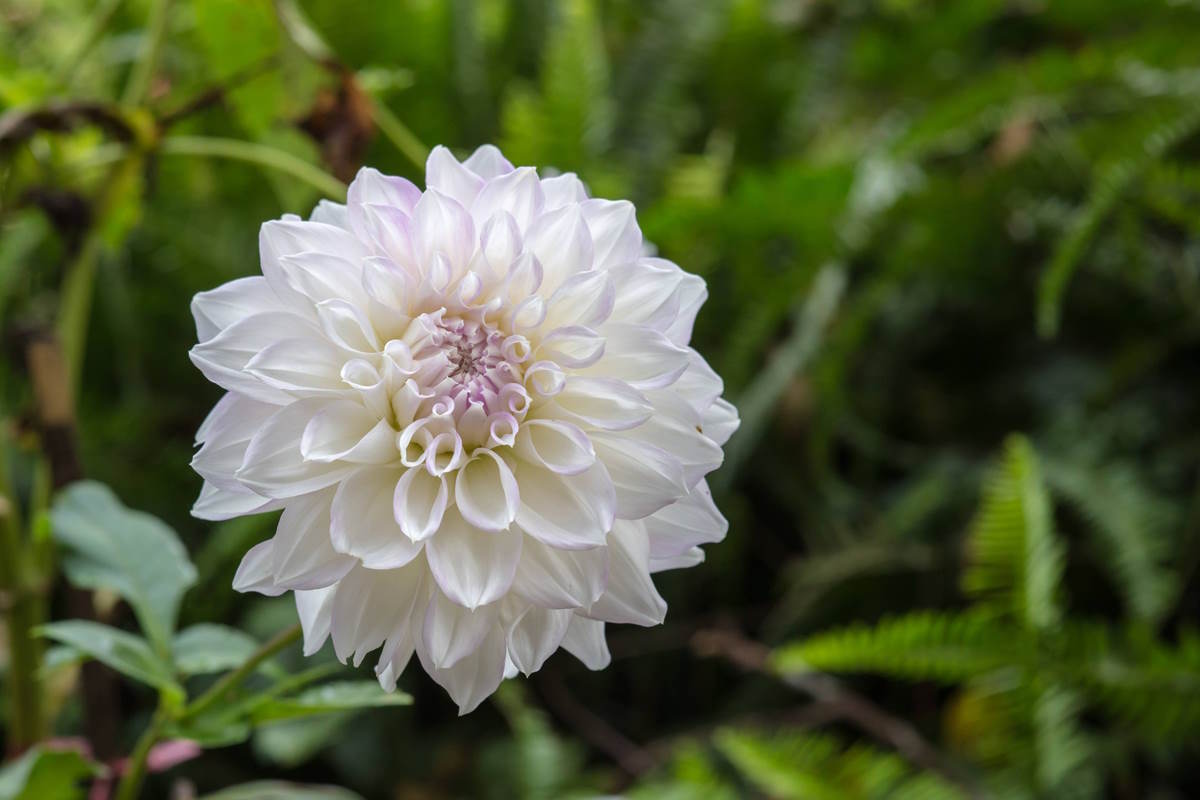
Dalia is one ornamental plant that produces intensely fragrant flowers with bright colors. The most common colors are above all The shades of yellow and redbut there are also varieties of dalie with corolla White, orange, pink, purple or tested with polychrome shades.
Originally from Mexico, genre Dhaalia It includes 30 species and more than 20 thousand varietieswhich can reach different dimensions.
They range from 25-35 cm of the dwarf varieties passing through the intermediate ones up to the giant duties, which can even go up to 2 meters in height and have very large and flashy flowers. The dwarf varieties are the most suitable to be grown in pots, both to decorate balconies or terraces and to embellish the windowsills.
Dalia It blooms in the summer until late autumn.
It has a cable stem, tuberiform roots, large and numerous dark green leaves. The flowers, on the other hand, present themselves in the most varied forms.
Dalia what are the most common varieties
As mentioned, there are many varieties of Dalia, depending on the shape and color of the flowers. The most common ones, or at least the most common ones in our country, are as follows:
How to cultivate the dalia
Dalia can be grown in the ground or pot. As mentioned, the dwarf varieties are more suitable for growing in pots. This plant needs hot climates and very sunny environments, it is very delicate, not very rustic and suffers the cold.
Keeping in mind these characteristics, his cultivation does not present particular problems. The only precaution to observe is that of Remove the tubers from the ground during vegetative restespecially if we live in particularly cold areas. Those who live in southern Italy, or in any case in an area characterized by particularly mild winters, can also avoid this practice, leaving the underground tubers during the cold season.
Otherwise, at the end of the autumn the tubers must be extracted from the ground, eliminating the sick or ruined ones. They must be placed on a box with dry sand and sawdust, having layers and keeping them in a dry place, well ventilated and sheltered from the light.
Spent the cold season, with The arrival of the first spring tiles can be made to plant.
When the dalia is planting
Dalie must be planted Between the end of March and Maywhen the cold is now definitively behind. If we intend to cultivate it in vasewe have to get one who is great At least 30 centimeters.
The soil must be fresh, deep and full of organic substances. The bulbs must be buried at about 10-15 centimeters of depth.
Depending on the variety and the maximum height it can reach, we will have to observe different distances between one bulb. The dwarf species or the flower beds must be planted leaving a space of about 40 cm between one specimen and the other. In the case of the species of intermediate size, it will be necessary to distance them of 60 cm, while the giant varieties must be positioned at a distance of 65-85 centimeters.
What ground is suitable for Dalia
Dalie grow well in any kind of soil, As long as it is rich in organic and well -drained substances. However, to obtain better results in terms of flowering, it is recommended to buy special soil, formulated specifically for this plant.
If you grow the dalia in pots, the advice is to add sand, which will favor better drainage of the plant.
Where the Dalia must be positioned
Dalia is a plant that needs A lot of heat to develop and flourish.
For this, it is important to place it in a well -suned position, in direct light of the sun’s rays. Its ideal exposure, therefore, is the one on the sun, having the foresight to move the plants to a position sheltered from the winds during the winter.
How many times the Dalia must be watered
Dalia requires Continuous and abundant irrigations. Especially after planting, the plant needs a remarkable supply of water. In the first phase of the vegetative period, the use of liquid fertilizer is also advisable, Rich in nitrate.
Subsequently, the watering must still be regular and well -cadenced over time, avoiding the excesses that could cause the decrease in the size of the flowers.
Between an annotation and the other, the soil must be kept humid, however avoiding water stagnation.
How and when to fertilize the dalia
Dalia goes fertilized annuallyin spring, using slow transfer granular fertilizer. During the vegetative phase of the plant, it is advisable to add some Liquid fertilizer to water Used for watering, at least until the leaves are ticked. At that point, immediately after the appearance of the foliage and throughout the flowering period, fertilizations can be stopped.
In fact, the plant will then be able to exploit the force and energy previously accumulated to flourish in a luxuriant way in our garden or on our terrace.
When to prune the dalia
For a better decorative and scenographic effect of the plant, the pruning phase is very important. Especially during flowering, the Dalia must be controlled weekly to eliminate the dry, damaged, old or widening parts.
It is also important to carry out the so -called blossom, which consists in eliminating the side buds, leaving only the central one. In this way, the latter will be able to create larger flowers.
On the contrary, if you want a greater number of flowers, but more small in size, you can eliminate the central bud, keeping only the lateral ones.
What are the diseases and parasites of the Dalia
Dalia fears above all i lepidoptera, which can ruin the stem, and the snailswho are greedy for his tubers.
This plant could also be the subject of attack by the Oidio (or white badly)a very common mushroom that causes the appearance of white spots on the foliage. To eradicate it, a treatment with battles-80 sulfur can be used, also admitted to organic agriculture.
In any case, prevention and the right care are fundamental for avoiding diseases or attacks by mushrooms or insects. During the planting, it is appropriate to distance the dallaie, in order to guarantee them the right contribution of light and air.
Furthermore, Always avoid the formation of water stagnation, which can encourage the proliferation of parasites and the rot of the roots.
How the dalie multiply
The multiplication of Dalia takes place for Division of the CESPI, by cutting or through sowing.
The division of the CESPI takes place at the beginning of the winter period.
The tubers from the ground are taken and place on a box containing sawdust or sand, located in a dry and repaired place. It is important that for each portion of Tubero there is a part of the old stem and at least one gem.
Multiplication for Herbaceous cuttingobtained by sprouting the flowers in the greenhouse, it is mainly used for the production of the cut flower.
Sowing serves to produce new varieties or multiply the varieties in pots, especially the simple flower varieties.
What are the curiosities related to the Dalia
Dalia was already known at the Aztecs, who used it to decorate gardens, buildings and places of worship. But the ornamental use of the plant was not the main one: at that time the Dalie constituted a real food.
They were also used to combat epilepsy and as a natural remedy to remove mosquitoes. Finally, the cables, typical of this plant, were used to collect water during the hunting trips.
The arrival of Dalia in Europe can be dated around the early eighteenth century.
Originally, however, these tuberose were intended for food use, replacing potatoes. Although it was considered edible, in Europe its bulbs were considered of little nutritional value.
Fortunately, however, the extraordinary beauty of its flowers soon came out.
Is the Dalia toxic for cats?
According to the list ofEnpa of Milan Dalia is a plant harmful to cats, if ingested can cause vomiting, excessive salivation and demolition. It is not considered toxic to man, but tubers should not be eaten raw (they are edible in theory, but in practice they are not digestible and have no significant nutritional value). In the past they were tested as substitutes for potatoes, but they were discarded.
What is the symbolic meaning of the Dalia
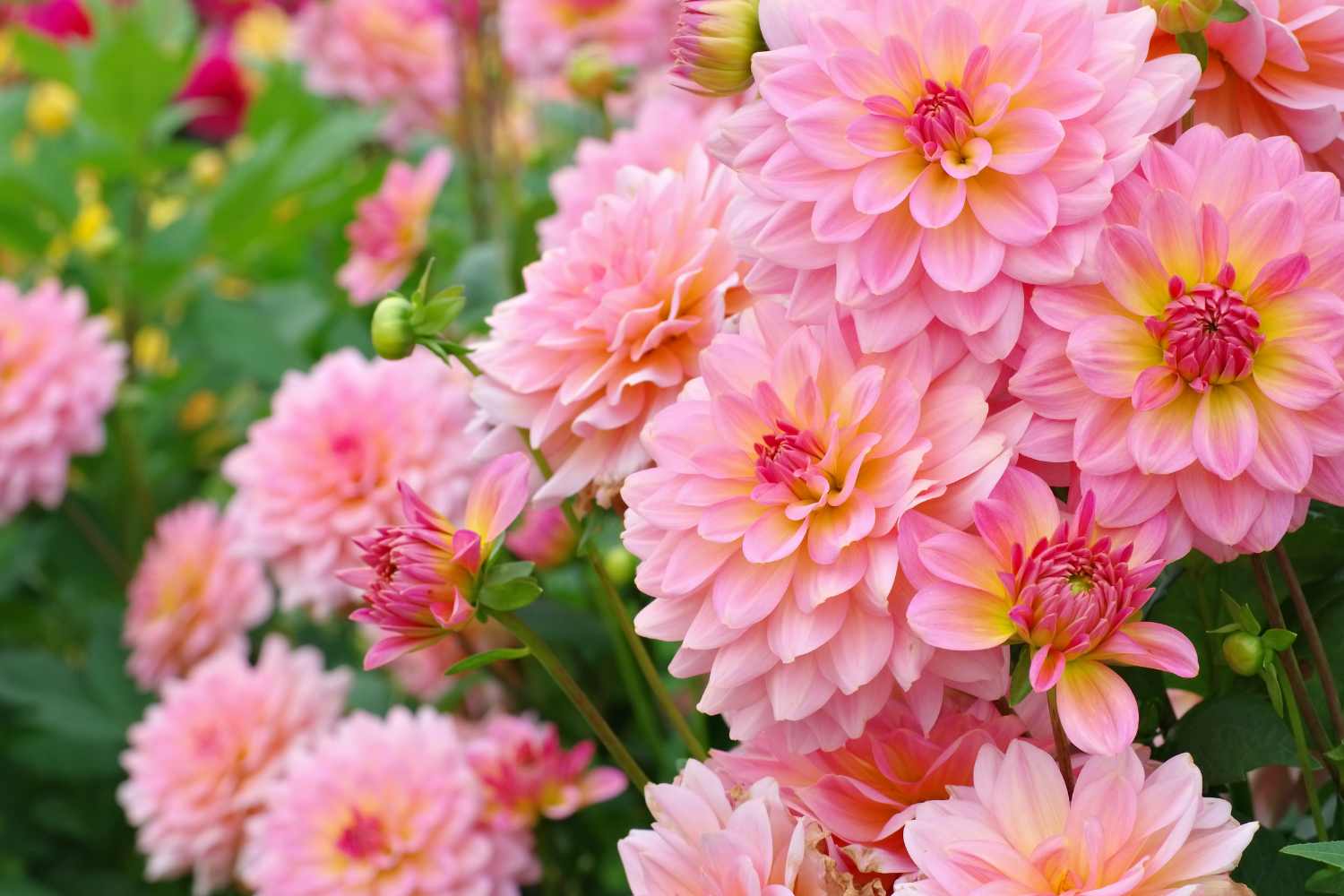
In the language of flowers the Dalia represents elegance and gratitudebut also admiration and femininity. The lovers exchanging it as if it were an omen, an anticipation of the future declaration of love.
If received as a gift from a friend or acquaintance, It is a symbol of gratitude and gratitude.
Frequent questions about the Dalie
Dalie resist the cold?
No, Dalie does not resist intense cold. They are not very rustic plants and fear the frost. In the regions with cold winters, the tubers must be extracted from the ground in autumn and stored in a dry, cool place and sheltered from the light until the following spring.
Can I cultivate the Dalie on the balcony?
Yes, Dalia’s dwarf varieties are perfect for pot cultivation, therefore ideal for balconies and terraces. Just use a container of at least 30 cm in diameter, well -drained soil, and place them in full sun. Regular irrigation is needed and a little liquid fertilizer in the early stages.
How long do Dalia’s flowers last?
Dalia’s cut flowers last on average 5-7 days in water, if well cared for. To prolong its freshness, cut the stems with a sharp knife diagonally, change the water every 2 days and keep them away from sources of heat and ripe fruit.
Do Dalie attract bees and butterflies?
Yes, especially the single flower varieties are highly appreciated by bees, butterflies and other pollinating insects. The most double and ornamental Dalie, on the other hand, tend to have less available nectar, therefore they are less attractive for useful fauna.
They could also be interested in:
