
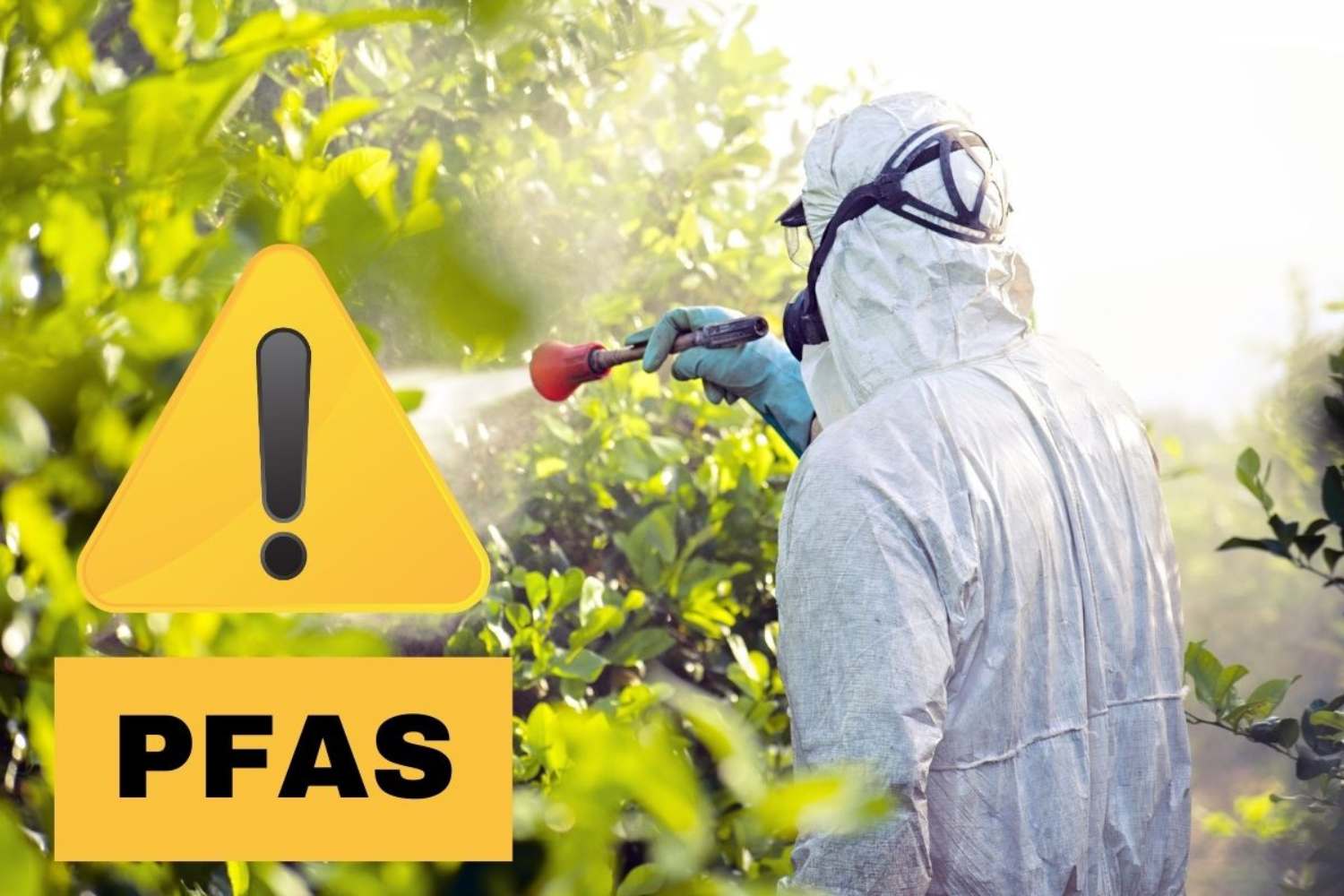
A necessary decision: the Danish agency for the protection of the environment has announced the withdrawal of theAuthorization to 23 phytosanitary products containing PFASsubstances known for their persistence in the environment and their ability to contaminate the aquifers. A move that not only puts the protection of public health and ecosystems in the foreground, but also launches a strong signal to the other Member States of the European Union.
The Danish measure concerns six active ingredients – fluazinam, fluopyram, diflufenican, mefentrifluconazole, taufluvalinato And Flonicamid – employees in agriculture and which, according to the study “Triflupest“Conducted by national geological services for Denmark and Greenland (Geus), degrade forming trifluoroacetic acid (TFA), a short chain PFAS mixture. The TFA is highly mobile in the ground, resistant to degradation and can easily reach underground waters, with possible long -term toxic effects.
According to European legislation (CE 1107/2009 regulation), the active substances contained in pesticides must not exceed the threshold of 0.1 µg/l in underground waters, especially if they have a problematic toxicological profile. The TFA is one of these. In the absence of immediate community interventions, the legislation obliges member states in any case to intervene nationally, and this is precisely the context that led Denmark to review the authorization granted to these pesticides.
The Geus investigation, together with the assessments of the Danish APA, found that in the usual conditions of use in agriculture these products release TFA in significant quantities. The concentrations were found not only in underground waters, but also in surface ones and even in foods such as wine and cerealsas highlighted in numerous reports of Pan Europe and in research of theGerman agency UBA.
In this regard, Salomé Roynel Pan Europe said: “EU legislation is clear. Article 44 of Regulation 1107 establishes that Member States must review and withdraw the phytosanitary products from the market if there is evidence that does not meet the requirements”.
The economic implications of the ban are not negligible: agricultural producers fear an impact, in particular on the cultivation of starch potatoes, widely used in the food industry. However, as pointed out by Cristina Guarda, MEP of the Greens, “the pollution of the aquifers with a permanent toxic chemical should be prohibited in all countries”.
Look adds: “The Danish provision confirms what we have been denouncing for some time: the phytopharmacies containing substances that degrade in TFA constitute a threat to food safety and the quality of drinking water. And it is painful that Italy, which hosts the largest case of contamination from Pfas known to the world, is not leader in the fight against these ‘eternal pollutants’ “.
Currently, ten other phytosanitary products are still under review by the Danish Agency, and a decision is expected within autumn. Meanwhile, the ban for the 23 products already identified will gradually enter into force: for some, use will be prohibited within six months, for others within fifteen.
Denmark’s decision is part of an increasingly urgent debate on the use of PFAS, substances that Europe has so far struggled to regulate in a homogeneous and timely manner. Despite the growing scientific evidence of their effects on health and the environment, and the growing pollution of water in countries such as Germany, Sweden and Belgium, the EU has not yet adopted a total call for these compounds in pesticides.
The Danish action, therefore, can represent a turning point. If other Member States decide to follow the example, it will be more difficult for the European Commission to ignore the problem. The alternative? Continue to tolerate the diffusion of “eternal” chemical compounds in our ecosystems, with the risk of irreversibly damaging the water resources of which all – including agriculture – depend on.
