
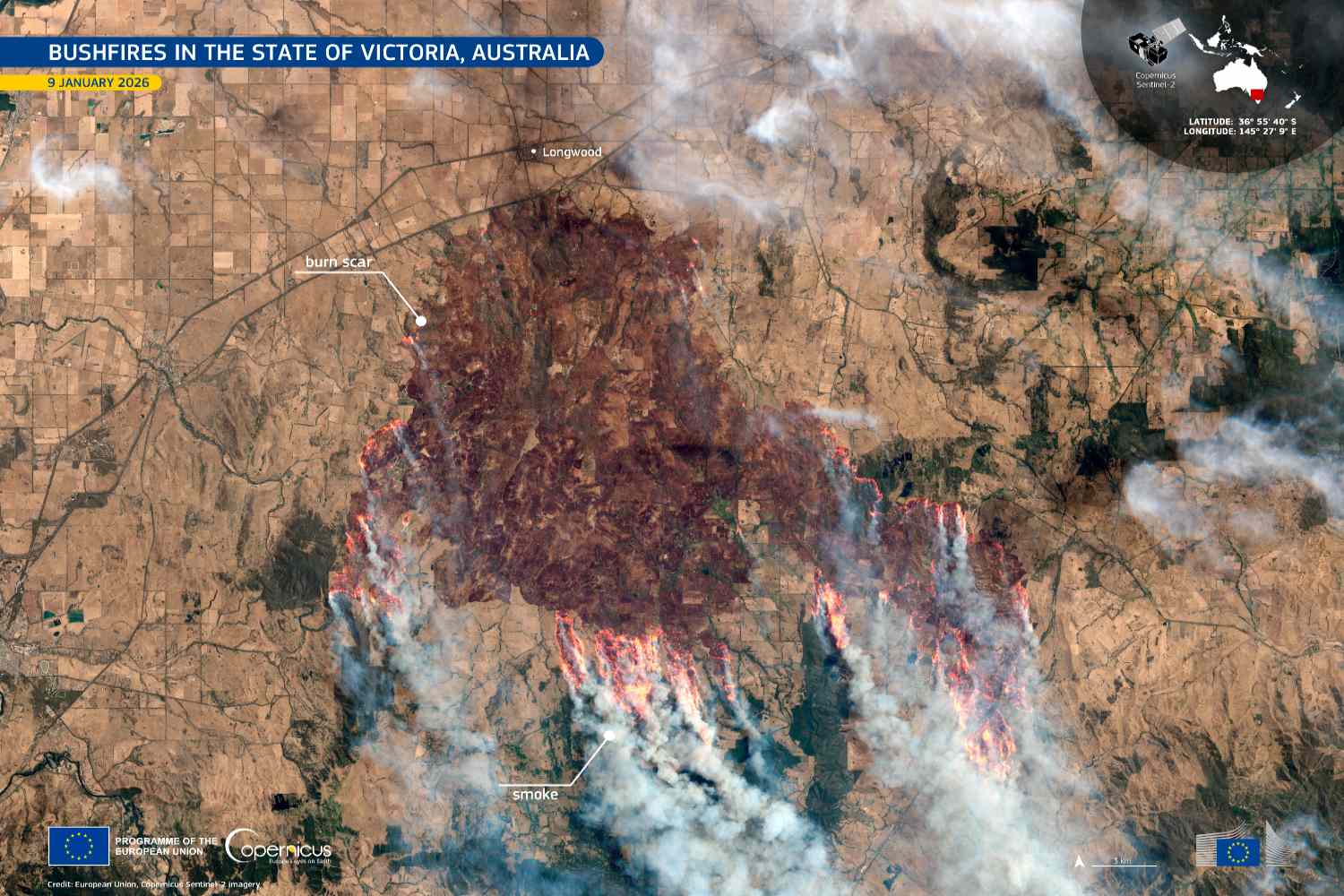
Bushfires have hit southeast Australia hard, killing one person and destroying more than 300 buildings. The most critical situation is in the state of Victoria, but the flames are also affecting New South Wales. Authorities have declared a state of emergency, mobilizing thousands of firefighters and more than 70 aircraft to tackle the blaze, which could last for weeks due to extreme heat, wind and dry conditions.
Victoria has declared a state of disaster as bushfires destroy more than 130 properties and burn through 300,000 hectares, with flames stretching from the state’s south to the New South Wales border. pic.twitter.com/yOrfXnqHX1
— 7NEWS Sydney (@7NewsSydney) January 10, 2026
The remains of a person were found in the village of Gobur, near Longwood, about 110km from Melbourne. The victim has not yet been identified. Meanwhile, air quality is severely affected in many areas, including the city of Melbourne, due to smoke and ash.
The current fires are considered the worst to hit south-east Australia since the disastrous 2019-2020 period. Local captain Andrew Wilson described the situation as “heartbreaking“, while reporters documented entire roofs of houses left alone in the rubble. Also showing the devastation is a satellite photo from Copernicus Sentinel-2 which portrays the burned areas in black and the active fires in bright red south of Longwood.
In other regions it is Cyclone Koji that brings destruction
Australian Prime Minister Anthony Albanese visited the affected areas, announcing $19.5 million in recovery funding, along with the State of Victoria. The authorities are inviting the population to evacuate or seek safety. Emergency Management Commissioner Tim Wiebusch recalled that many areas remain dangerous, even after the fire has passed, due to falling trees or debris.
The provisional toll shows more than 350,000 hectares of bushland destroyed, as well as hundreds of homes and public facilities. Meteorologists predict a temporary drop in temperatures, but significant rain is only expected later in the week, while in other Australian regions the passage of Cyclone Koji brings heavy rain and intense winds. Unfortunately, the frequency and intensity of extreme phenomena such as heat waves and forest fires continue to increase, a tangible sign of the effects of the climate crisis which brings with it death and destruction.
You might also be interested in:
