

It is estimated that the majority of the population has a more or less marked deviation of the nasal septum, often without any symptoms. For a significant portion, however, that deviation can translate into something negative, and lead to sleepless nights, recurrent sinusitis and shortness of breath, without forgetting the aesthetic value of a deviated nasal septum.
The question that many ask themselves, often after years of living with these disorders, is whether and how much it is worth having surgery. The answer is not unique, because it depends on the type of deviation, the symptoms, the possible aesthetic component and the surgical technique available. Let’s try to sort things out.
What is the nasal septum and why does it deviate
The nasal septum is a plate of cartilage and bone that divides the two nasal cavities from the inside, whose function is easily explained: it contributes to the regulation of the air flow in the nasal cavities, favoring the filtration, heating and humidification processes carried out by the nasal mucosa, and guarantees the structural stability of the entire nose. When this wall shifts – due to congenital causes, trauma, or simply due to asymmetric development during growth – it is called a deviated septum.
Deviations are not all the same. Some involve the anterior cartilaginous part, others the posterior bony part, some produce a curvature visible from the outside, others remain hidden and manifest themselves only through the symptoms we talked about at the beginning. The so-called “boxer’s nose”, for example, is the most obvious form and usually the result of direct trauma; more common is the septum that deviates without making it visible externally, which can only be diagnosed with a rhinoscopy.
Symptoms that should not be ignored
Not all septal deviations require surgery. The turning point usually occurs when the symptoms become so persistent that they compromise the quality of life. Among the signs to take into consideration we can mention unilateral or bilateral nasal obstruction that does not respond to pharmacological therapies, recurrent sinusitis, frequent nasal bleeding, chronic headaches and – perhaps the most insidious because it is often not traced back to the cause – snoring associated with sleep apnea. Furthermore, a markedly deviated septum alters airflow in a way that dehydrates the nasal mucosa and promotes sinus infections. The sum of these disorders, associated with aesthetic dissatisfaction with the shape of the nose, outlines the typical clinical picture, which will almost always lead to a surgical solution.
Septoplasty, rhinoplasty, rhinoseptoplasty: it’s not the same thing
One of the most common mistakes is to use these terms as synonyms, because in reality we are talking about very distinct interventions, with different objectives and precise indications. Let’s look at them better:
When the deviated septum also requires rhinoplasty
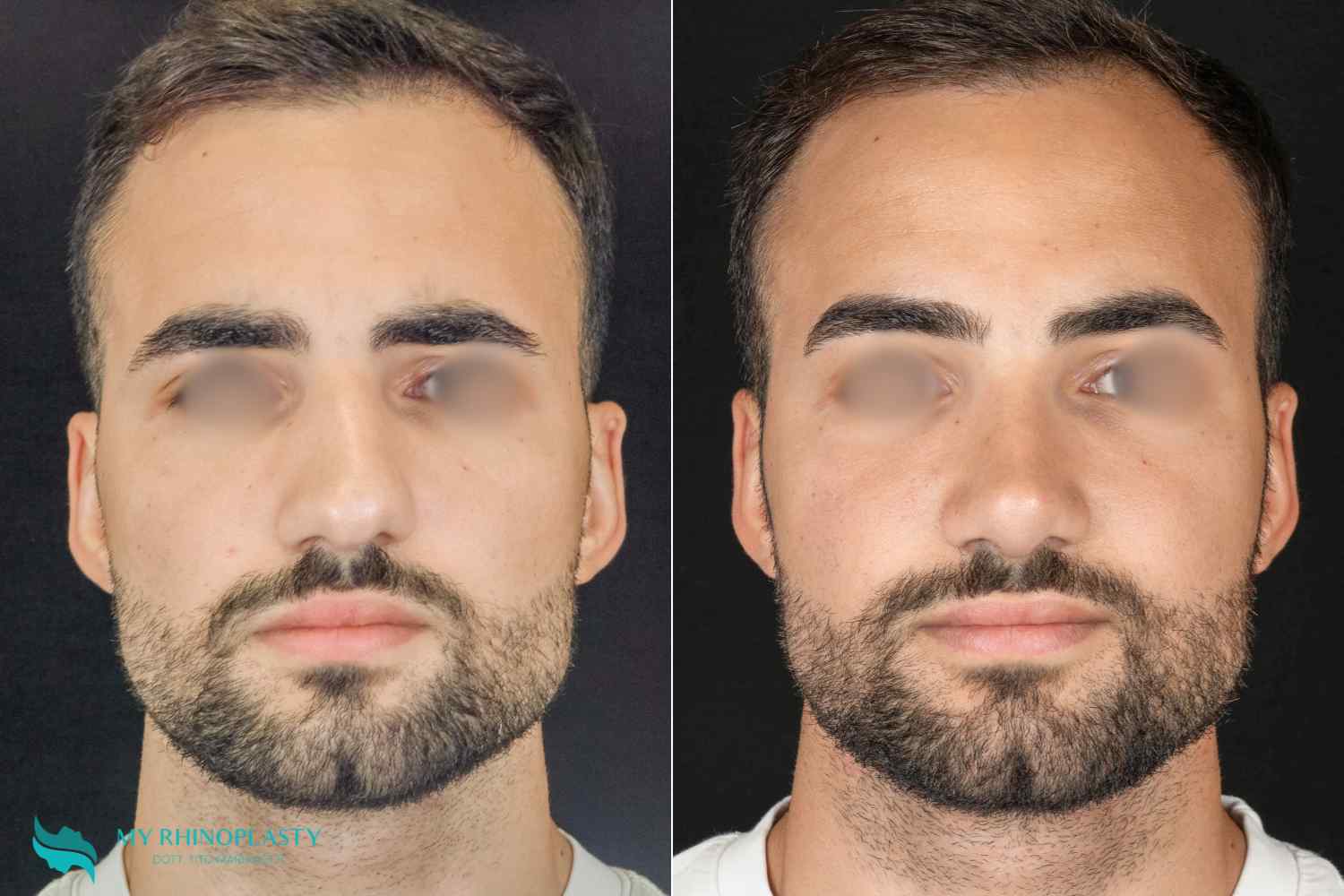
The crooked nose – the one in which the bony pyramid is lateralized and the shape changes depending on the angle from which it is observed – is almost always the external expression of a deviation of the septum. In these cases, operating only internally without also correcting the external structure would produce a satisfactory but aesthetically incomplete functional result. As in the opposite case: in the hypothesis in which an aesthetic rhinoplasty was requested for a nose perceived as crooked, ignoring the internal component, an aesthetic result would be obtained which over time would fail under the pressure of an incorrect structure.
The surgeon’s assessment in the pre-operative phase serves to understand exactly where the problem – or problems – are located and what the most appropriate approach is. There is no one-size-fits-all answer.
The surgical technique: open, closed, ultrasonic
The available techniques are essentially divided into two approaches: open rhinoplasty, which involves a small incision in the columella – the strip of skin between the nostrils – and allows the surgeon maximum visibility of the nasal structure; and the closed one, which works entirely through the nostrils without external incisions. The choice depends on the complexity of the case.
In recent years, the ultrasonic technique with PiezoSurgery has become widespread, which allows osteotomies (i.e. controlled surgical cuts of the nasal bone) to be performed with extreme precision and minimal invasiveness on the surrounding tissues. Combined with the mattress suture closure, it allows you to avoid the use of post-operative nasal swabs – one of the aspects that most discourages patients from undergoing surgery – a condition which guarantees a decidedly more comfortable post-operative course.
How to choose the surgeon: the criteria to take into consideration
Nasal surgery – both functional and aesthetic – is one of the most complex procedures in facial surgery. Each nose has a different history and structure, with relative anatomical logic, and for this reason the choice of surgeon is the first and most important step to take. Among the most important elements during the selection phase, we can include the following:
A reference in the area: Dr. Tito Marianetti
Among the ultra-specialized maxillofacial surgeons in nasal surgery active in Italy, Dr. Tito Marianetti is a point of reference of absolute importance. University professor at the Catholic University of the Sacred Heart of Rome in the Master of “Functional and aesthetic surgery of the nasal pyramid”, author of over 60 scientific publications and of the volume “The ways of rhinoplasty”, he is a member of the AICEFF board of directors representing Italian maxillofacial surgeons. He completed part of his education at Texas University and the Universidad Complutense of Madrid.
On an operational level, Dr. Marianetti has developed an approach that he calls “NOSE” (acronym for Natural, Open, Structural and Essential), in which it combines ultrasonic surgery with PiezoSurgery – allowing precision osteotomy interventions with minimal trauma to the tissues – with a closed mattress suture which makes the insertion of post-operative nasal swabs superfluous. For many patients, the prospect of waking up with a blocked nose and having to remove the swabs only after several days is the main deterrent to surgery. With this technique, this phase disappears completely.
Dr. Marianetti’s case history exceeds 3,000 nasal operations, a number which, beyond the data itself, indicates a variety of situations addressed: from isolated deviations to complex cases in which the functional correction of the septum is intertwined with a reconstruction of the nasal pyramid, up to revision rhinoseptoplasties on patients who have already undergone surgery elsewhere.
Before deciding: the right questions to ask
If you are approaching an evaluation of this type for the first time, you should arrive at the specialist visit with some questions already in mind, such as: “Are my symptoms compatible with a septal deviation?”, “Is the surgery proposed to me functional, aesthetic or combined?”, “What surgical technique is planned and why?”, “What is the plan for the post-operative course?”.
A good surgeon will answer all your questions clearly, without rushing and without omitting the risks, so that you can know the entire procedure of the operation.
