
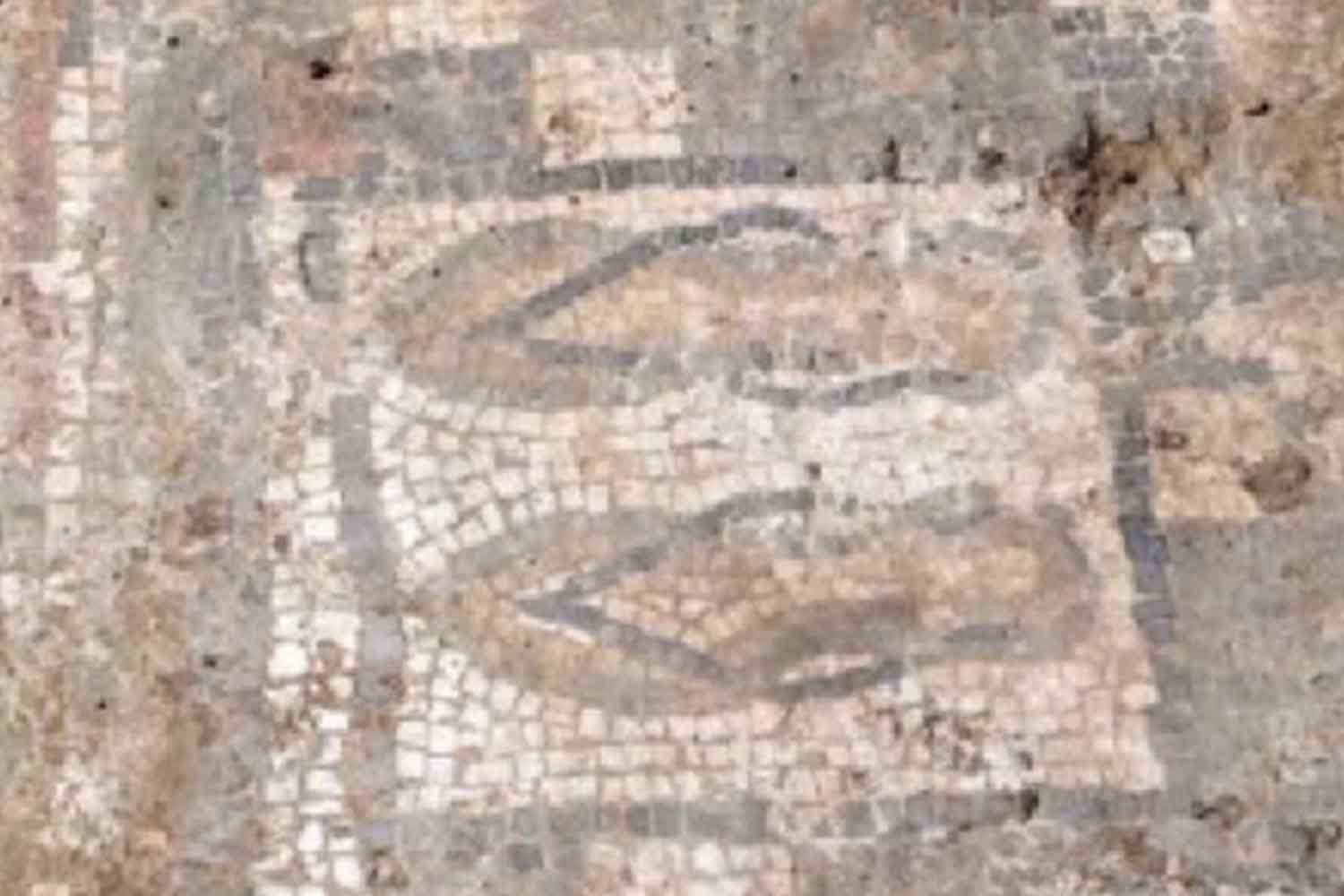
A couple of Roman flip flopssculpted with incredible precision in the colored pieces of a mosaic, is the new protagonist of the Sicilian archaeological scene. At 1,600 years after its realization, this small detail that emerged from the bottom of a swimming pool of the Roman villa of the farmhousein Piazza Armerina, seems to rewrite the story of an object that we all know and still use today.
The discovery was announced by Archaeological park of Morgantina and the Roman Villa del Casalewho spoke of a “not simple decoration, but refined work of a mosaicist master”. Depicted in frigidarium – the cold room of the Roman spa – sandals have the classic Y shape between the fingers, just like those we wear on the beach or a poolside on the beach.
Flip flops in antiquity?
In addition to visual curiosity, detail has a precise meaning. In the Roman era, walking barefoot in public bathrooms was not only not recommended: it was also a sign of neglect. The flip floptherefore, they were not only practical accessories, but also part of the culture of well -being and personal hygiene, very rooted among the upper classes of the empire.
The fact that this representation appears precisely in the pavement mosaic of a thermal swimming pool, in a private and luxurious context, confirms that these shoes were common and probably also required to access the spa. A custom that, if we think about it, is not so different from the rules we find today in each gym or wellness center.
The discovery
To bring to light the mosaic was Isabella Baldiniarchaeologist of the University of Bologna, during the fourth edition of the Summer Series Archlaba training project involving students from 11 countries for excavation practical experiences in Italy.
There Roman villa of the farmhousedeclared UNESCO World Heritage Siteis one of the best preserved late Roman residences, known for the incredible wealth of its mosaics. Each room is decorated with detailed scenes, which reflect daily life, aristocratic habits and artistic tastes of the time.
In this villa there is also the famous mosaic of “Girls in bikini”in the gym next to the thermal area. And even there, as in the case of flip flops, the decoration has a function that goes beyond aesthetics: it represents a visual education, an indication on how to use space.
It is no isolated case
Professor Baldini explained that Similar reasons also appear in Spain, Jordan, Cyprus, Cyrenaica and Asia Minoralways within thermal complexes. It was therefore a shared iconography, which immediately communicated the social and aesthetic level of the place.
And it is not even the first time that findings from the Roman era show objects or symbols that seem modern to us. Already in 2023, in Pompeii, a fresco with a sort of pizza on a banquet. Obvious signs that many of the things we use or eat today have much deeper roots than we think.
