
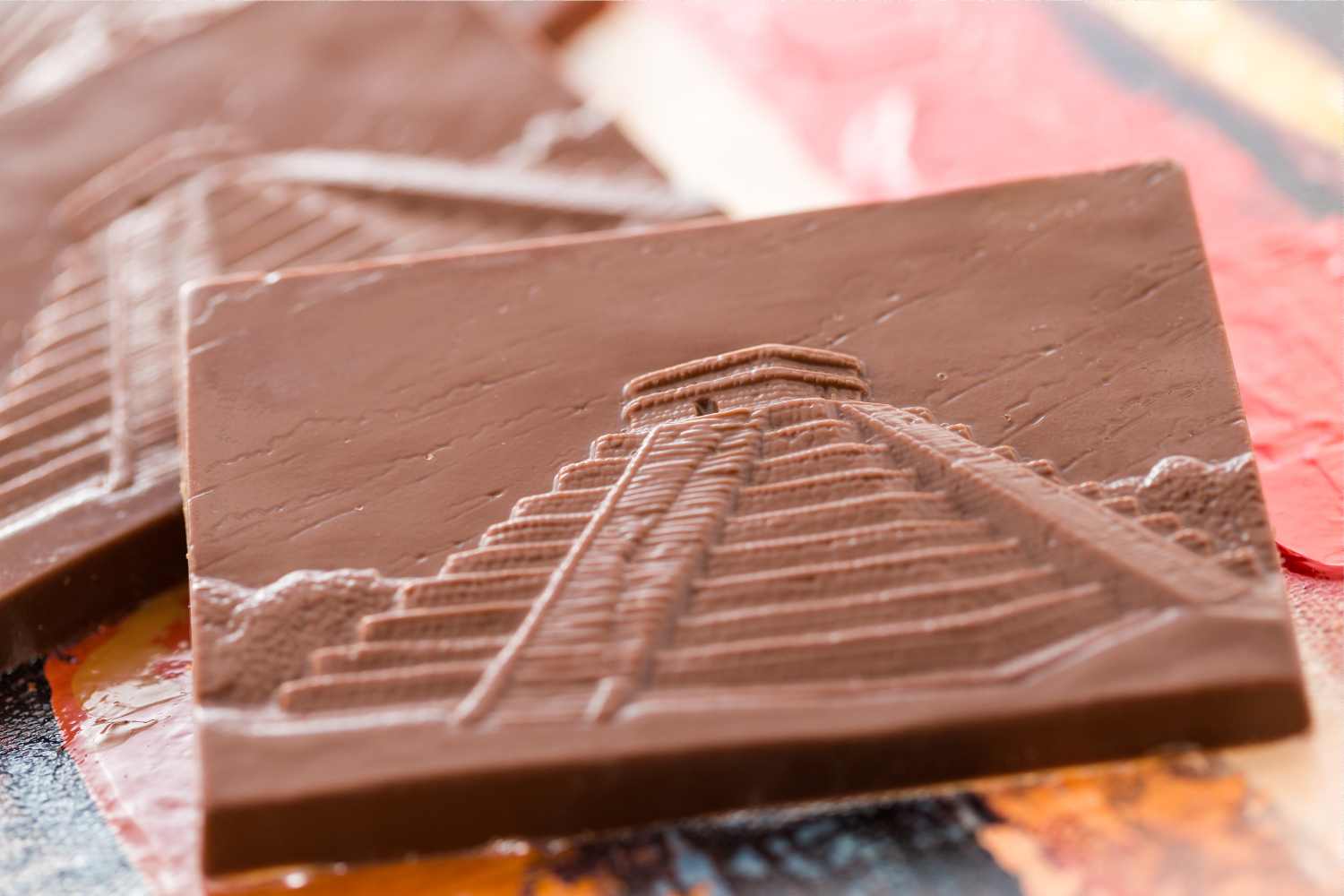
There was a time when the chocolate did not eat, nor was melted in the cup, nor did he give himself to celebrate a love. Instead it counted, accumulated and exchanged. Were the times when the barter existed, and chocolate became moneyreal, sound coin – indeed, crunchy.
It happened among the Mayans, in that universe full of symbols and rites that left an indelible imprint in the history of humanity. And yes, they knew well how much cocoa was worth: not only as a food or sacred drink, but as an instrument of power, barter and exchange.
To reveal it precisely is a search for the archeologist Joanne P. Baronof New Jersey, published in the magazine Economic Anthropology. A study that reveals surprisingly like cocoa beans, well before becoming chocolate as we know it today, they circulated in the Mayan markets as real account units.
Precious fava beans like gold
The logic is simple, but refined. In an era in which money, as we understand it today, did not yet exist, the companies entrusted to barter. Corn, tobacco, fabrics, land products, daily use materials, all with a symbolic and practical value.
Among these, cocoa occupied a special place. He grew only in certain areas, required complex processes, and was associated with religious rituals and social prestige. It wasn’t for everyone.
Baron’s work is based on the analysis of hundreds of images dating back to the classic period of the Mayan civilization, between 250 and 900 AD Engravings on ceramics, mural paintings, representations of offers and taxes. Everything suggests a fascinating reality: the cocoa beans were not simply “food”. They were a means of payment, tribute to power, salary.
Starting from the eighth century, in the depictions they appear frequently. The tribal leaders were paid homage to bags full of beans, and more than transforming them into drinks, they seemed interested in accumulating them, just like it is done with money.
Chocolate as a coin: a historic turning point
Baron’s hypothesis is clear: cocoa was “monetized” when the economic needs of the Mayan kingdoms became more complex. Wars, alliances, trade, imposed a more efficient form of exchange than direct barter.
And so the beans, already appreciated for the symbolic and religious value, also became currency. A transformation far from trivial, because behind that passage there is a profound evolution: from the ritual gift to systemic payment, from the sacred to the economy.
It is no coincidence, in fact, that together with cocoa the cotton fabrics also took on the same role. Both, writes the scholar, were “prestigious” objects, full of meaning, and as they are easily spent such.
Cocoa made it possible to buy goods, to pay workers, to support the needs of everyday life. And it is interesting to note that, in parallel, stories and symbols that justified this new function have spread. As if to say: “What we use as a coin, we use it because it is sacred, noble, rare”.
From the pyramids to the tablet
Thinking about it has a certain effect. Today the chocolate is found everywhere: in supermarkets, in bars, in snacks. Yet, originally, it was an elite object.
Drink bitter, spicy, foamy, he was reserved for kings and priests, as if he were an elixir, a “magical” potion. It did not exist in tablets, nor to milk: it was liquid, strong, enveloping.
Its use as a coin marks a crucial phase of the Mesoamerican economic and cultural history. And it tells something deeper about the way in which humans attribute value to things.
Money, Baron writes, is not only material, but also narration, relationship. And contest, for this reason a simple cocoa fava could be as worth as much as a day of work. Or a precious dress.
A past that smells of the future
Today talking about “chocolate currency” almost makes you smile. Yet if we think about it, there are digital coins, cryptocurrencies, collectibles that have value only because someone has decided that they must have it, in an arbitrary and conventional way.
The lesson of the Mayans, after all, is still current: the value does not reside in the object, but in what it represents, and if once the cocoa served to pay the taxes, today it continues to be one of the most universal gifts, a symbol of affection, gratitude, party.
So yes, the next time you scared a tablet of chocolate, think about it. Among those sweet and fragrant lines, a millennia long story resides, made of trade, power and rituals. And of a people, the Mayans, who knew how to see in a small bean the beating heart of an entire economy.
