
In Italy, as temperatures rise, glaciers melt and natural snow becomes increasingly rare, around 90% of public funds allocated to mountain tourism continue to finance the “snow system”. However, minimal resources remain for the conversion of obsolete facilities and the development of mountain tourism less dependent on skiing.
Furthermore, between the Alps and the Apennines, in 2026 the number of abandoned ski resorts rose to 273, while – among abandoned or underused hotels, residences, tourist facilities, military or production complexes – the “suspended buildings” registered reached 247.
The new Nevediversa 2026 report by Legambiente takes stock, which analyzes the situation of skiing and accommodation infrastructures at altitude in the era of the climate crisis and also reflects on the prospects of major winter events, such as the Olympics. The document also includes some proposals for the future of mountain areas, collected in the “Poster of the Caravan of mountain hospitality”, which aims to put local communities back at the centre.
The report
At a regional level, Piedmont confirms itself as the region with the highest number of abandoned ski facilities (76), followed by Lombardy (51). Instead, the Regions that have the most “suspended buildings” registered in the Alpine arc are:
while on the Apennines:
Among the symbolic cases there is, for example, the Grand Hotel Wildbad, in San Candido, Bolzano, a structure with historical-cultural value, but in a strong state of abandonment. At a national level, Legambiente also adds to these numbers those of the 106 ski resorts closed temporarily, the 98 that operate in a mixed condition of “opening and closing”; and then the 231 plants that today survive thanks to the funds, the so-called “cases of therapeutic obstinacy”. Lombardy (63), Abruzzo (47) and Emilia-Romagna (34) are the Regions with the most cases.
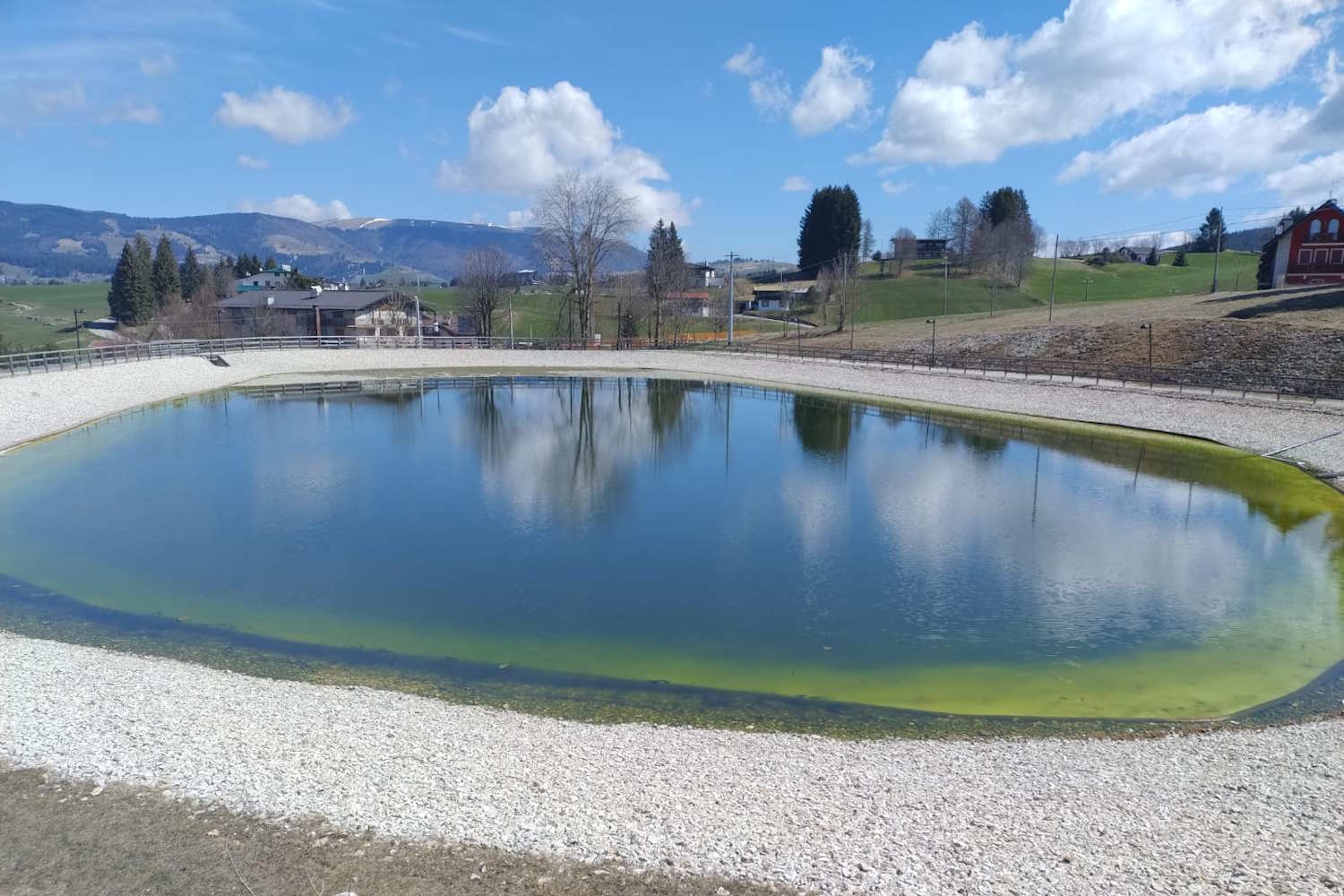
On the other hand, there are 169 basins for artificial snow, the majority of which are located in Trentino-Alto-Adige, Lombardy and Piedmont. Meanwhile, more and more “mountain amusement parks” are being created at high altitudes, i.e. those recreational attractions such as tubing slopes, summer bobsleigh or other runs that are often integrated into ski areas but are not always sustainable in the mountain environment. Of these, most are concentrated in Lombardy (13 structures) and Tuscany (7).
Delays on reuse and dismantling
As for the reuse and dismantling of plants that are no longer functioning, in Italy there have been just 37 cases registered so far by Legambiente, in spite of our cousins beyond the Alps.
In the French Alps, for example, in Métabief, in the heart of the Jura massif, the resort has decided to anticipate the reduction of the skiable perimeter, closing the Piquemette sector to concentrate resources and guarantee the sustainability of the other facilities. In Les Arcs, in Savoy, the focus is on the diversification of tourist activities to extend the season beyond the winter, with summer itineraries, outdoor activities and cultural events. Furthermore, environmental sustainability projects have also been launched, existing structures have been redeveloped and sustainable mobility has been encouraged.
The big events
Furthermore, according to the dossier, another worrying sign concerns the future of major winter sporting events: within thirty years 44% of Olympic venues will lose their climate reliability. The situation is even more critical for the Paralympic Games, which generally take place in March: in this case it could be cancelled 76% of the locations currently considered suitable.
There is no shortage of critical issues for Milan Cortina 2026. Between delays on construction sites, rising costs and large disputed works, the budget leaves many questions open. This is why Legambiente underlines the need to open a broad and transparent discussion involving local communities, associations, economic categories and institutions, with the aim of arriving at a shared and useful evaluation to face a future increasingly marked by the climate crisis.
According to the environmentalist association, it is now urgent to rethink the winter tourism model and implement strategies that involve all interested parties, from local communities, associations and trade organizations to regional and national bodies for a final shared and useful evaluation for a future that takes note of the climate crisis.
With this spirit the “Poster of the Welcome Caravan” promoted by Legambiente and the result of comparison with the 300 Green Flags of the Alpine arc, entities awarded in recent years by Legambiente with the green banner and which invest in sustainability and innovation by responding and adapting to the ongoing climate crisis.
The Manifesto of the Caravan of Hospitality
Legambiente reports that the snow season in the Alps has noticeably shortened: according to data from Eurac Research, today it lasts between 22 and 34 days less than fifty years ago. Furthermore, between 1982 and 2020, the snow cover period was reduced by 10-20 days. In the same period of time, a drop of more than 30% was also observed in both the depth of the snow cover and the SWE (Snow Water Equivalent), the indicator that measures how much water is contained in the snow and therefore the real seasonal water reserve.
On the Apennines the presence of snow is increasingly irregular and uncertain. Ski tourism is also showing signs of a slowdown, aggravated by the increase in prices. The Italian Mountain Tourism Observatory (JFC) estimates for the 2025-2026 season a 14.5% decrease in daily skiers and a 3.9% decrease in Italians who choose to stay in the Alps and Apennines. Despite the decline, the numbers still remain high: the sector generates an economic volume of more than 12 billion euros, of which approximately 6 billion are linked to the hospitality sector.
The 10 points of the Manifesto
Within the Manifesto Legambiente summarizes ten central points:
HERE you can find the complete dossier.
