
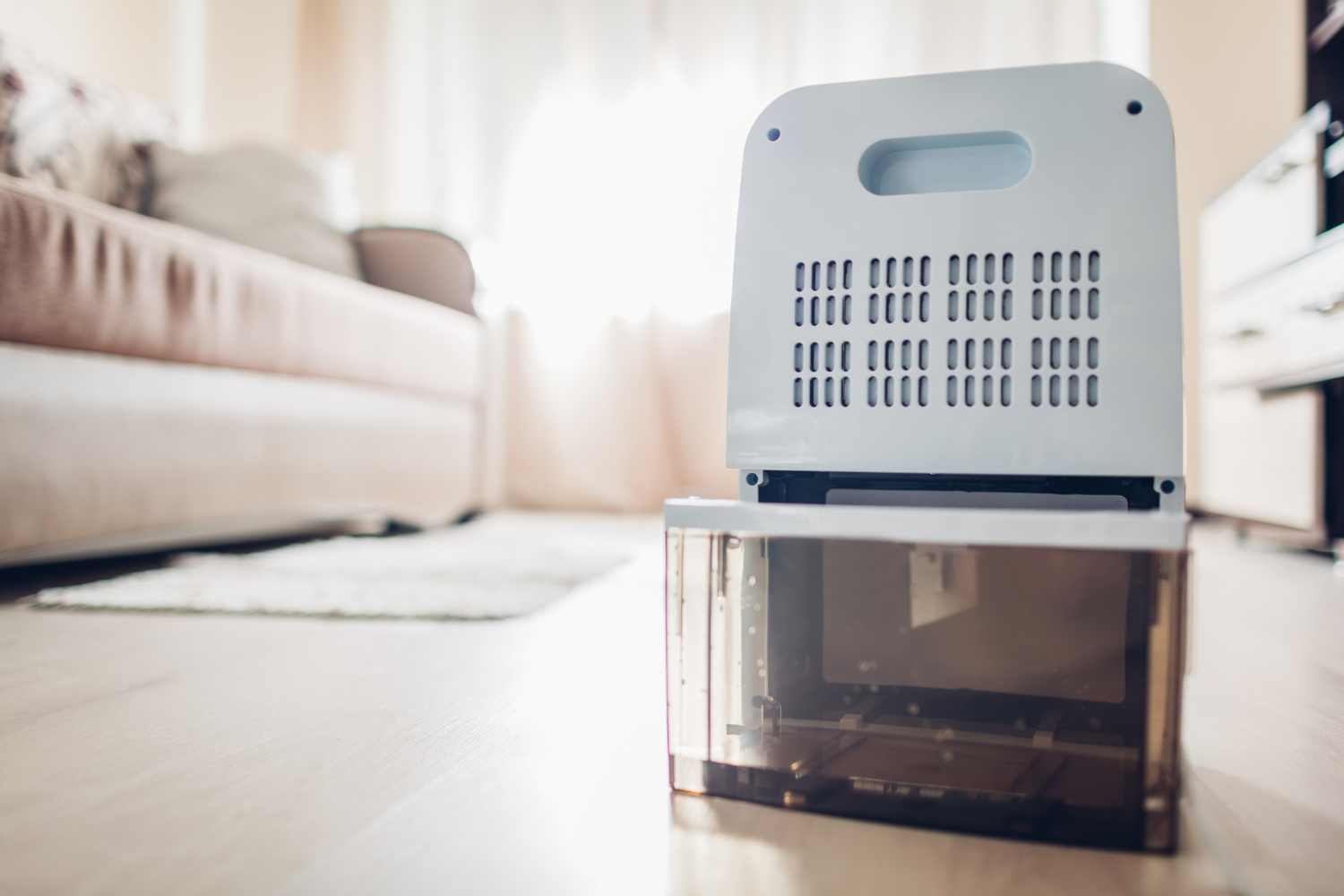
During the cold months, the dehumidifier becomes one of the most useful devices in the home, because it allows you to dry the laundry in almost half the time, avoiding the possibility of clothes piling up on the drying rack for days, and allows you to keep the domestic humidity threshold at bay, which improves air quality and reduces the risks linked to condensation and mould. Yet, in daily practice, many people simply turn it on, direct it towards the clothesline and leave it running for hours, without asking too many questions about its actual efficiency.
Careless management leads to a clear result: higher consumption and energy bills that grow without any real benefit in terms of performance.
The most common mistake: the wrong position
According to experts in the household appliance industry, the main problem concerns positioning. A dehumidifier placed in the wrong place risks negatively impacting household costs while reducing its effectiveness.
The reason is simple: to work correctly the appliance needs adequate air flow. If it were hidden behind furniture, placed against a wall or placed in a narrow corner, its ability to absorb moisture would significantly decrease. The air does not circulate sufficiently and the device struggles to intercept the water vapor present in the environment. To ensure optimal performance, it is necessary to leave a free space of at least 20-30 centimeters on each side, only in this way can the dehumidifier correctly extract and treat the air in the room.
How a dehumidifier really works
The basic principle is well known: the device captures water vapor dispersed in the air and removes excess humidity. In this way the environment becomes healthier and the laundry dries significantly faster.
However, if the air was not able to reach the device freely, the process would be interrupted or slow down significantly. A physical obstacle, such as a wall that is too close or a bulky piece of furniture, prevents correct air exchange and compromises the entire operation.
A central and airy location is better
Although it may seem less practical than placing it near the drying rack or against a wall, the most efficient point remains a central area of the room, with free space around it, a solution that allows air to circulate and promotes uniform absorption of humidity.
Remember: the location directly affects the consumption and performance of the appliance.
Be careful of doors and vents
Another often underestimated element concerns the circulation of air within the environment, given that a completely closed room, without any exchange, would reduce the effectiveness of the dehumidifier.
It is best to leave the door slightly ajar to allow air movement. At the same time, it is important not to block the device’s air vents and not cover the radiators, as heat and humidity could remain trapped, making the device’s operation less efficient.
The best time to turn it on
After having identified a more suitable position, it is also worth considering the time of use, with the morning hours being particularly suitable. During the night, humidity tends to accumulate: breathing contributes to increasing water vapor in the air and lower temperatures favor the formation of condensation on the glass. When you wake up, therefore, humidity levels often reach their daily peak.
Activating the dehumidifier in the early hours of the day allows you to quickly eliminate the humidity accumulated during sleep. Furthermore, those who have an electricity tariff with more convenient time slots can obtain further savings by taking advantage of off-peak times.
A small measure that makes the difference
Correct use of the dehumidifier represents one of the simplest strategies to contain energy costs in winter, just pay attention to a few details:
This way the appliance works efficiently, the laundry dries faster and the risk of mold and excessive humidity in domestic environments is reduced. A simple preliminary operation can really make the difference, both for the comfort of the home and for the wallet.
