
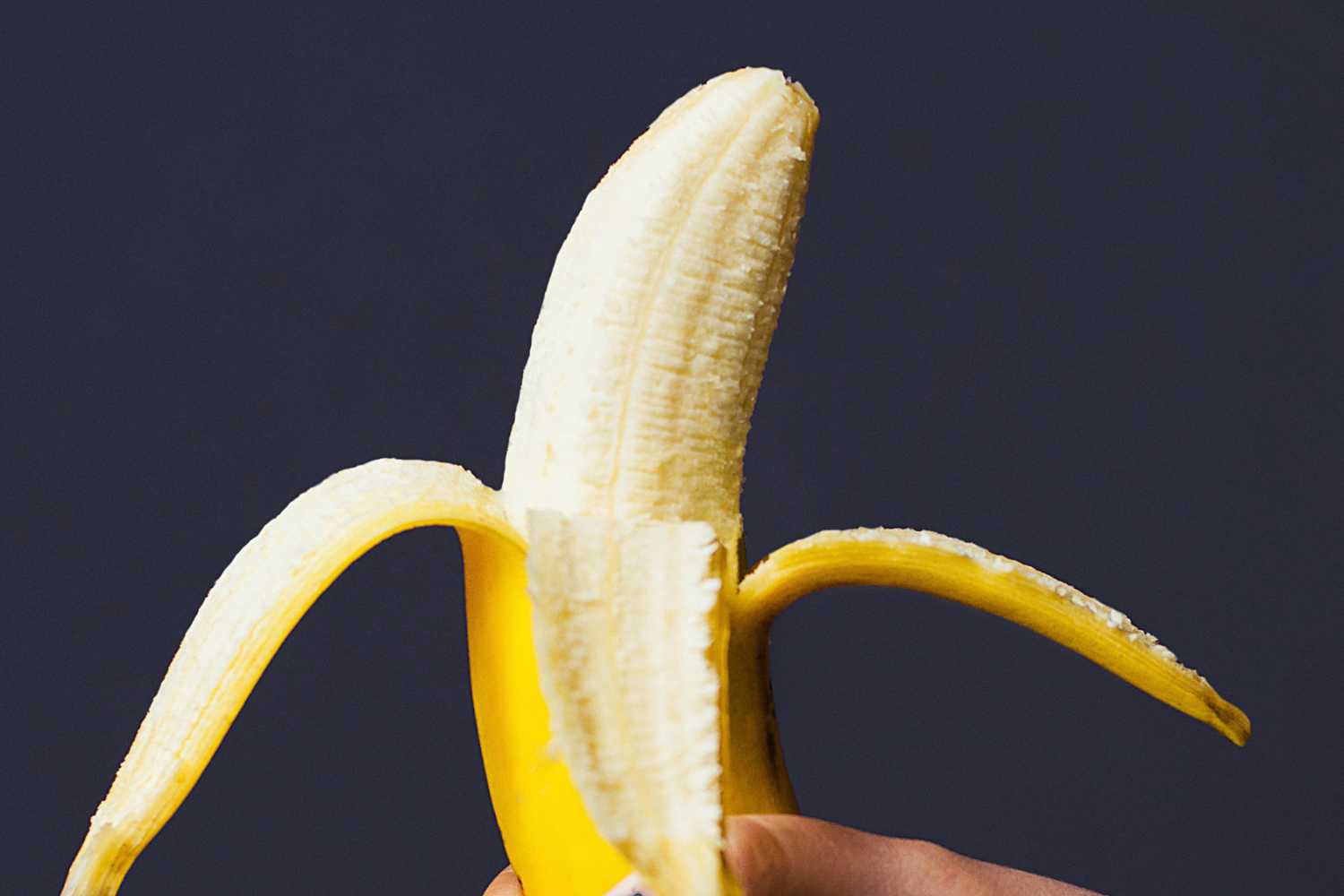
Every time you peel a banana, the show is repeated: thin wiressometimes adhering to the fruit, sometimes rebellious and annoying, who remain attached to the peel or hang along the pulplike small vegetable nerves. Many people take them carefully, someone ignores them, few really know what they are. Yet, behind that apparently insignificant detail, there is a fascinating and, in some ways, surprising biological mechanism. What we call banana “threads” have a precise name, floemaand I’m not a defect at all.
Not a useless residue, but a vital structure
In the language of botany, the floema is a common fabric that plays a central role in the life of the plant. If the xylem – the best known “brother” – transports the water and mineral salts from the roots upwards, the floema performs the inverse operation: distributes the products of photosynthesis (especially sugars) From the leaves to the other organs of the plantincluding growing fruits.
In the case of the banana, Floema continues to work also in the ripe fruit, and those thin filaments that we often find between the pulp and the peel are nothing more than florist bands, a sort of logistics network that has had – and partly preserves – the task of nourish and grow the fruit itself.
In other words, Those threads are essential for the development of the banana: without them, the fruit could not receive the necessary substances to mature. They are therefore a physiological part of the fruit, just like the peel or the pulp, and not an error of nature.
Why are they sometimes more visible?
The quantity and visibility of the floema in the banana can vary from one fruit to another. Among the factors that affect the following:
What happens if you eat bananas’ threads? Must be removed?
The answer is simple: No, they don’t hurt, and it is not necessary to remove them. The Floema threads are perfectly edibleand do not contain toxic or unpleasant substances. Indeed, like all the plant components rich in fiber, they can even be useful for digestion.
The taste can be just different from the main pulp, sometimes more neutral, sometimes more herbaceous, and, let alone serious reasons to avoid them. As in the case of the filaments of celery or ribs of leafy vegetables, the question is purely sensory.
Those who are particularly sensitive to textures – for example children and people with disorders related to sensory elaboration – can choose to remove them, but it is a subjective choice, absolutely unnecessary.
A “vegetable nervous system”?
In metaphorical terms, defining the Floema “the Banana nervous system” is not entirely improper. Does not transmit electrical impulses, of course, but coordinates the movement of vital resources, responds to chemical stimuli and regulates a part of the internal dynamics of the plantjust like the nervous system does it in animals. In addition, it is part of a wider, intricate and refined network, which involves communication between the various portions of the plant body.
This vision also helps to reformulate our relationship with the fruits we consume. Every element we consider as a waste and “imperfection” is, in reality, the result of a complex biological architecture which allowed the plant to generate the fruit, to feed it, protect it and make it available for reproduction, or, in our case, for nutrition.
And from a nutritional point of view?
There are no studies that attribute to the Floema della Banana particular nutritional properties, even if it is generally known that The vegetable conductive fabrics can contain insoluble fibers and traces of antioxidant substancesalbeit in very small quantities compared to the pulp and peel. On the other hand, The presence of the floema can be considered an indicator of freshness and integrity of the fruit.
A banana with a pulp that is too soft, now fermented, will have the propensity to show unrelated threads, if not completely absent, while a fruit in good condition will have obvious and consistent, which makes these filaments, curiously, too A small clue to evaluate the quality of the fruit.
