
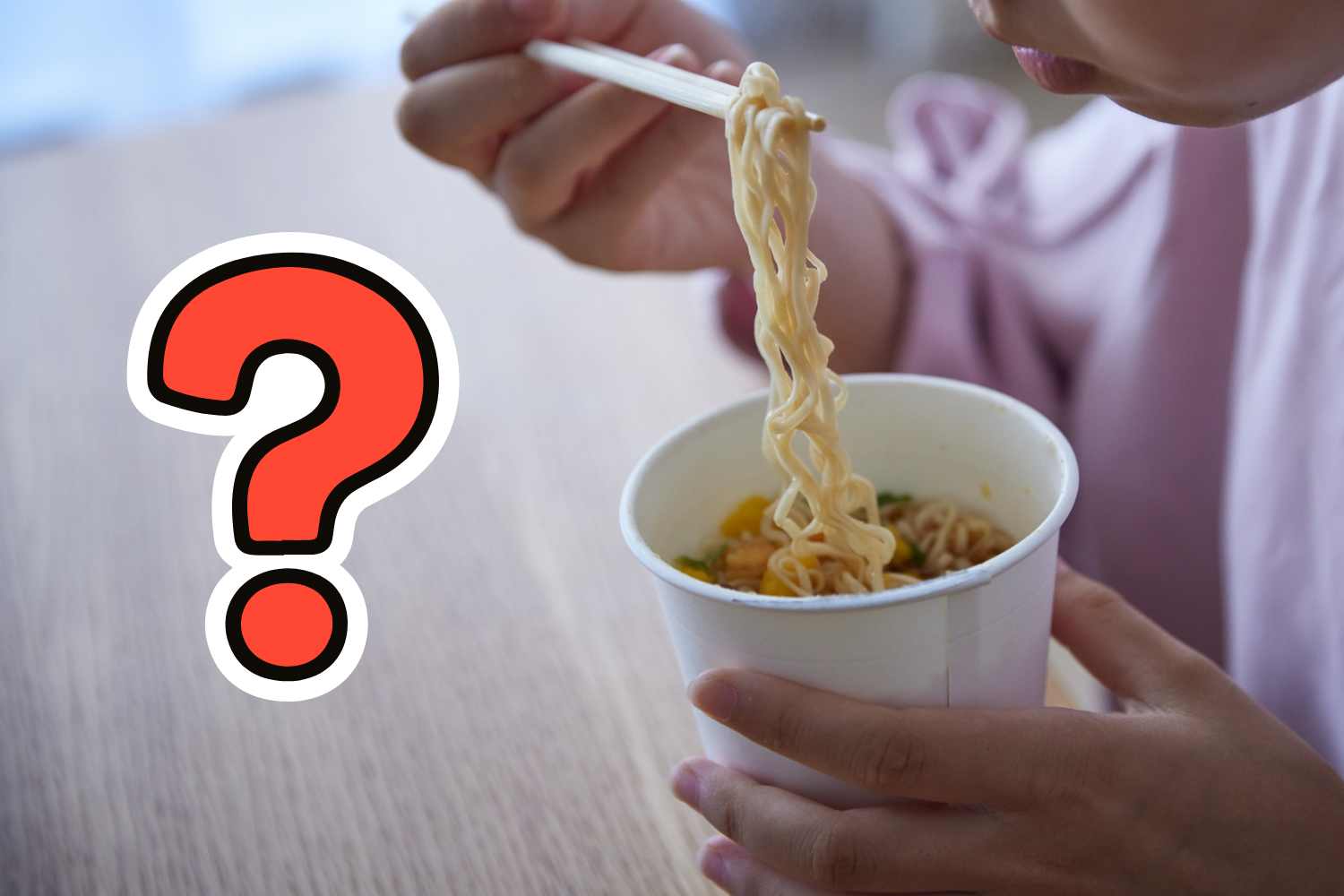
Practical, economical, ready in five minutes: Asian instant noodles seem like the perfect solution for a quick meal. But when you read the label, the story changes dramatically. The experts of the French consumer magazine 60 Millions de Consumers have analyzed these products that are conquering more and more shelves in European supermarkets, revealing a composition that is perplexing.
The history of noodles
Invented in Japan in 1958 to address the post-war food crisis, instant noodles have taken the world by storm. In France, consumption has exploded: from 115 million portions in 2023 it went to 160 million in 2024. The success is evident especially among young people and students, attracted by the low price (less than one euro for some packages) and the promise of a culinary trip to Asia without leaving home.
As underlined by Gaëlle Pantin-Sohier, marketing professor at the University of Angers interviewed by the magazine, these products benefit from the charm of Asian culture, riding the trend started with manga and K-pop.
What Noodles Really Contain
The first element that emerges from the analysis of 60 Millions de Consumers it’s the almost universal presence of palm oil, added to prevent the noodles from sticking together, and at least one antioxidant, the first sign of a highly processed product. Salt and sugar (or dextrose) complete the picture of ubiquitous ingredients, the latter used to balance the flavor.
But the list of additives is the most striking. As observed by Kelly Frank, agricultural engineer and founder of the Goûm agency consulted by the French magazine, the labels reveal ultra-processed products with numerous additives and industrial ingredients.
Acidity regulators, thickeners, emulsifiers, colourants… the number of additives varies from four for the Tanoshi brand to eleven for Yum Yum noodles: a record! – we read on 60 Millions.
Of particular concern is the presence in some products of carboxymethylcellulose (E466), an emulsifier suspected of contributing to inflammatory bowel diseases, and xanthan gum (E415). The latter, according to a 2024 Inserm study cited in the analysis, is associated with an increased risk of type 2 diabetes when repeatedly consumed.
The dye E150c, present in some packages, also causes concern, as its compounds, called 4-MEI, are in fact potentially carcinogenic at high doses.
But there is another aspect that the French experts highlight: the umami flavour, that fifth fundamental taste typical of Asian cuisine. The term means “delicious and tasty taste” in Japanese. In nature it develops through long fermentation processes, as in soy sauce, but in instant noodles, however, it is obtained quickly and economically thanks to flavor enhancers. These are monosodium glutamate (E621) and disodium 5′-ribonucleotide (E635).
At least one of these additives is present in all the noodles analyzed, and as the teacher Pantin-Sohier explains, this umami flavor creates the desire to eat more, leading, according to some specialists, to a form of addiction.
And the chicken? Despite many packages stating “chicken flavour” on the label, research by French experts revealed that the majority of products contain only artificial chicken flavours, without any trace of real meat. Only two brands out of those analyzed include chicken fat, and in any case in minimal quantities (1.6%). The result is a very low protein intake, around 2 grams per 100 grams of product, coming exclusively from soy sauce.
Ultra-processed foods
Dr. Boris Hansel, an endocrinologist and nutritionist at the Bichat Hospital in Paris interviewed by the magazine, summarizes the underlying problem thus: these ultra-processed foods not only provide very few beneficial macronutrients, but are also extremely salty, with individual portions that can contain up to 3-4 grams of salt. The real concern, according to the doctor, is not so much the intrinsic danger of these products but the fact that they are replacing whole, healthier foods in the daily diet, especially among young people.
In conclusion, 60 Millions de Consumers underlines that enjoying a bowl of noodles every now and then is not a problem, but be careful about turning them into a daily meal because it means taking on a real industrial cocktail.
