
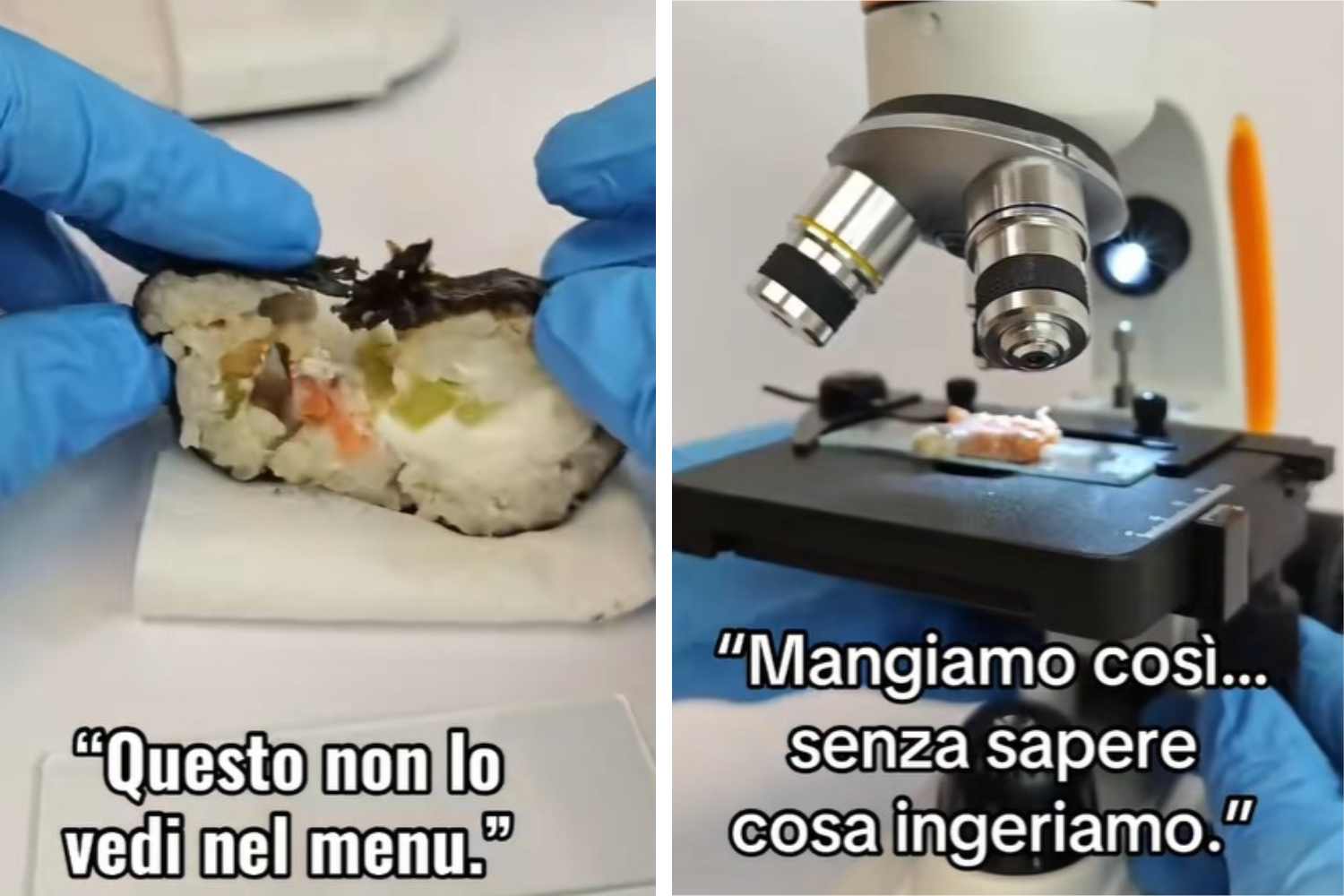
In recent years, sushi has become one of the most loved dishes in Italy too. Tartare, carpaccio, colored rolls, etc. prepared with raw fish are now a dietary habit for many of us. But are we really sure of what we are eating?
A video on TikTok by creator @longevity_rules shows something hard to forget, simply by looking at a common sushi roll under a microscope.
What the video shows under the microscope
The creator takes a normal sushi roll, takes out the raw salmon and initially observes it as it is. Then, with a slide, he takes a sample of that fatty and shiny film that covers the fish and analyzes it again.
Under the microscope lenses, live parasites can clearly be seen moving. These are not blurry or dubious images, but perfectly visible, moving organisms that contaminate fish intended for human consumption. A scene as disgusting as it is impressive, which makes us reflect on what can end up on our plates.
@longevity_rules Many people consume raw fish every week. Sushi. Tartare. Carpacci. Few know what can really be hidden. This is a microscopic analysis. Not an opinion. Not a conspiracy. Real parasites. Identify yourself. You live. In Italy the preparation of raw meat is often done superficially. HACCP procedures exist, but are not always respected. Not out of malice. But due to lack of training. Weak controls. Insufficient technical management. In Japan we don’t focus on genetics. The focus is on operational excellence: short supply chain, rigorous controls, trained staff. Not here. And it is no coincidence that most raw fish poisonings occur in restaurants. #rawfish #foodsafety #haccp #food #sushi
♬ original sound – longevity_rules
The problem of preparing raw food in Italy
As the video explains, in Italy the preparation of raw fish “it often happens in a less than adequate manner“HACCP procedures exist on paper, but in practice they are not always respected with the necessary rigor.
It is not necessarily a question of bad faith on the part of restaurateurs, but of a series of systemic critical issues: lack of adequate staff training, insufficient controls and poor technical management. The result? The majority of raw fish poisonings in our country originate in restaurants.
The comparison with Japan is illuminating. In the country of the Rising Sun the focus is not on the genetic selection of fish, but on operational excellence with a short and controlled supply chain, rigorous procedures at every step, highly trained and specialized staff.
In Italy, unfortunately, this quality standard is still far from being the norm, especially in many fusion or all-you-can-eat restaurants that have proliferated in recent years.
The real risks of raw fish (too often underestimated)
Many consumers consider raw fish a safe food, perhaps more “natural” than others. The reality is that health risks are real and often underestimated.
The most common parasites in raw fish are Anisakis, small nematode worms that live in the digestive system of many fish. When the fish dies, these parasites migrate into the muscle tissues, the very ones we consume. Ingestion of Anisakis can cause:
But the Anisakis are not the only unwanted guests. Raw fish can also contain tapeworms (such as Diphyllobothrium), which can grow in the human intestine up to several meters in length, causing significant nutritional deficiencies, in particular vitamin B12.
On the bacterial front, the risk includes Salmonella, Listeria and other pathogens which can cause even severe gastrointestinal infections, particularly dangerous for children, the elderly, pregnant women and immunosuppressed people.
Thermal blast chilling to -20°C for at least 24 hours (or -35°C for 15 hours) should eliminate the parasitic risk, but only if carried out correctly, checked consistently and followed by an impeccable cold chain. Unfortunately, as some cases in the news and health checks demonstrate, this procedure is not always respected.
What can we do?
If you really can’t give up sushi, here are some practical tips:
