
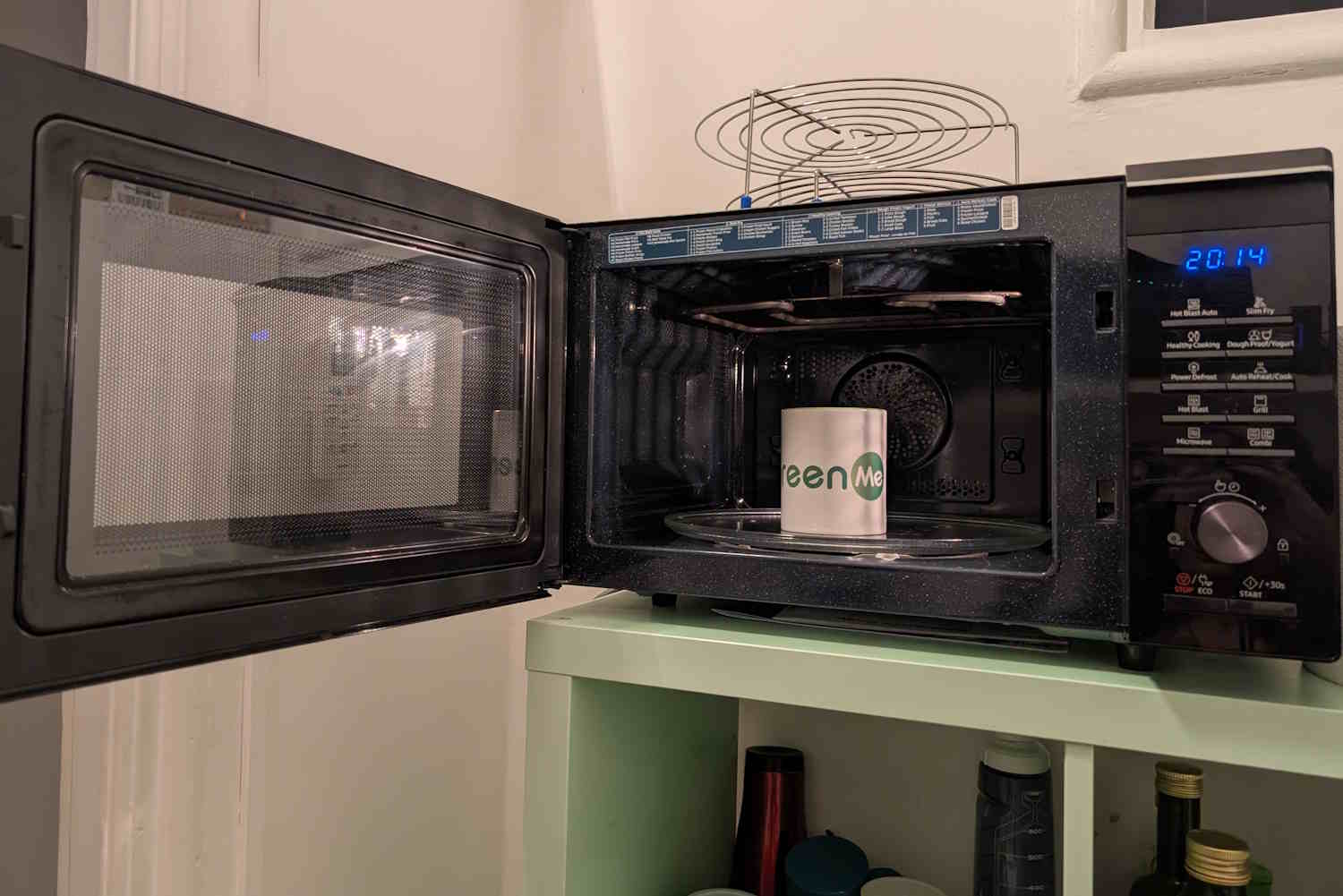
Who among us has never used the microwave of the office to heat lunch? Maybe a plate of advanced pasta, a sandwich or a piece of pizza, daily actions that actually hide concrete health risks.
The microwave oven, designed to heat the food in a few minutes, can turn into a receptacle of bacteria, like the relaxation room in which it takes refuge for the various breaks that are part of the working day. Because, unfortunately, germs do not stop at the desk or bathroom: the real problem can reside right there, in the heart of the lunch break, where the microwave becomes the protagonist of a possible food drama.
The truth hidden in microbes
If you think the bathrooms are the only place in the office where the bacteria nestates, it’s time to review your beliefs. In fact, according to recent studies, the relaxation rooms and the kitchens of the offices are often the most contaminated places. Surprisingly, the greatest number of bacteria lies precisely in the place where we prepare our lunch, including the most fearful, such as Salmonella, Escherichia Coli and Stafilococcus.
Microwave ovens are designed to destroy bacteria through heat, but it may happen that they cannot do it in a completely effective way, due to non -uniform heating. And this, as we can imagine, is the critical point.
The problem arises from the fact that many people do not pay attention to how they use the microwave. Some foods are only partially heated, the case that creates “cold areas” where bacteria can proliferate undisturbed. A small accident on the route, such as not mixing the dish well or not rotating it during the cooking process, can transform the microwave into a dangerous trap.
An invisible battlefield
Imagine enter the office after a long meeting and head to the relaxation room to warm up your lunch. The microwave is there, ready to welcome you with its plastic bowl waiting for your dish. But that microwave could tell you a different story. It is easy to think that a simple warmer is enough to make food safe, but it is not always the case. Each meal we heat in the microwave leaves invisible traces: germs and bacteria that accumulate inside, especially if we do not clean it regularly.
According to some studies, the microwaves found in the offices with hundreds of employees have high levels of contamination. Think that, in a 2012 investigation, conducted on about 5,000 buffers taken from buildings used as office, the dirty areas were precisely those of relaxation rooms and kitchens. A small invisible battlefield, where, if we are not attentive, we could fall victim to diseases of food origin.
Prevent it is better than cure
The good news lies in prevention, since preventing is relatively simple. Just follow some precautions and, with a little attention, we can minimize the risk.
First of all, we should avoid heating food after 14:00, when the environment is already saturated with the bacteria accumulated by breakfast and lunch. If you can, try to eat before the critical time, or opt for a snack that should not be heated.
When you use the microwave, make sure to always cover your food with a lid or paper napkin, in order to avoid the sketches that could spread the bacteria. And remember: mixing and rotating food during cooking are fundamental actions, which will allow you to facilitate better heat distribution and contribute to the total eliminations of any bacteria.
The just heat for health
And speaking of heat, make sure that your food reaches an internal temperature of at least 74 ° C, as recommended by the USDA, in order to kill most of the bacteria.
While it seems an irrelevant detail, a simple kitchen thermometer will actually be able to make the difference between a safe and a risky lunch. Do not forget to regularly clean the microwave, including the door handle and the buttons, where the germs nest. There is nothing worse than finding a sticky stain on the handle after turning on the microwave. That’s why rapid cleaning can prove to be a valid ally.
Make the difference in the office
Finally, even if it might seem embarrassing, you could consider the idea of placing a small reminder in the office. A sign that reminds everyone good cleaning and heating practices could be the key to avoid possible contaminations. Maybe you will not become the most popular colleague, but certainly the most appreciated in terms of health and food safety.
