
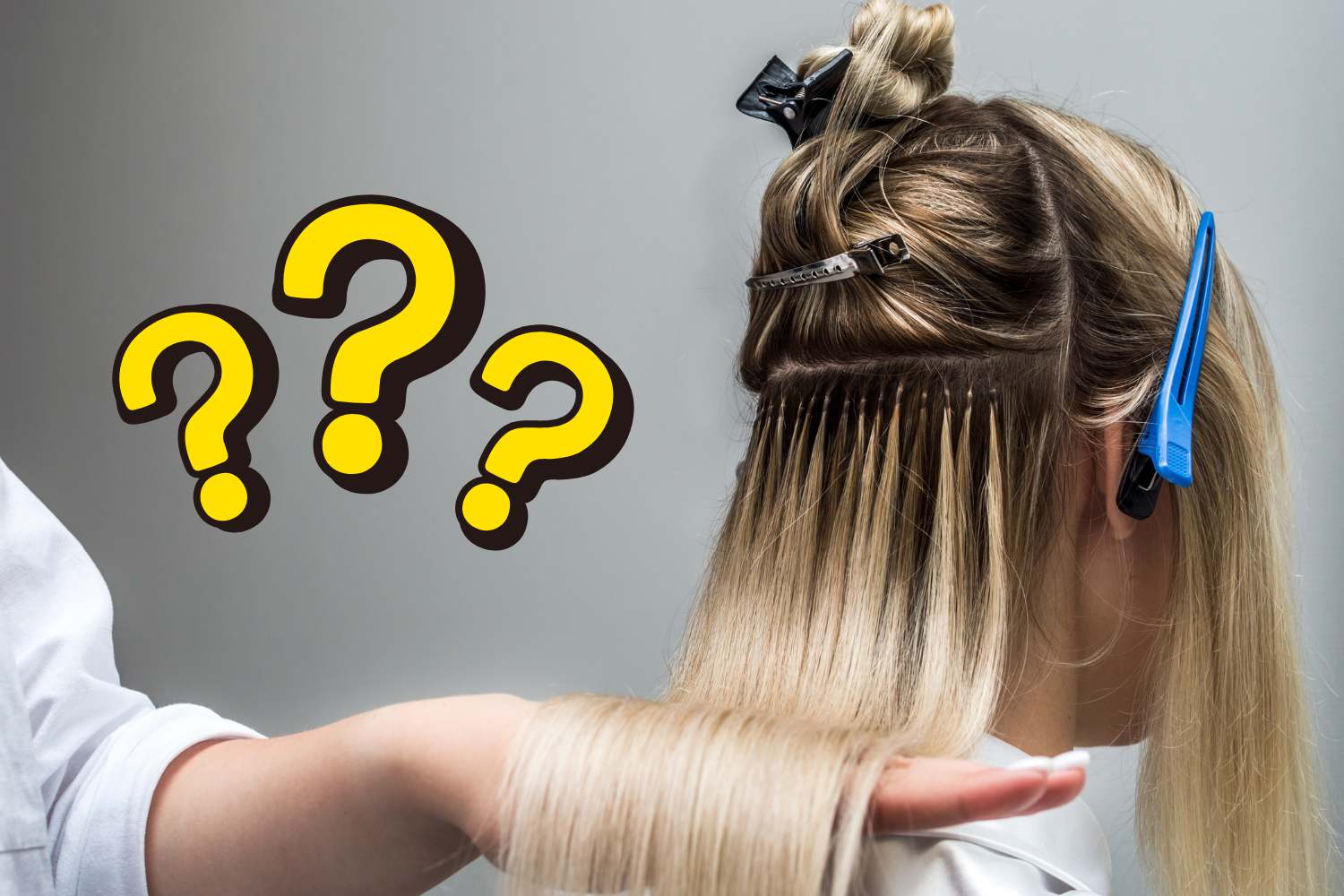
The global market for hair extensions is already worth billions of dollars and is expected to exceed 14 billion by 2028. Yet, despite their widespread diffusion, these products remain among the least regulated and least studied cosmetics around.
A group of researchers from the Silent Spring Institute, who published in the journal, filled this gap Environment & Health what is defined by the authors themselves as the most complete public analysis ever conducted on hair extensions.
What is hidden in extensions?
To understand what extensions really contain, researchers purchased 43 of the most popular products on the US market, selecting them based on popularity on social media, label declarations and variety of materials: from Kanekalon synthetic fibers to raw virgin human hair extensions, including banana fibers, silk and hybrid blends.
Each sample was subjected to two-dimensional gas chromatography coupled to high-resolution mass spectrometry (GCxGC-TOF-MS), a sophisticated technique capable of detecting volatile and semi-volatile compounds even in minimal traces. The data processing was entrusted to the Highlight artificial intelligence platform, developed specifically for high-throughput non-targeted chemical analyses.
The result? As many as 933 distinct chemical signatures, for a total of over 5,200 detections distributed across all samples. Of these, the researchers were able to positively identify 169 chemical substances and then classify their risk potential.
The most worrying substances
Among the compounds identified, 48 appear on at least one of the official lists of hazardous substances, including California’s famous Proposition 65, which requires warnings on products containing carcinogenic or reproductive toxicants. 91% of the samples analyzed contained at least one of the substances on this list.
Here are the categories that have caused the most alarm:
Organotin compounds
Nearly 10% of the samples analyzed contained organotin compounds, a chemical class normally associated with PVC stabilizers and antifouling paints for boats. Four samples of unspecified synthetic fibers had tin concentrations above 0.4% by weight, a value that exceeds the limits set by the European Union (0.1%).
Among the identified compounds, dibutyldichlorotin stands out, classified in the EU as a substance of very high concern and prohibited in articles intended for consumers above certain levels, and tributyltin chloride, a well-known endocrine disruptor which in laboratory animals causes metabolic alterations comparable to metabolic syndrome, as well as insulin resistance and lipid dysfunctions. Historically used in naval paints, its use has been prohibited due to its marked aquatic toxicity.
Of particular concern is that leachate analyzes have shown that these compounds are able to partially migrate into the water under conditions that simulate a normal shower, with more significant leaching in an acidic environment — such as that achieved with apple cider vinegar, a home remedy often recommended as a pre-wash for synthetic hair extensions before use.
Flame retardants and halogenated compounds
The majority of synthetic extensions analyzed are marketed as flame retardant or heat resistant, characteristics achieved through the incorporation of halogenated compounds into the polymer. All Kanekalon fibers showed very high concentrations of chlorine — up to 277,000 micrograms per gram — consistent with the presence of a vinyl chloride polymer and chlorinated flame retardants.
However, high levels of bromine were detected in Mastermix fibres, between 25,000 and 44,400 micrograms per gram, indicative of brominated polymers or brominated flame retardants. Aquatex fibres, marketed as water-repellent, had fluoride in significant concentrations: a signal potentially attributable to the presence of PFAS substances, the infamous “eternal pollutants”, although the targeted analyzes available did not allow specific PFAS to be confirmed.
Phthalates, nitroaromatics and known carcinogens
Other substances confirmed or provisionally identified in the danger lists include bis(2-ethylhexyl) phthalate (DEHP), a plasticizer with effects on the reproductive system, dibutyl phthalate, styrene (probable carcinogen), tetrachloroethane (highly toxic to the liver and kidneys) and benzophenone, present in numerous samples of different types, including Kanekalon, Mastermix and even some human hair extensions. The pesticide permethrin was also found in a sample of raw human hair, probably a residue of an insect treatment carried out during processing.
Who is more exposed
Extensions are not a product of occasional use for many consumers: they are worn for days, weeks, in direct contact with the scalp, neck and skin. They are bathed in the shower, heated with straighteners and hairdryers, and in some cases even carried by children. Hairdressers handle them daily.
The researchers highlight the important issue of health equity: in the United States, more than 70% of black women use extensions at least once a year, while among white women the percentage is less than 10%. It is a market that burdens above all a community already disproportionately exposed to environmental pollution and which, due to the lack of transparency of the products and the limited regulatory supervision, is forced to make practically “blind” choices.
“Green” declarations are not always reliable
A striking fact concerns extensions marketed as ecological or non-toxic products. Spetra fibers, labeled as “toxic-free” and “phthalate-free,” were among the cleanest of the entire sample, consistent with the claims. However, banana fibers — sold as biodegradable, PVC-free and phthalate-free — contained bis(2-ethylhexyl) phthalate in both samples tested.
Only two products out of the entire panel had no chemicals listed on any hazard list. A result that demonstrates how compliance with certain standards is possible, but far from general.
What researchers ask
The authors of the study call for more transparency in the composition of fibers, more stringent regulation – especially for organotin compounds, already banned in the EU but not in the USA – and greater attention from health authorities.
On the practical front, they suggest investigating the exposure routes (inhalation, skin contact, ingestion), especially for the most vulnerable categories, and developing more precise quantification methods for the identified compounds. Finally, they encourage producers to reformulate products and eliminate dangerous substances, remembering that safer alternatives already exist on the market.
How to defend ourselves
Although the study concerns products sold in the United States — where cosmetic legislation is less restrictive than in the European Union — the problem is not foreign to the European market, where some products are imported through online networks or from suppliers for hairdressers of dubious origin.
Some practical indications to reduce exposure:
