
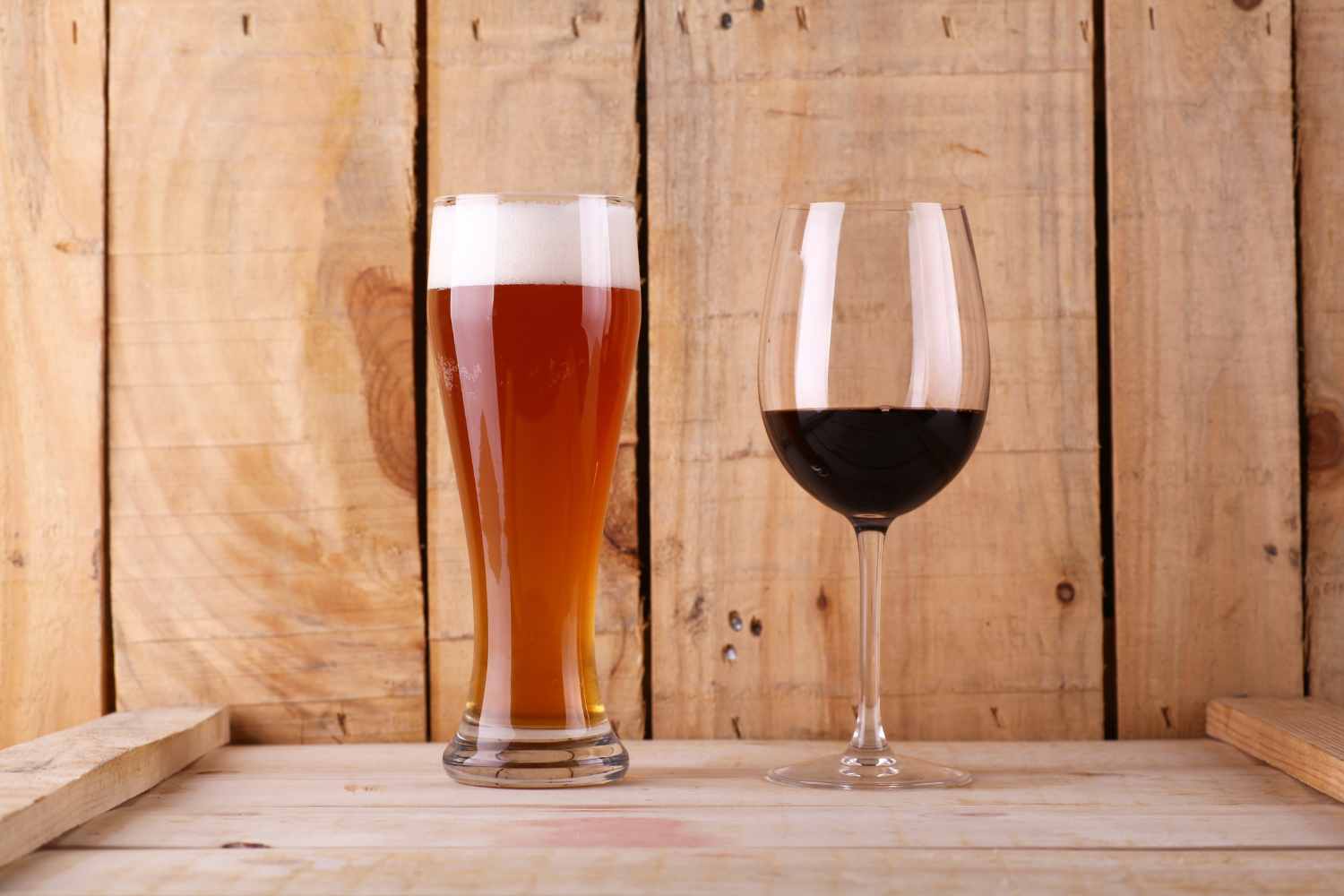
Beer and wine They are among the most loved and consumed alcoholic beverages but, those who care about their health and physical fitness, probably the following question will have asked: Which one makes you fat more?
Before this, before giving you an answer by quoting some scientific research, we would like to emphasize that the most important aspect to consider regarding these drinks is the presence of alcohol. Consequently, regardless of whether they make you fat or not, you don’t have to abuse it.
But returning to the initial question, we start from the caloric contribution of these drinks. Wine and beer contain calories, but in different quantities. On average, A glass of wine (150 ml) contains about 120-130 caloriesWhile A standard beer (330 ml) provides a calorie intake between 150 and 200 kcal.
However, this is certainly not the only aspect to consider. Speaking of wine and beer, we must also evaluate The effects on appetite as well as metabolic ones which could therefore affect the accumulation of fat.
A study published in the magazine “Nutrition Reviews“He examined the impact of alcohol on the adjustment of appetite and caloric hiring. According to research, moderate alcohol consumptionregardless of the source, can increase appetiteleading to an increase in calorie intake. However, alcohol consumption as part of a meal seems to have a lesser impact compared to when it is taken without food.
Then there is a research conducted by the Department of Nutrition of the University of Copenhagen which analyzed The impact of wine and beer on metabolic processes. The results show that red wine, in particular, contains polyphenols such as resveratrol that can positively influence lipid metabolism. However, the exact effect seems to be modest and requires further insights.
On the other hand, Beer contains carbohydrates coming from maltodextrin, which can increase blood sugar levels and contribute to the fat depositespecially when consumed in excess.
Also an investigation published on “European Journal of Clinical Nutrition“He studied the association between the consumption of alcoholic beverages and the distribution of body fat. It was concluded that Excessive beer consumption is related to a greater amount of abdominal fatwhile wine consumption did not show the same negative effect on body composition.
A further study, published in the magazine Obesity Science & Practicehas come more or less to the same result: Consuming beer and spirits is associated with a greater visceral adipity connected to dyslipidemia (alteration of the quality of fats) and insulin-resistance. The moderate intake of wine can on the contrary protect, thanks to the anti -inflammatory effects.
From the research it would therefore seem the beer to be the most disadvantaged drink between the two in terms of accumulation of fat, but only if consumed in excess.
It is essential to underline that the consumption of any alcoholic drink should take place in moderation. The real determining factor for weight gain is the overall calorie excess in the diettogether with a sedentary lifestyle. Regardless of the choice between wine and beer, consuming them in excessive quantities will lead to an accumulation of calories which, over time, could contribute to the weight increase.
To conclude, both beer and wine can be consumed without particular risks, but the key is always moderation. Alcohol, in any form, has effects on the organism that go beyond the calorie intake, also influencing metabolism and appetite management. It is therefore essential not only to pay attention to the type of drink chosen, but also to the quantity, to prevent the excess of calories from translating into a weight gain. The awareness of your lifestyle and your eating habits remains the crucial factor to maintain a good physical shape, regardless of the choices on the table.
