
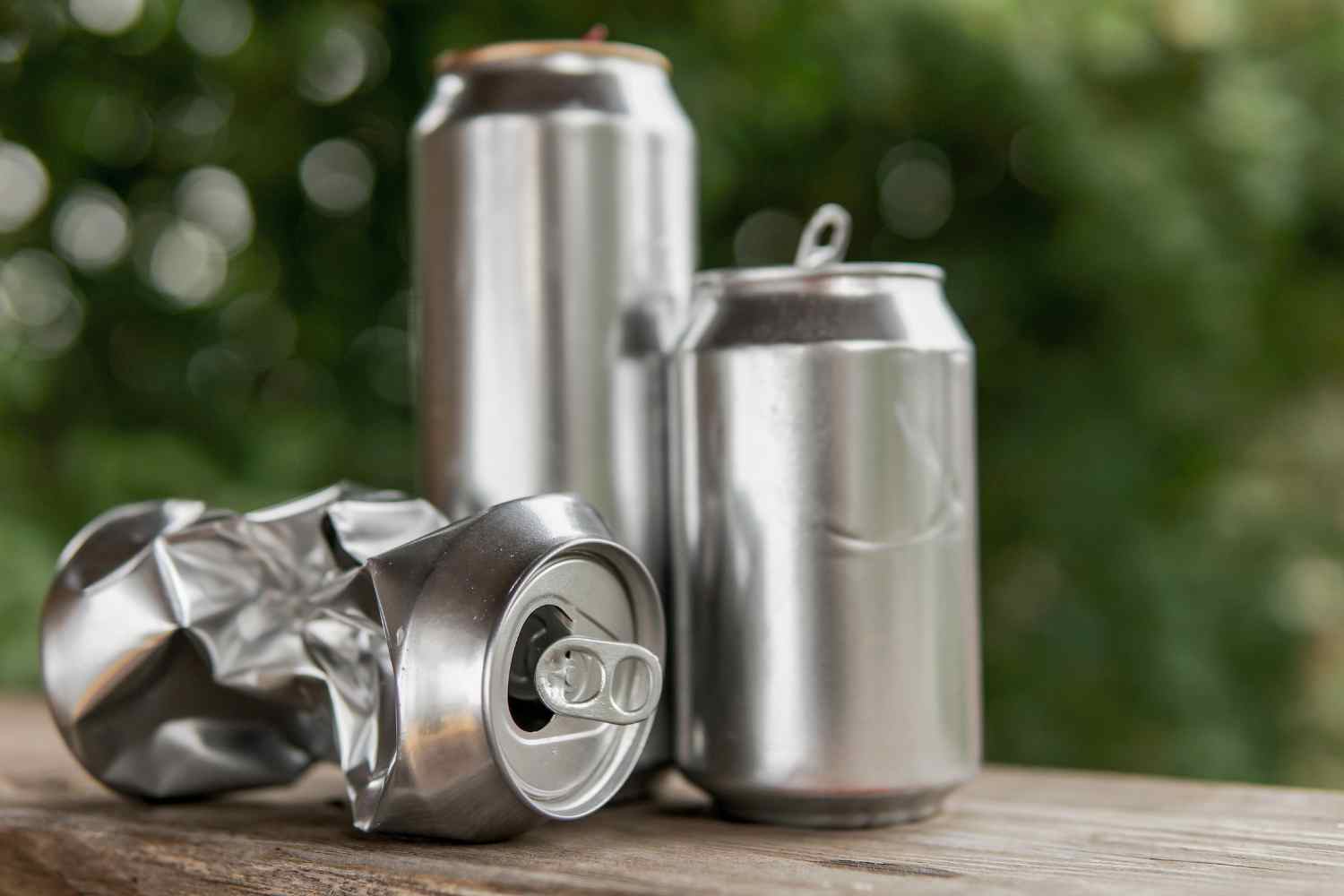
We are not talking about just any material. Aluminum is one of those silent companions in our everyday life that rarely receives the attention it deserves. We open it, have a drink, maybe crush it absentmindedly, then throw it away without thinking too much. End of story. And yet the story begins right there. Because aluminum has a peculiarity that distinguishes it from practically any other material used in packaging: it can be 100% and infinitely recycled, without losing quality. A thin sheet, a can, a tray can be transformed into new packaging, a car component, part of a building facade or a city bike. And if 130 cans are enough to power a scooter, it’s worth asking how much power we’re throwing away every time we don’t bestow it correctly.
The recycling supply chain: powerful but fragile
In 2024, thanks to an efficient and tracked industrial system, over 68% of the aluminum packaging placed on the market was recycled in Italy. An important result, strengthened by an overall recovery rate of 71.7%. Not a final objective, a step on a path that is based on real collaboration between municipalities, companies, institutions and citizens. CIAL – National Aluminum Packaging Consortium – has coordinated this mechanism since 1997, ensuring that aluminum does not become waste but a resource. And it does so according to two principles that don’t need marketing to explain: shared responsibility and the polluter pays.
The hidden power of a domestic gesture
Every year, aluminum recycling allows for energy savings of 95% compared to primary production from bauxite and avoids the emission of over 440,000 tonnes of CO₂. It’s like turning off thousands of engines before even starting them. Yet, despite technological efficiency, the supply chain relies on human gestures. Those who start in the kitchen. Those that only work if they are done with awareness, not out of habit.
5 rules to avoid mistakes in the separate collection of aluminium
Let’s see together the 5 rules to avoid making mistakes in the separate collection of aluminium
Understand what can be contributed
The first concerns what to throw away. Aluminum is everywhere: cans, thin sheets, capsules, trays, spray cans, caps, tubes. If the packaging is made entirely or largely of aluminium, it goes into the dedicated separate waste collection container, according to municipal methods. A frequent error arises from uncertainty about small or composite parts. If a cap is detachable and made of aluminum, it must be awarded. If the can is empty, without dangerous residues, it is also recyclable. The idea that “only cans are truly recoverable” is false. Aluminum, if recognized, is always recycled: it is intrinsically precious.
Don’t wash it: just empty it
The second rule concerns emptying. An aluminum packaging must not have product residues, liquids or foams. There is no need for complete cleaning, just remove anything that may interfere with the selection or contaminate the material. Here a resistant myth falls: it should not be washed. We will protect the environment by not consuming water to clean a can. Just empty it properly. Recycling also works with harmless micro residues. The quality of the collected flow is already monitored through over 240 product analyzes conducted by CIAL in 2024. Recovering well does not mean sanitizing, but making the material recognizable and manageable.
Separate whenever possible
Immediately following is the issue of separation from different materials. If a package is made up of several easily separable parts, it is better to divide them. Aluminum with aluminium, plastic with plastic, paper with paper. It’s not an absolute obligation, but it helps. Where separation is impossible, the logic of the prevailing material prevails. This attention reduces waste in the plant and increases recycling efficiency.
Place in the right container
The fourth rule concerns the correct destination. In many municipalities, aluminum must be placed in the plastic/metal container. In others there is a collector dedicated to metals, or with glass. The important thing is to follow local directions. It seems trivial, but it is not, not all areas adopt the same procedures, and an incorrect provision can compromise the interception of the material. Let’s remember that CIAL covers 70% of Italian municipalities, and reaches around 45.8 million inhabitants: the scale is enormous, the precision necessary.
Crumpling up: the gesture that makes the difference
And finally, the rule that changes everything: curl up into a ball. The gesture that decides whether aluminum will be recognized or discarded. Packaging that is too small, if left flat or scattered, risks getting lost on the sorting belts. If we compact them, we make them physically interceptable. An aluminum pellet does not escape selection technologies, a cap left free can disappear in the mixed flow. It compresses, compacts, makes life easier for systems and the environment. This fifth rule deserves attention because it represents a bridge between a domestic gesture and an industrial impact. Compacting means acting knowing that you have an impact.
A two-second gesture but an impact that lasts over time
And this is precisely the final point. You don’t need sensational gestures to participate in the circular economy. Recycled aluminum powers key sectors such as packaging, automotive and construction. 100% of the aluminum produced in Italy comes from recycling. No dependence on primary raw material. It means autonomy, efficiency, real sustainability. It means that every tray, every can, every sheet that arrives correctly at the plant represents raw material for a strategic industrial supply chain.
Telling all this is not intended to blame, it is intended to make people responsible. Aluminum is infinite, as long as it is recognized and treated correctly. There are materials that cannot withstand more than two or three recycling cycles, aluminum can do a hundred, a thousand, without degrading. There is a difference between “doing separate waste collection” and doing it well. A difference that lies in five clear gestures. Don’t wash it. Empty it. Separate if you can. Place in the right container. Roll it into a ball.
From that moment on it is no longer in our hands. And for this reason it is worth doing it correctly. Because every time we close our hand on a can and compress it, we are contributing to the transformation of waste into a resource. An almost mechanical gesture, which takes two seconds. The exact time to choose whether to generate value or waste it.
